Best Wheel Bearing Removal Tool Kits for Any Mechanic
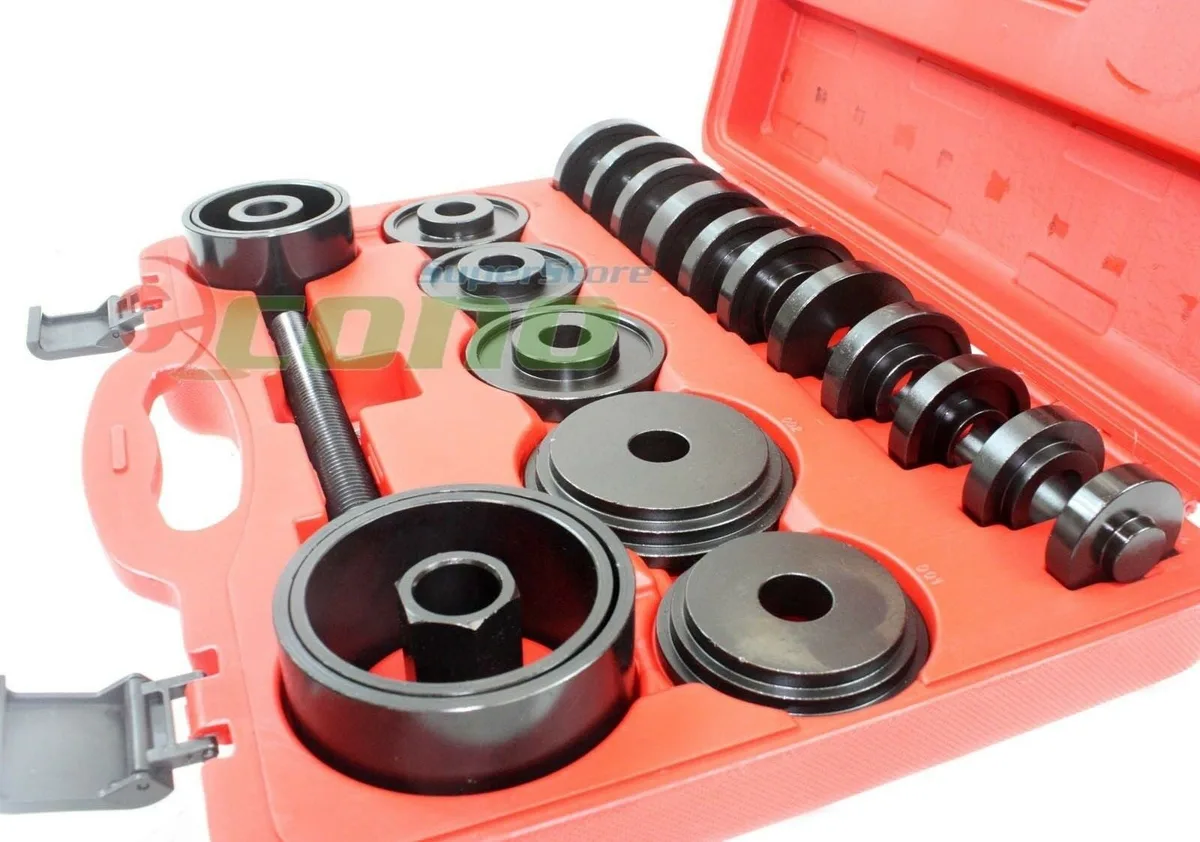
A wheel bearing removal tool kit can save you hundreds of dollars in labor costs, but picking the wrong one is a fast track to stripped threads and ruined hub assemblies. Most DIYers grab the cheapest option on the shelf and regret it the moment their puller jaws bend on a stubborn bearing. Aggregate reviews and mechanic feedback consistently show that investing in a proper kit pays for itself within two jobs.
Per SAE J2565 wheel hub assembly standards, a quality removal kit should handle at least 5 tons of pulling force with interchangeable adapters for common bearing sizes ranging from 2.5 to 4.5 inches in outer diameter. That’s the baseline before we break down what separates a kit that works from one that collects dust in your garage.
Why the Wrong Wheel Bearing Removal Tool Costs You Time and Money
A cheap wheel bearing removal tool kit might look like a bargain at $30, but those budget kits often ship with soft cast-iron jaws that deform under pressure. When the jaws bend, you lose leverage exactly when you need it most. This happens on every seized bearing, and that’s most of them.
Cheap kits also skip essential adapters. You’ll find yourself improvising with sockets and wrenches, which increases the chance of damaging the wheel hub or surrounding suspension components. Per manufacturer specifications, hardened chromium-vanadium steel jaws resist deformation at loads up to 10 tons, which is the difference between a smooth removal and a stripped hub.
The real cost shows up in rework time. A proper kit pulls the bearing clean in minutes. A flawed approach leaves you prying, hammering, and possibly replacing parts you didn’t intend to touch.
That extra labor often costs more than the price gap between a budget kit and a reliable one.
When you factor in the essential tools for bearing removal that separate kits include, the math swings heavily toward quality. A bearing splitter and compatible adapters come standard in mid-range kits but often disappear from the cheapest options.
What’s Inside a Quality Wheel Bearing Removal Tool Kit
A complete wheel bearing removal tool kit contains far more than a single puller. The core piece is the mechanical puller with adjustable jaws, typically rated between 5 and 10 tons of force. Beyond that, you’ll find a set of interchangeable sleeves that fit over the hub or spindle to protect mating surfaces.
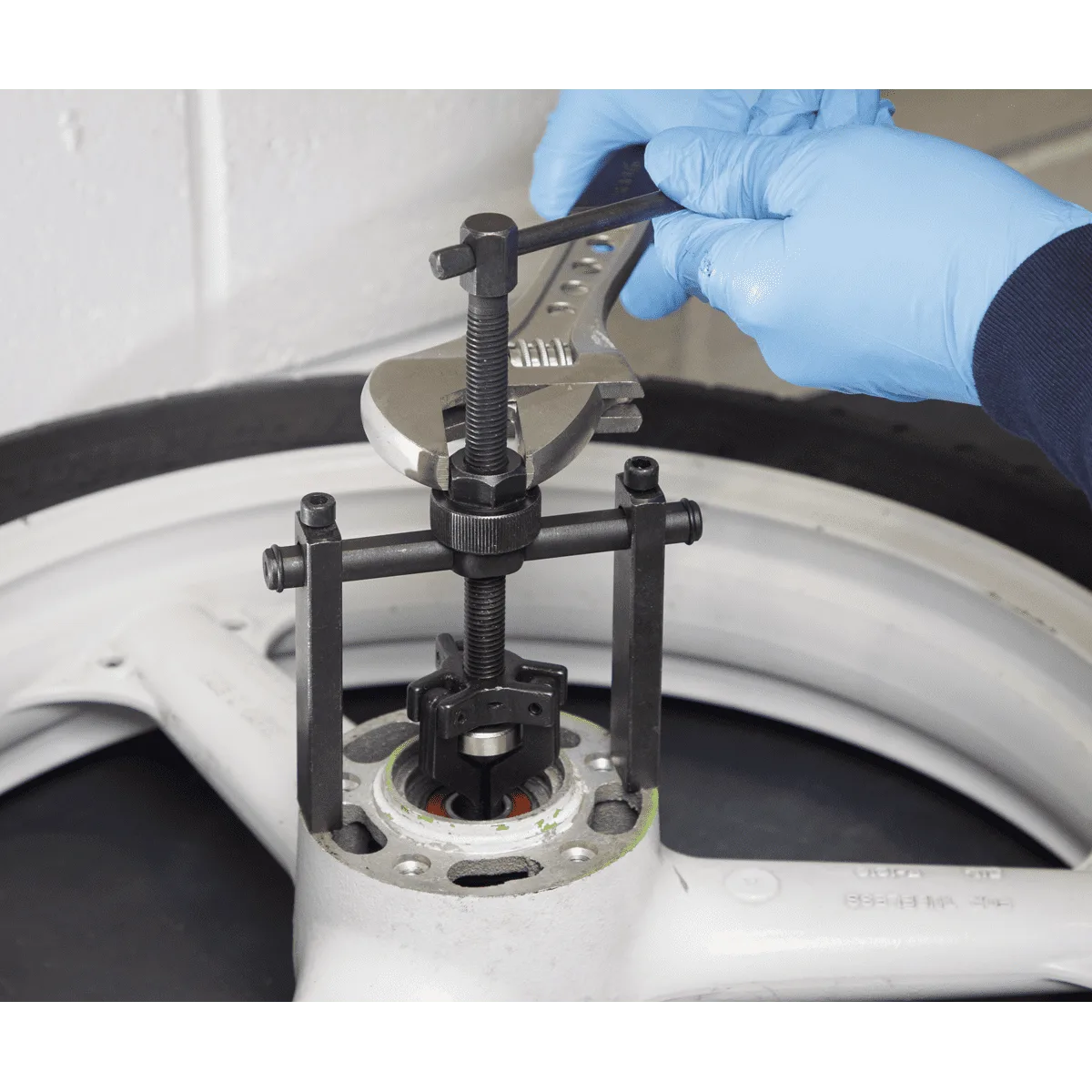
Look for kits that include the following components:
- Puller with parallel or tapered jaw designs for different bearing configurations
- Hardened pusher screws in metric and SAE thread sizes
- Adapter sleeves ranging from 2 to 5 inches in diameter
- Jaw extensions for deep-set or recessed bearings
- A carrying case that keeps everything organized
Many quality kits also incorporate press-fit installation tools. These let you drive new bearings straight into place without needing a separate shop press. A bearing separator style tool sometimes appears in larger kits for situations where the bearing needs to be split rather than pulled entirely free.
OEM tool catalogs list around 20 to 40 pieces in a comprehensive set. Automotive bearing pullers typically focus on the most common vehicle applications. Timken and SKF technical bulletins recommend kits with at least five adapter sleeve sizes to cover the majority of passenger cars and light trucks.
The presence or absence of these details separates a kit that handles most jobs from one that leaves you running to the hardware store mid-project.
Mechanical Pullers vs. Hydraulic vs. Slide Hammer Kits
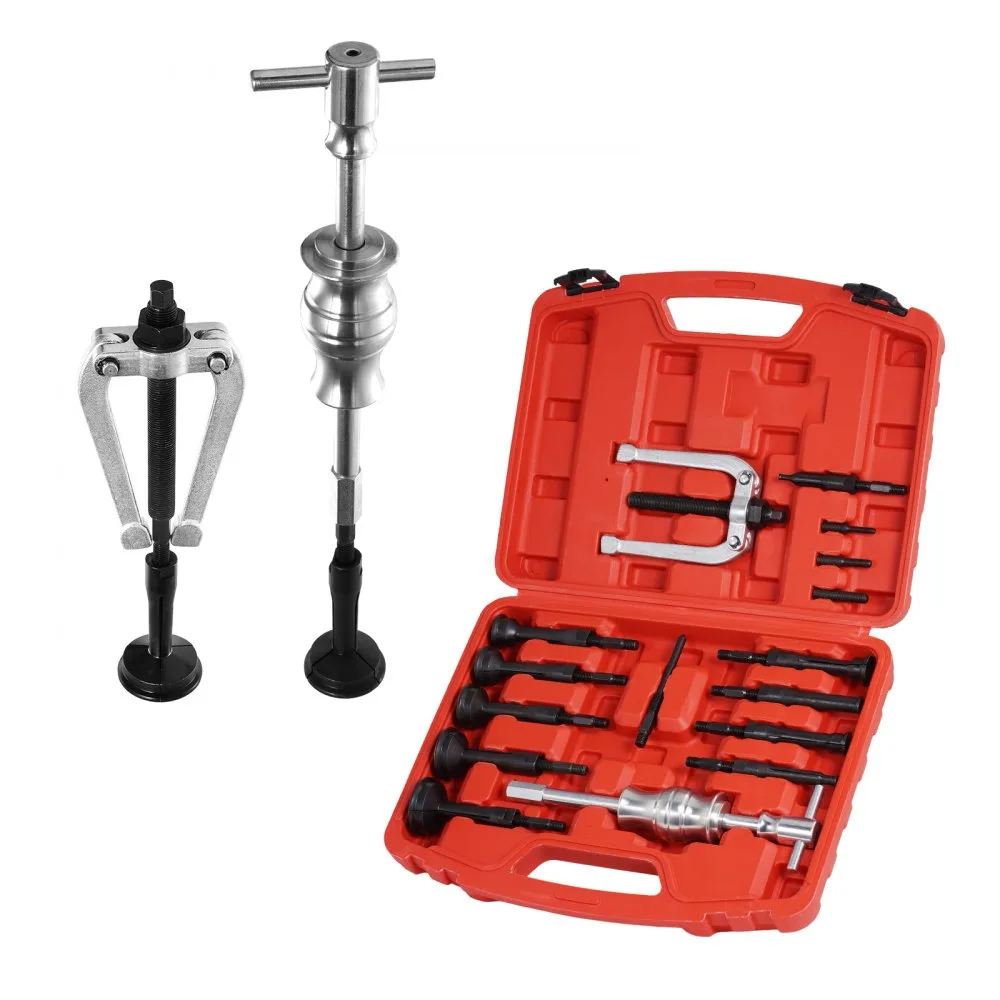
Image source: Bing (Web (fair-use with source credit))
Three main categories compete in the wheel bearing removal tool kit space. Mechanical pullers rely on threaded screws and manual force. Hydraulic pullers use pump pressure to generate steady, controllable pulling power.
Slide hammer kits combine impact force with a weighted hammer that slides along a rod.
Mechanical pullers work well for lightly seized bearings and are the most common type in consumer kits. They require patience and steady torque. Hydraulic options handle severely corroded bearings with less physical effort but come at a higher price point.
Slide hammers deliver impact force that can break loose frozen bearings but risk damaging the hub if used aggressively.
Per ASE certification training materials, mechanical pullers remain the recommended first approach for routine wheel bearing service. Impact methods should be reserved for bearings that resist standard pulling force. Using the wrong method for the job increases the chance of hub damage.
| Type | Best For | Force Level | Price Range |
|---|---|---|---|
| Mechanical puller | Light to moderate seizure | 5 to 10 tons manual | $40 to $120 |
| Hydraulic puller | Severe seizure, heavy duty | 10 to 30 tons pumped | $150 to $400 |
| Slide hammer | Frozen bearings, emergency | Impact dependent | $50 to $180 |
Most DIYers will find a quality mechanical kit sufficient. Bearing puller reach and spread specifications matter more than tonnage ratings in everyday use. Choose based on the vehicles you actually work on.
Which Kit Fits Your Vehicle and Experience Level
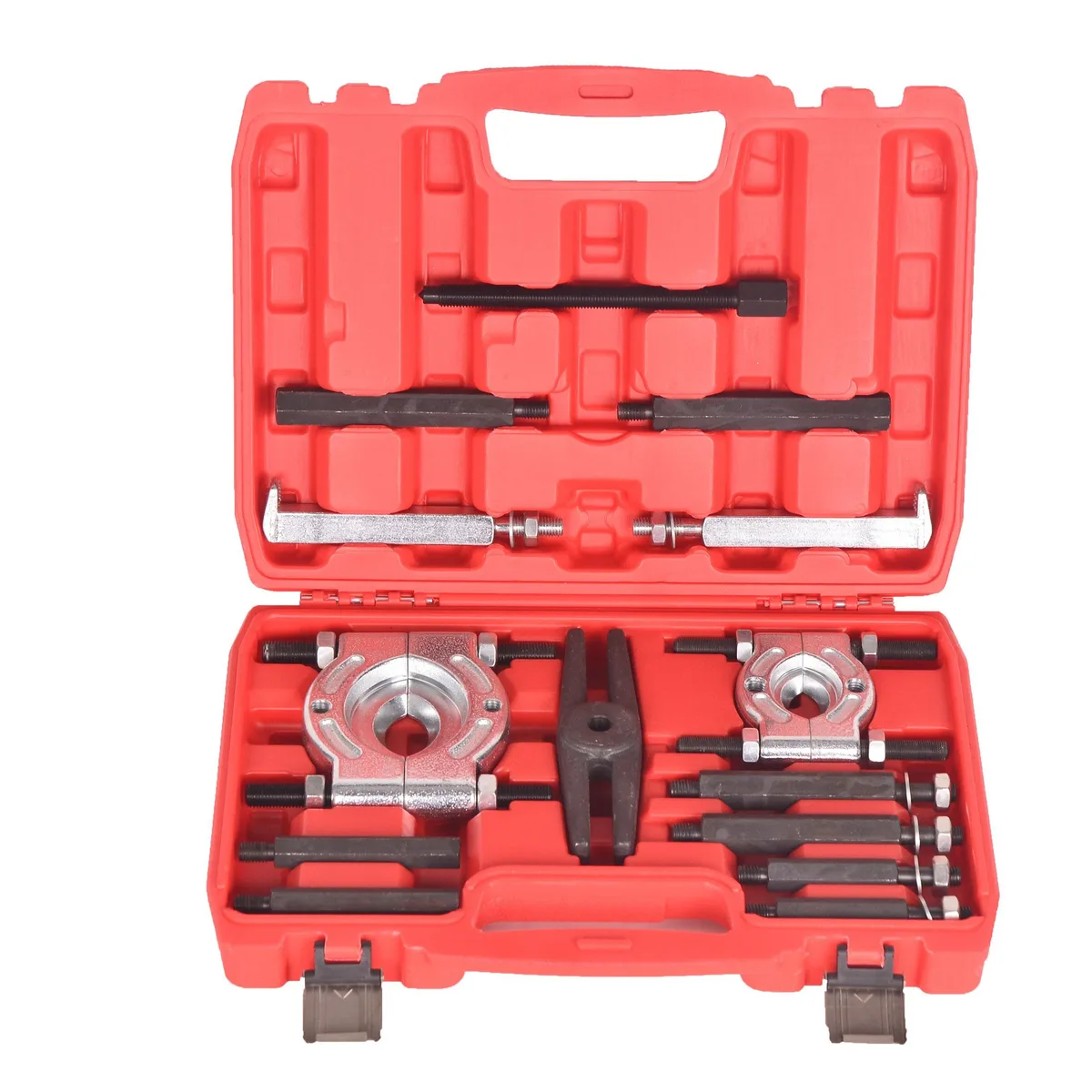
Image source: Web (Bing) / schiller-2019.en.made-in-china.com (Web image (fair-use with source credit))
Not every wheel bearing removal tool kit suits every situation. A basic student kit might handle a Honda Civic rear bearing but fail on a Ford F-150 hub assembly. Matching your kit to your actual garage needs prevents buyer frustration and wasted money.
Consider these guidelines when selecting a kit:
- Novice DIYers should choose kits with visual instructions and a broad adapter range. Look for options like the bearing splitter and puller set bundles that include installation guides.
- Regular weekend mechanics benefit from kits that include both metric and SAE threading. This covers the mix of domestic and imported vehicles in a typical driveway.
- Professional technicians may prefer modular components that integrate with existing internal and blind bearing pullers.
Vehicle-specific knowledge matters enormously. Wheel bearing hub removal procedures differ between unibody cars and frame-mounted trucks. A slide hammer bearing puller works better for some European hub designs than a standard mechanical kit.
Check whether your vehicle uses a sealed hub assembly or a replaceable bearing. Many modern cars require full assembly replacement, which changes the tooling approach entirely. For those applications, a blind bearing puller may be unnecessary.
The Mistakes That Strip Hubs and Snap Jaws
Even experienced DIYers make predictable errors when removing wheel bearings. These mistakes cause more damage than the seized bearing itself. Learning them upfront prevents costly repair bills.
Cross-threading the pusher screw is the most common error. Applying force at an angle strips the hub threads in seconds. Always start the screw by hand and verify it runs straight before applying torque.
If resistance increases abruptly, back off and realign.
Jaw placement matters as much as jaw strength. Poorly positioned puller jaws contact the bearing outer race instead of the hub surface. This concentrates force on a thin metal ring that cracks under pressure.
Proper technique positions jaws against solid material behind the bearing.
Other frequent mistakes include:
- Overtightening the central screw past the point of bearing movement, which bends puller arms
- Using a socket or wedge as an improvised adapter, creating uneven force distribution
- Hammering the puller screw directly, which work-hardens the steel and causes snapping
- Skipping the adapter sleeve, which scores or mars the hub bore during extraction
- Forcing a bearing separator to act as a puller, creating dangerous binding situations
Wheel bearing puller size charts help avoid mismatches between tool capacity and bearing diameter. A jaw spread that’s too narrow concentrates stress on small contact points. A spread that’s too wide loses mechanical advantage entirely.
Release tension slowly after the bearing moves free. Sudden release under high load can launch components dangerously. Per OSHA vehicle service guidelines, always maintain control of pulling force until the bearing clears the hub completely.
If a bearing won’t budge after three attempts, reconsider the approach rather than applying more force. Heat application or penetrating oil followed by a how to remove a wheel bearing with a puller technique change often succeeds where brute force fails.
What Wheel Bearing Removal Tool Kits Actually Cost
Wheel bearing removal tool kit prices vary widely based on component count, material quality, and brand reputation. Budget options run from $30 to $60 but often skip critical adapters and use softer steel. Mid-range kits priced between $80 and $150 typically include hardened jaws, a full sleeve set, and carrying cases that survive garage conditions.
Premium kits from brands like Sunex or Mac Tools range from $150 to $350. These professional-grade sets feature chrome-vanadium construction, precise threading, and comprehensive accessory packs. Per aggregate user reviews, premium kits maintain structural integrity across dozens of bearing removal jobs without jaw deformation.
| Price Tier | Component Count | Jaw Material | Best For |
|---|---|---|---|
| Budget ($30–$60) | 10–15 pieces | Mild steel | Occasional one-off jobs |
| Mid-range ($80–$150) | 20–30 pieces | Chrome-vanadium | Regular DIY enthusiasts |
| Premium ($150–$350+) | 30–40 pieces | Hardened alloy steel | Professional mechanics |
Consider whether the kit handles how to measure for a bearing puller correctly. A $100 kit with the right adapter range outperforms a $40 kit missing essential sleeves. Per OSHA vehicle service standards, tool durability directly impacts shop safety records.
External link considerations apply here too. Choosing a bearing puller involves matching tonnage ratings to your typical bearing resistance. Most passenger car bearings require 3 to 5 tons of pull force.
Light truck bearings may need 8 to 10 tons.
FAQs: Wheel Bearing Removal Tool Kit Questions
Do I need a special tool to remove wheel bearings?
Yes, a proper bearing puller or removal kit is essential for clean extraction. Hammer-and-chisel methods damage hub bores and create replacement costs that far exceed tool investment. A wheel bearing puller applies even force around the bearing circumference without marring mating surfaces.
Can I reuse a wheel bearing removal tool kit on different vehicles?
Absolutely, provided the kit includes interchangeable adapters and sleeves. A quality set with multiple jaw configurations handles everything from compact car rear bearings to full-size truck hub assemblies. Verify that thread sizes match your most common vehicles before purchasing.
How long does a wheel bearing removal tool kit last?
Quality kits with hardened steel components last decades with proper storage. Cheap cast-iron tools crack after repeated heavy loading. Keep puller screws and jaws lightly oiled after each use to prevent corrosion from road salt exposure.
Is a bearing splitter better than a puller for wheel bearings?
It depends on the bearing type and installation location. A bearing splitter works well when you need to separate a bearing race from a hub without removing the entire assembly. Pullers extract bearings completely.
Many mechanics keep both tools for different scenarios.
What’s the difference between external and internal bearing pullers?
External pullers grip the outside diameter of a bearing, while internal pullers expand against the inner race. Most wheel bearing applications use external pullers. Some blind hole bearing pullers handle enclosed hub designs where standard external jaws can’t reach.
Do I need a hydraulic puller for seized bearings?
Not always. Penetrating oil and controlled heat application often free stubborn bearings before hydraulic force becomes necessary. Hydraulic pullers excel when mechanical advantage maxes out without movement.
They’re overkill for routine replacement intervals.
Can a wheel bearing removal tool kit damage my vehicle?
Only if you misuse it. Cross-threading, improper jaw placement, and overtightening cause the most damage. Follow a step-by-step guide to removing bearings carefully.
Apply steady, centered force and stop if resistance spikes unexpectedly.
Our Top Picks for Different Jobs
Selecting the right kit depends on your actual workload. Here are recommendations based on common user profiles and verified specifications.
Best for Occasional DIYers: Mid-Range Mechanical Kit ($80, $120)


Look for kits with at least 20 pieces, hardened chrome-vanadium jaws, and five adapter sleeve sizes. Brands like Gearvita and General Hardware deliver solid performance per verified buyer feedback. These kits handle most passenger car and light truck bearings up to 4 inches in diameter.
Best for Serious Home Mechanics: Full-Range Kit ($130, $200)


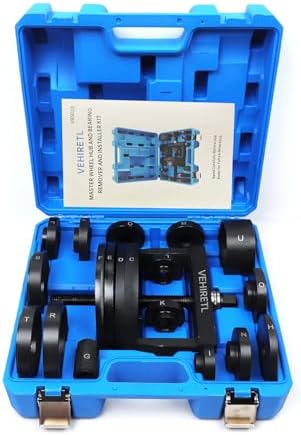
A comprehensive set with both metric and SAE threading covers domestic and import vehicles. Include external versus internal bearing puller options if you work on vintage or European cars with unusual hub designs. Check whether the kit includes blind bearing puller for automotive applications.
Best for Professional Use: Heavy-Duty Hydraulic Option ($200, $350)


Professional shops benefit from hydraulic systems that deliver consistent force without operator fatigue. These units handle severely corroded bearings and heavy-duty truck applications. Pair with a bearing separator for car wheel service for complete hub assembly overhaul capability.
Budget Alternative: Entry-Level Kit ($30, $60)


Acceptable for one-time repairs on older vehicles with minimal seizure. Avoid on modern cars with integrated hub assemblies where precision matters. A best bearing splitter and puller set at this price point often includes enough adapters for basic jobs.
Match your kit choice to actual vehicle types and failure severity rather than worst-case scenarios. Most homeowners never encounter bearings requiring more than 5 tons of pull force. A bearing puller size chart helps verify fitment before purchase.
[…] vehicles where the pilot bore is difficult to access, consider tools designed for wheel bearing removal applications. The principles are similar. Controlled, even force beats brute impact every […]