External vs Internal Bearing Puller: Which One Saves Time?
Picking the wrong style of bearing puller is one of the fastest ways to strip a shaft, mangle a raceway, or snap a mounting stud in half. The core question behind external vs internal bearing puller isn't really about which tool is better. It's about which side of the bearing is the safe place to grab.
Pullers come in dozens of sizes and mounting styles. As of 2026, three-jaw pullers rated from 1 ton up to 100 tons are standard across every shop bench, and manufacturer specs from SKF, NSK, and Timken all agree on the one rule that separates these two families. Get the anchor point right and the job takes two minutes.
Get it wrong and the repair gets worse than the bearing that brought you in.
Quick Answer
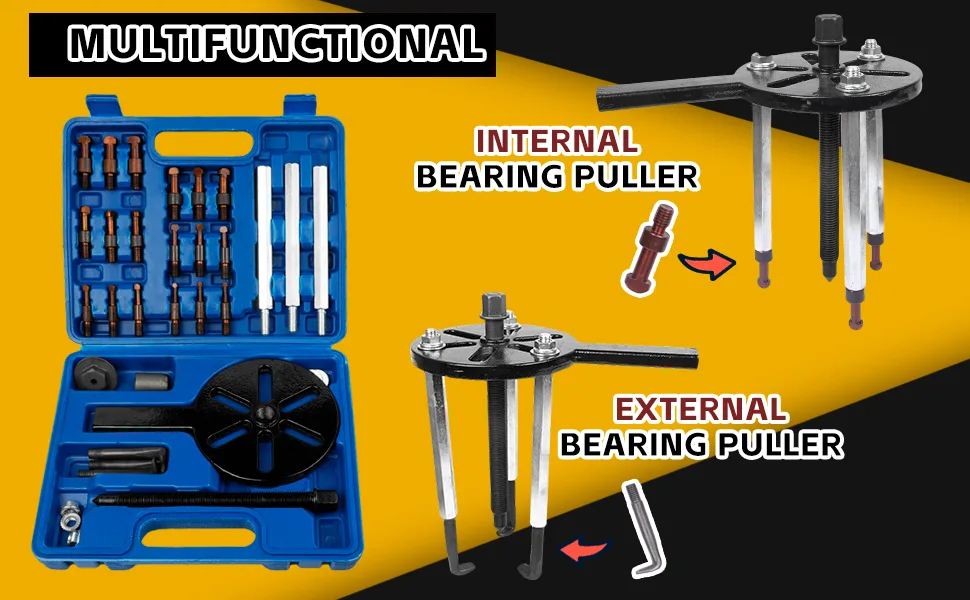
External pullers mount to studs or threads on the housing and pull the bearing outward. Internal pullers grip the bearing's outer race and pull it off the shaft. The choice depends on which side you can anchor to without damage.
Use an external puller when the bearing is seated in a housing. Use an internal puller when the bearing is press-fit on a shaft. Either tool applies force to the inner or outer race only.
Never the shaft.
Image source: Bing (fair-use with source credit)
Why the Choice Between Internal and External Matters More Than You Think
These two families look almost identical on a shelf. Same two-jaw or three-jaw head. Same chromed ram and long handles.
Same price tag on a mid-range model. But the direction of pull is flipped, and that flip decides whether the puller saves your part or destroys it.
Think about it like this. An external puller pushes the bearing outward against the housing anchor. An internal puller pulls the bearing inward against the shaft.
Same action, opposite side of the bearing. Swap the two, and you're loading the wrong part.
The physics are simple. Bearings remove cleanly only when force is applied to the race that is press-fit, not the race that's loose. Push force through the wrong race and you'll mar the raceway, deform the shaft, or crack the housing.
A cheap puller failure costs you parts. A $20 puller is not the problem if you mount it on the wrong side.
For context on the wider tool family, the difference between external and internal is one of the biggest splits in any full set of bearing tools. Everything else about a puller, handles, jaw count, tonnage, sits on top of that anchor decision.
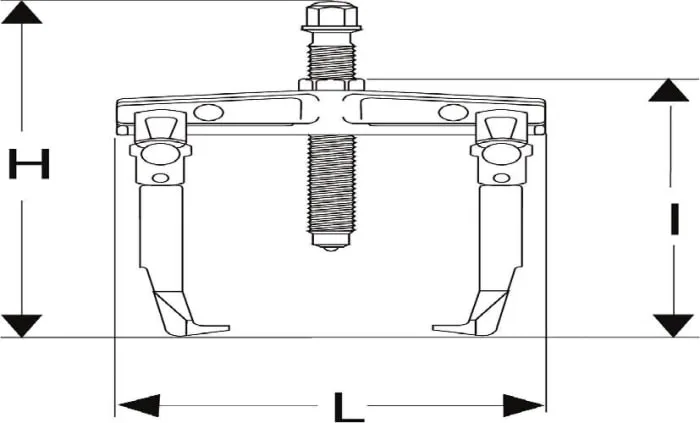
Image source: Bing (fair-use with source credit)
How Internal and External Pullers Actually Work
The mechanical difference comes down to one question. What's the puller pushing against?
An internal puller mounts to the shaft end. Its jaws spread open and grip the outer race of the bearing. The ram pushes the jaw arms, which in turn pull the outer race, dragging the whole bearing off the shaft in one clean stroke.
Force travels through the jaws, into the outer race, and out through the shaft.
An external puller mounts to studs or threaded holes on the housing face. Its jaws reach in and grip the inner race of the bearing. The ram pushes against the housing, which in turn pulls the inner race outward and lifts the whole bearing out of the seat.
Force travels from the ram, through the studs, into the housing, and out through the inner race.
In both cases, the force is applied to exactly one race. That's the whole point. Applying force to the shaft, or to the loose race, is what causes damage.
| Element | Internal Puller | External Puller |
|---|---|---|
| Mounts to | Shaft end | Housing studs or threads |
| Grips | Outer race | Inner race |
| Pull direction | Bearing toward shaft | Bearing away from housing |
| Typical use | Bearings on rotating shafts | Bearings in housings or seats |
| Clearest signal | Bearing press-fit on shaft | Bearing press-fit in housing |
Side-by-Side: Key Differences in Design and Application
Once you understand the force path, the design differences follow naturally.
- Mounting style. External pullers use stud-mount, hook-mount, or frame-mount bases. Internal pullers mostly use stud or shaft-mounted rams.
- Capacity per dollar. Internal pullers hold up to higher forces at the same jaw size because the jaws slide on rods and transfer load more efficiently.
- Bore clearance. Internal pullers need enough shaft end clearance for the jaws to spread open around the bearing OD.
- Stud load handling. External pullers put real stress on short mounting studs. Long weld-in studs survive better than stock M6 studs.
- Coverage. You can't turn one style into the other. If you need both jobs on the same bench, you need both tools.
Most puller manufacturers publish selection charts keyed to these variables. You can see the same logic laid out more thoroughly in a puller tool selection reference, or by matching capacity and jaw style in the right size by application.
That last point matters. An external puller will not work as an internal one. You're not buying flexibility.
You're buying a specific force path.
Which One Fits Your Situation: Use Case Breakdown
The answer shifts every time the bearing sits differently. Here's how the logic usually plays out.
- Car wheel hubs and drive hubs. The bearing is press-fit into the knuckle or hub face. Studs are machined into the face. Use a stud-mount external puller. The internal option usually can't reach in.
- Pillow blocks and bearing seats. Bearing is in a housing with no studs, just flat bosses. Use a hook-mount or frame-mount external puller anchored on the housing.
- Fan shafts, pump shafts, conveyor rollers. Bearings are press-fit on a shaft with the housing closed on the far side. Use an internal puller mounted at the shaft end, jaws inside the housing.
- Sealed and shielded industrial bearings. Housing-side access is often blocked by flanges. Internal pullers win because they don't need to reach around the seal.
- Mixed shop workload. If you service both housings and shafts regularly, own one of each. They're complementary, not substitutes.
Field technicians, industrial maintenance crews, and DIYers doing engine or gearbox teardowns tend to run both types side by side. On the automotive side specifically, external pullers show up constantly in the right tools for car repair, while shop-floor shops lean harder on internal pullers for machine work.
Image source: Bing (fair-use with source credit)
Common Mistakes and How to Avoid Damaging Your Parts
Most puller damage isn't a tool problem. It's a setup problem. Here are the five that show up in almost every failed pull job.
Gripping the wrong race. With an internal puller, jaws land on the outer race. If you accidentally grip the shaft, the jaws cut a groove in the shaft and the bearing gets thrown out the back. With an external puller, jaws land on the inner race.
If they slip onto the outer race, you're pulling the housing seat apart instead of the bearing.
Short studs that strip. External pullers load the studs in tension. An M6 stud pulled beyond roughly 0.5 ton can strip or shear. Weld in a longer stud where possible, or use a hook-mount variant.
Off-center loading. Three-jaw pullers self-center better than two-jaw, but you still have to dial them in before applying load. Skewed pull force shears studs, bends handles, and can crack housings.
Overtorquing the pivot bar. The ram screws down to a specific pitch. Push past rated tonnage and the puller body distorts. SKF and other manufacturers' bearing documentation recommends using a puller rated well above the load you need, not one matched to it exactly.
See bearing raceway damage for guidance from the manufacturer.
Using a cheap, worn puller on a heavy job. Cheap two-jaw models under 2 tons are fine for lightweight bearings. Push them into a seized 4-ton job and the arms will bend.
The fix for all of these is the same. Choose the right side, use three jaws, stay under rated tonnage, and keep the pull centered.
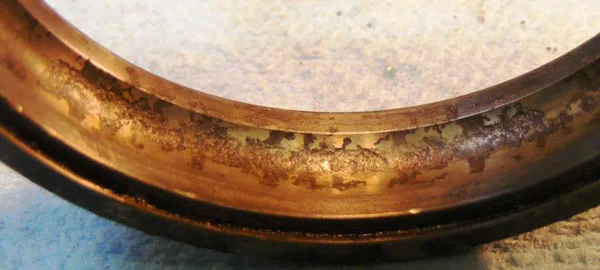
Image source: Bing (fair-use with source credit)
Cost, Capacity, and Practical Buying Considerations
You don't need a $500 puller to do most jobs. You do need the right tonnage for the right part.
Most shops get by with a 2 to 3 ton three-jaw puller. That covers small engines, motorcycles, and most automotive bearings. Industrial maintenance shops often run a 10 to 20 ton hydraulic unit.
That's for gearboxes, spindles, and conveyor rollers.
| Tier | Typical capacity | Price range | Best for |
|---|---|---|---|
| Entry DIY | 0.5 to 2 tons | $20 to $60 | Household, small engines |
| Home shop | 2 to 5 tons | $70 to $200 | Cars, trucks, light industrial |
| Pro shop | 5 to 15 tons | $250 to $600 | Auto shops, field service |
| Industrial | 15 to 100 tons | $800 and up | MRO, machine shops |
Material matters more than brand. Chrome-vanadium alloy holds up better under repeated loads than low-grade carbon steel.
If you're pulling the same seized bearings every month, spend the extra for forged steel. The handles and jaws won't bend the third time around.
Jaw count is worth the premium. Two-jaw models work when the part only allows one access angle. Three-jaw models self-center, spread the load more evenly, and hold rated capacity longer.
If you can only afford one upgrade, go three-jaw.
The full tonnage and jaw style spectrum lives in a bearing puller types breakdown. Auto-focused workloads have their own specs in an automotive puller guide. Both point to the same rule: size for the heaviest part you'll realistically pull.
Two modest pullers beat one expensive one in most workshops. A $100 internal and a $100 external covers almost every job a home mechanic throws at them. A single $300 unit leaves half your jobs stranded.
Quick FAQ and Final Verdict
Which is stronger, internal or external?
Internal pullers hold more tonnage at the same jaw size. The jaws slide on rods and transfer load more efficiently than external hooks do. That's why most industrial MRO shops reach for internal units on heavy jobs.
External pullers still handle typical 2 to 5 ton work easily.
Can I convert an external puller into an internal one?
No. The force path is opposite. External pullers push against housing studs to pull the inner race.
Internal pullers push against the shaft to pull the outer race. Swapping them doesn't work, and forcing one into the other role bends the handles or snaps the jaws.
How many jaws do I need?
Three jaws for anything important. Two jaws work on light jobs and when the part only allows one access angle. Three jaws self-center, spread the load more evenly, and hold rated capacity longer.
If you can only afford one upgrade, go three-jaw.
What capacity should a home shop get?
Most home shops are fine with 2 to 3 tons. That covers cars, motorcycles, and small engines. It handles most consumer appliance bearings too.
Move to 5 tons for truck work and equipment service. Stay below 2 tons only for very small or light work.
Can a puller damage a bearing I want to reuse?
Yes, if you mount it wrong or apply too much force. Always pull from the press-fit race. Stay under rated tonnage.
Center the jaws before loading. Per OSHA hand tool guidance, any tool under rated load should be inspected for damage before use. A properly pulled bearing often survives for a second install.
So which one should I actually buy?
If you only own one puller, buy external for automotive hubs and housings. Buy internal for rotating shafts. Buy one of each for a shop that does both.
The right tool for the right side of the bearing is the whole game. Pick your workload, match the anchor point, and stop second-guessing. A puller decision walkthrough can help if the answer still feels fuzzy.