Choosing a Bearing Puller: How to Find the Right Fit
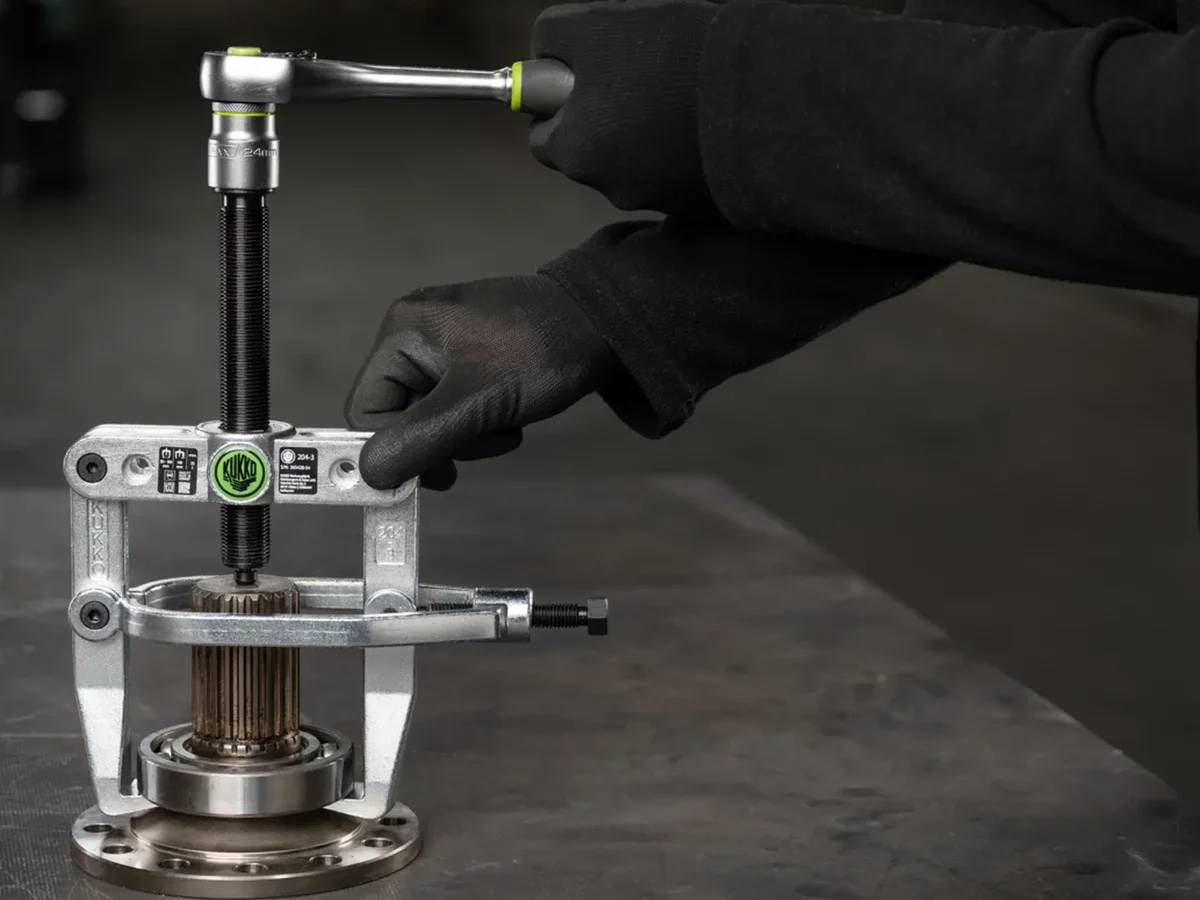
Picking the right bearing puller isn't just about grabbing a tool from the shelf. It's a three-way match between the bearing type, your access space, and the force required. Skip that calculation and you risk cracking a shaft or mushrooming a raceway.
As of 2026, the technology is mature, but the logic remains grounded in basic physics and OSHA machinery safety guidelines. Getting the basics right prevents most tool failures and safety incidents. Let's walk through the questions that actually decide which puller works for your specific job.
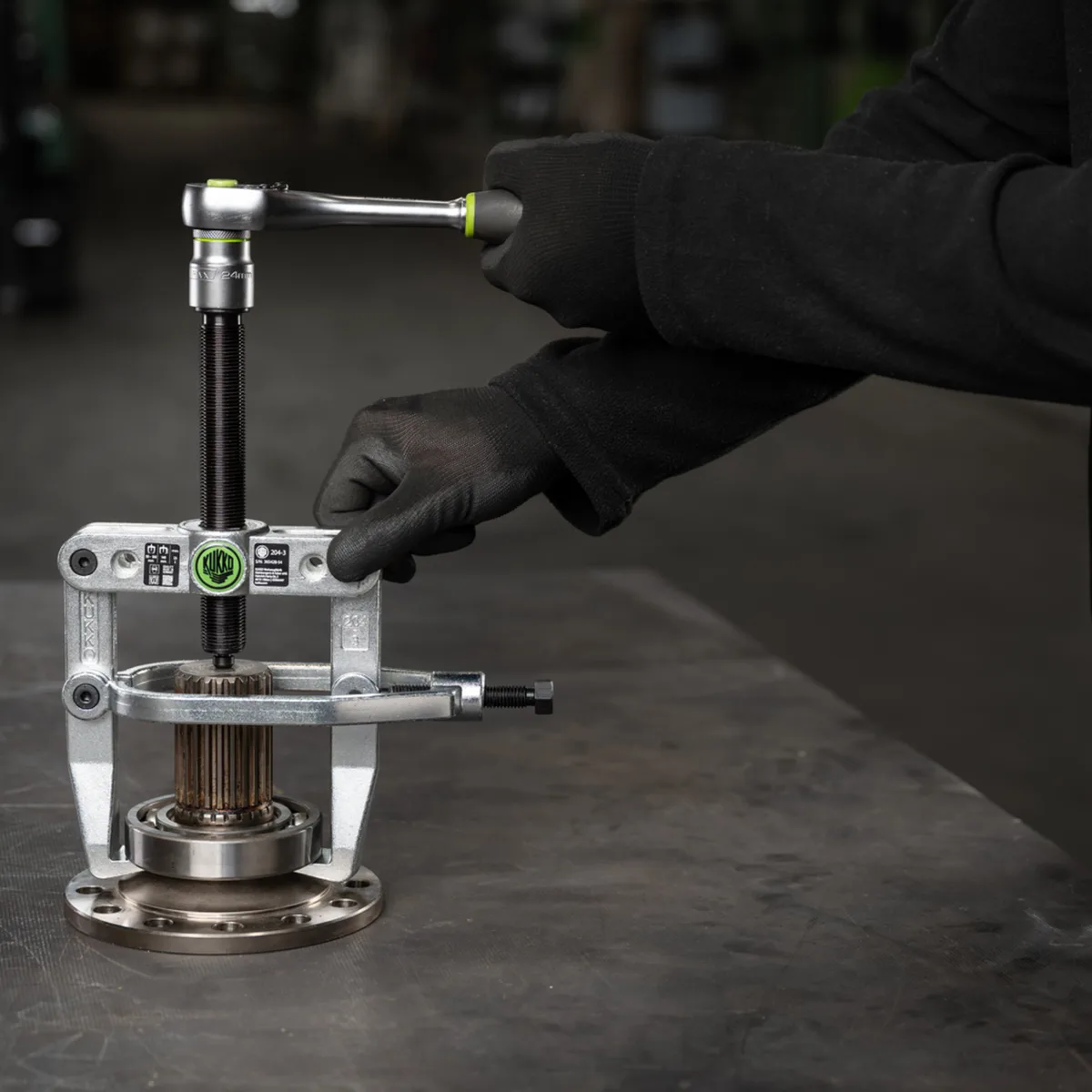
Image source: Bing (Web (fair-use with source credit))
Quick Answer
Pick a bearing puller by answering five questions: where the bearing sits, which race contacts the force, how much clearance you have, how much force you need, and how often you'll pull. Match jaw count to the race type. Match the frame to your access.
Match power to force. When in doubt, start with a C-frame 3-jaw and step up only when conditions demand it.
Start Here: The 5 Questions That Determine Which Puller You Need
Every decision branches off one of five questions. Answer them in this order and the right puller basically picks itself.
Question 1: Where does the bearing sit? If it's at the shaft's end, a C-frame works. If it's sandwiched between gear shoulders, you need more clearance or a different frame. See our broad overview of bearing puller categories to understand the options.
Question 2: Which race do you pull on? The inner race, outer race, or tapered raceway? Each one calls for different jaw geometry.
Question 3: How much access do you have? Measure the space between the jaw heads and the nearest housing wall. That number eliminates half the options on the shelf.
Question 4: What force do you need? A loose bearing wants 500 pounds of pull. A seized 1-inch interference fit wants 5,000. We detail the math later in this guide.
Question 5: How often will you pull? Once a month? Use a manual puller. Multiple times a day?
Go hydraulic.
This sequence works because each question narrows the choice. Once location and race type are set, the frame and power source follow naturally. Skipping a question creates ambiguity, and ambiguity is where tools get misapplied.
Know Your Bearing: Identifying Inner, Outer, and Tapered Races
The puller type is dictated by which raceway the jaws clamp onto. Get this wrong and you'll force the puller against the shaft instead of the bearing, damaging both parts.
- Inner-race bearings have the bore pressed onto the shaft. You pull the spindle down against the inner race, and the jaws hook under the shaft's shoulder. This is the most common configuration in electric motors, gearboxes, and pump shafts.
- Outer-race bearings have the outer ring pressed into the housing. You can't pull these off by the shaft. You clamp the jaws under the outer race lip and pull the housing out, or heat the housing to let the bearing drop free.
- Tapered bearings like wheel hubs grip the tapered raceway. Standard cylindrical jaws can't engage these. You need a specialized tapered-bore puller with shaped heads.
- Set-screw bearings rely on the set screw for position, not interference. A gentle pull with a small 2-jaw is usually enough. Don't over-torque.
When in doubt, assume the inner race is what the puller contacts. That's the most common case and the safest starting point.
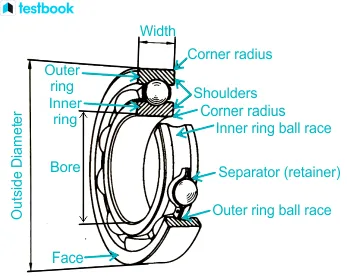
Image source: Bing (Web (fair-use with source credit))
Match the Puller Type to Your Access Constraints
Access is where most puller selections go wrong. You pick a tool that looks correct, mount it, and find the jaws won't reach. Here is the access decision tree.
- Exposed bearing, short shaft. Plenty of room around the jaws. A standard 3-jaw or 4-jaw C-frame works.
- Bearing wedged between two gear shoulders. Barely enough clearance. Look at a low-profile C-frame with small open height, or a 3-jaw puller that reaches from the sides.
- No clearance at all. The bearing face is completely enclosed. You either split the puller frame in half to install it from an angle, or switch tools entirely.
Measure the space before you pick the tool. If you can't fit a finger between the jaw heads and the housing wall, you need a frame with open height under 2 inches. If you can fit a knuckle, you have room for a standard C-frame up to 4 inches open.
For stubborn interference fits, warming the outer race with a propane torch to around 400°F (200°C) before pulling cuts required force by roughly 40 percent. The raceway expands, the bearing loosens, and you're done in seconds. Just don't torch the shaft itself.
The heat will distort the press fit and ruin both surfaces for future use.
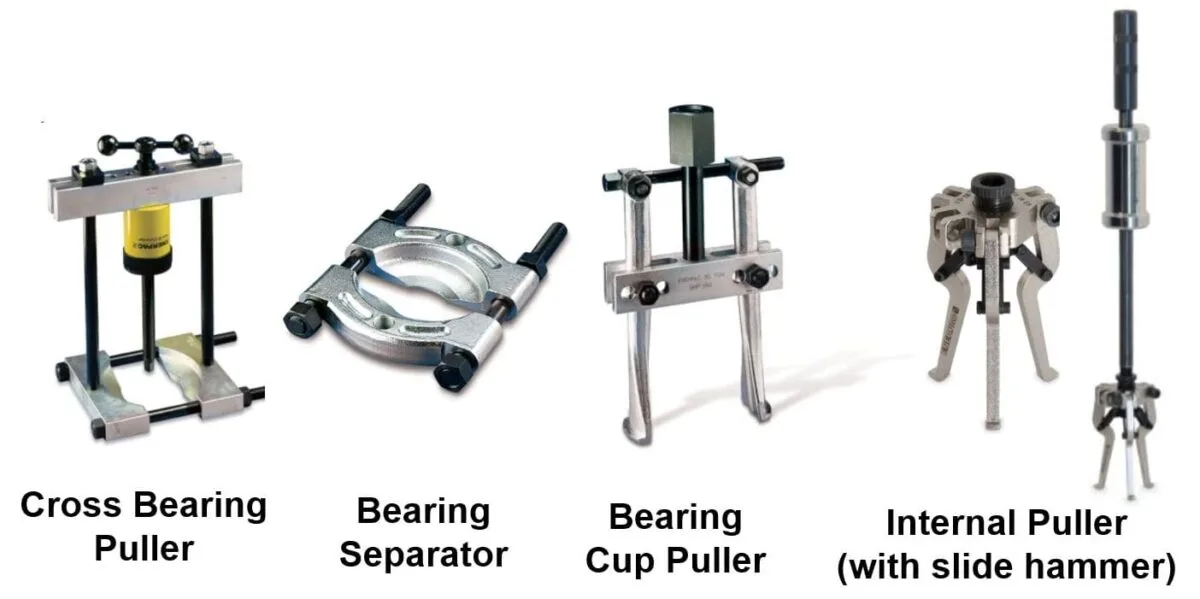
Image source: Bing (Web (fair-use with source credit))
The Size & Pressure Math: Calculating Force Requirements
Force calculation matters more than most people realize, especially on industrial shafts where damage means a $5,000 repair. You estimate pull force by multiplying race diameter, interference fit pressure, and effective contact area.
Here are the typical pressure ranges by fit type:
| Fit Type | Pressure |
|---|---|
| Light press fit | 4 to 6 MPa |
| Standard interference fit | 6 to 10 MPa |
| Heavy interference fit | 10 to 15 MPa |
| Seized bearing (rust fused) | 20+ MPa |
As a rough rule of thumb, a 1-inch bearing with a standard fit requires around 3,000 pounds of pull. A 2-inch bearing with a heavy fit wants closer to 12,000 pounds. Multiply the bearing diameter in inches by 3,000 to estimate the force requirement for a standard interference fit.
For a hydraulic puller, working pressure should be at least 7,000 PSI (483 bar) to deliver these forces with reasonable stroke length. A 5-ton hydraulic puller handles bearings up to about 2 inches at standard fit. A 10-ton unit covers bearings up to 3 inches at heavy fit.
Anything bigger calls for a large hydraulic extraction unit with dedicated power packs.
Never pull harder than the tool is rated for, and never pull harder than the shaft material can take. Mild steel shafts yield around 30,000 PSI. Exceed the pull force and you'll neck or crack the shaft before you free the bearing.
Our general tool guide walks through the sizing logic for various extraction tasks.
Hydraulic vs. Mechanical: Choosing Your Power Source
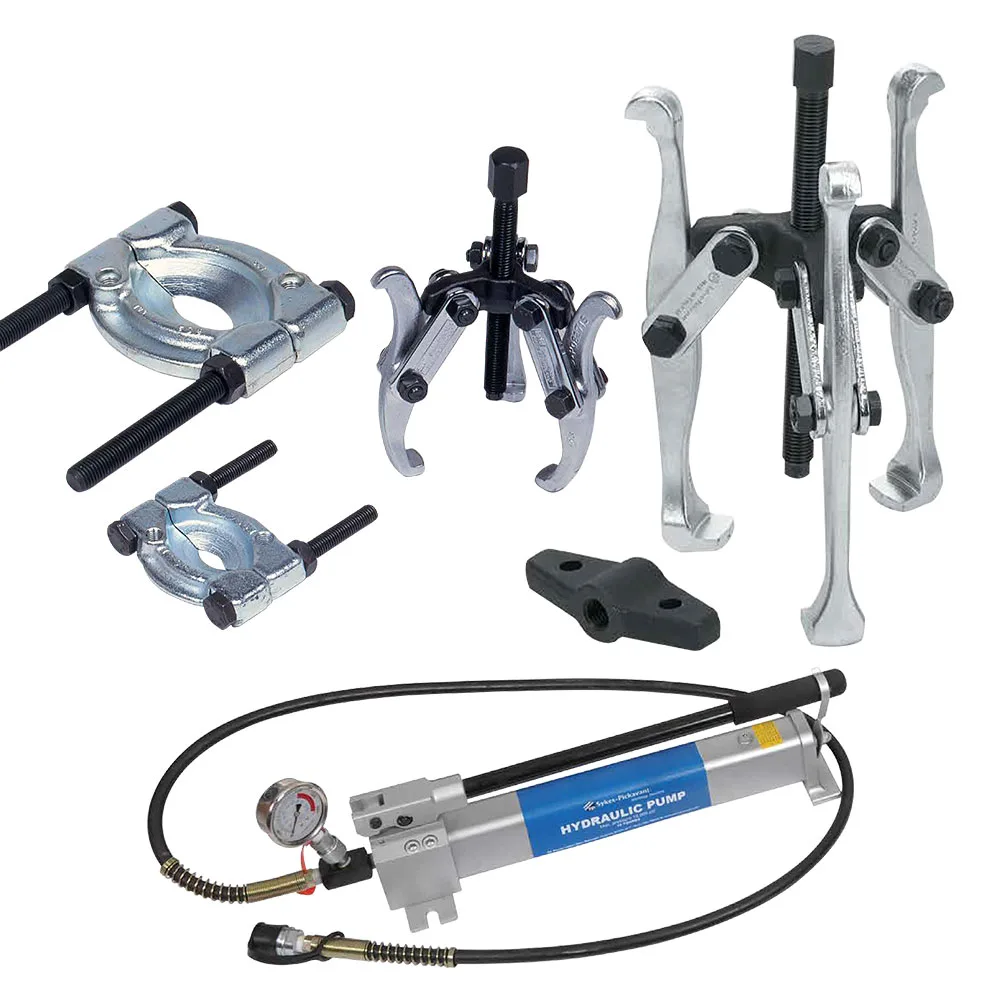
Image source: Bing (Web (fair-use with source credit))
Two power options dominate the puller world, and the choice depends on frequency, force, and precision.
Mechanical pullers use a threaded spindle you crank with a lever. They're cheap, portable, and deliver force through the thread pitch of the spindle. Standard mechanical pullers reach 3,000 to 5,000 PSI equivalent force.
They work fine for occasional use, light shafts, and situations where you don't need to move fast. The trade-off is time. A seized bearing can take 15 minutes of cranking on a manual puller.
Hydraulic pullers use compressed air or a hydraulic pump to drive the spindle. Manufacturer specs indicate hydraulic pullers reach 7,000 PSI (483 bar) working pressure, with tonnage ranging from 1 ton up to 50 tons. They free most bearings in under 30 seconds with a foot pedal.
The trade-off is setup complexity and weight. A typical 5-ton hydraulic puller runs 25 to 40 pounds, and you need a clean air line or a pump.
Here is the decision rule. If you pull more than five bearings a day in an industrial setting, go hydraulic. It saves hours of manual labor per week, and the tool pays for itself in a few months.
If you pull once a month in a shop or for essential car repair tasks, mechanical is fine and keeps your shop clutter light.
On precision shafts, hydraulic is safer. The force is applied evenly across the entire jaw face, so you don't get the localized stress that a mechanical puller can introduce when the spindle thread is slightly off-center. Manual pullers introduce more torque through the spindle, which on tight bearings can warp the shaft before the bearing drops.
For shops where storage is tight, keep hydraulic equipment limited to one or two high-tonnage units and rely on mechanical for everything else. It's the setup most professional mechanics have settled on, and it balances speed, cost, and portability better than either extreme.
5 Mistakes That Crack Shafts and Break Tools
Most puller failures aren't tool failures. They're application mistakes, and they cluster in a handful of recurring patterns.
Wrong surface contact. Jaw heads press into the inner race bore, not onto the outer race or shaft surface. Contact the wrong surface and the puller drives the bearing deeper instead of freeing it.
Off-center pull. If the spindle isn't aligned with the shaft centerline, the force pulls at an angle. That cracks or necks the shaft before the bearing even moves.
Pushing through. When the puller stalls, don't force it. Back it off and switch to a heavier puller. Pushing past stall warps the shaft and can over-torque the jaws.
Ignoring pressure limits. Hydraulic pullers have safety valves that vent at the rated pressure, typically around 7,500 PSI. Never exceed the rated tonnage printed on the frame. Manufacturers specify this for shaft integrity, not just tool durability.
Skipping lockout-tagout. On powered equipment, OSHA's LOTO standard is not optional. Confirm the machine is fully de-energized and locked before mounting the puller.
Pullers aren't the problem when shafts crack. The setup is.
Quick Decision Guide: Pick Your Puller in 60 Seconds
Use this table if you want a fast pick. Read down the left column, take the right answer.
| Situation | Recommended Puller |
|---|---|
| Small bearings under 1-inch, standard fit, occasional use | 2- to 5-ton mechanical 2-jaw |
| 1 to 3-inch bearings, multiple pulls a day | 5-ton hydraulic C-frame 3-jaw |
| Bearings between gear shoulders | C-frame 3-jaw with swivel heads |
| No access clearance under 2 inches | Low-profile C-frame or split-frame design |
| Tapered wheel hub bearings | Specialized tapered-bore puller |
| 3 to 5-inch bearings, industrial use | 10 to 20-ton hydraulic |
| Seized bearing with no clear fit data | 20+ ton hydraulic. Warm the housing first. |
For most shop work, a 5-ton hydraulic C-frame 3-jaw does the job. Keep a lighter 2-ton mechanical around as a backup. Save the heavier 20-ton hydraulic for large gearboxes and pumps.
Our automotive puller buyer's guide covers the shop setup in more depth.
Frequently Asked Questions
How many jaws should I pick, 2, 3, or 4?
3-jaw is the safest default. It applies force evenly around the circumference. 4-jaw gives more grip on tight interference fits and stubborn bearings. 2-jaw works for lighter jobs where you only need force from two points. Match jaw count to the force requirement, not to habit.
How much does a decent bearing puller cost?
Mechanical 2- and 3-jaw pullers run $30 to $150. Hydraulic 5-ton units sit around $150 to $500. Specialty hydraulic units for industrial use range from $800 to $3,000.
Cheaper than that and you'll get tool steel instead of chrome vanadium, and the frame will warp.
Can I use a C-frame puller for bearings between gear shoulders?
Only if the open height fits inside the gap between the shoulders. If it doesn't, use a low-profile C-frame, a split-frame design, or an H-frame puller. When the gap is really tight, heating the outer race and letting the bearing drop free is often the cleaner path.
When should I choose hydraulic over mechanical?
Pick hydraulic when you're pulling more than five bearings a day, when the force requirement exceeds 5,000 pounds, or when you need consistent force on precision shafts. Mechanical is fine for occasional use, small bearings, and budget builds. The frequency of use drives the choice more than anything else.
How do I calculate the pull force I need?
Start with a rough estimate. Multiply the bearing bore diameter in inches by about 3,000 pounds. That gets you a standard interference fit pull force.
Add 50 to 100 percent for heavy fits. Add another 100 percent if the bearing is seized or fused from rust. Size up, not down.