Blind Hole Bearing Puller: What You Need to Know Before You
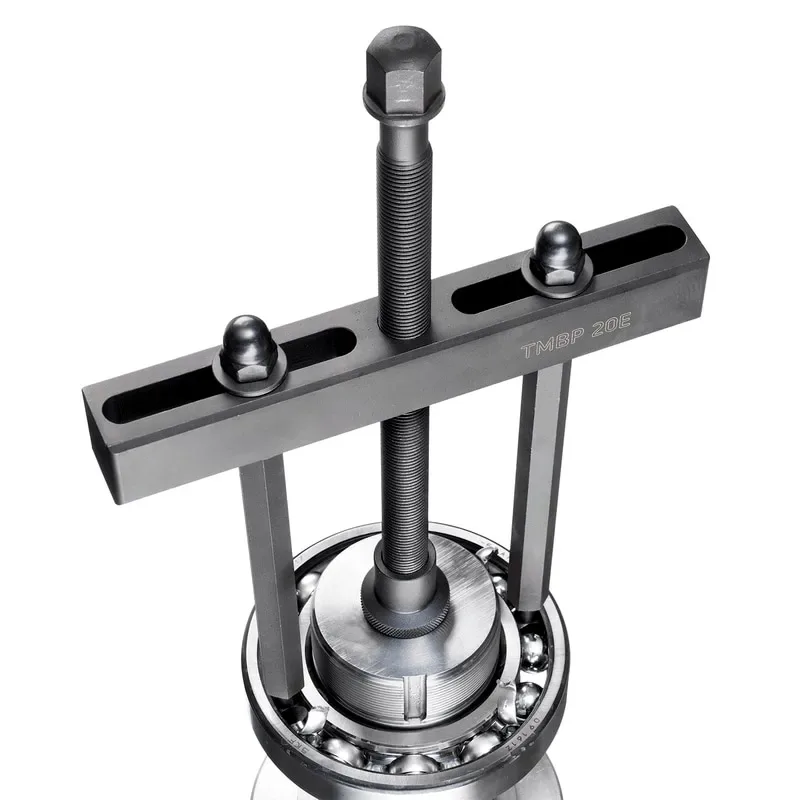
Image source: Web (Bing) / oxpowertools.com (Web image (fair-use with source credit))
That stuck bearing is not coming out with a drift and a hammer. A blind hole bearing puller is a specialized tool designed to extract bearings from non-through bores where standard external pullers cannot physically reach the outer race. The geometry of a closed-end housing forces the extraction force to come from the inside, not the outside.
This limits your options and raises the stakes for tool selection.
A generic puller might fit the jaw spread, but it might not reach the depth required for engagement. Per ANSI B108 safety standards for hand tools, improper tool geometry is a primary cause of slippage and housing damage. Understanding the specific constraints of your blind bore is the first step to a clean removal.
Quick Answer
A blind hole bearing puller extracts bearings from closed bores. It uses internal jaws to grip the outer race. Force is applied by a threaded center rod.
Jaws must reach the race depth inside the housing. No exit hole is needed for the tool.
The Blind Hole Problem: Why Standard Bearing Pullers Fail Here
Standard two-jaw and three-jaw pullers rely on an external base. The base clamps to the outside of the housing, and the jaws reach inward to grab the outer race. This works perfectly when the bearing is in a through-hole.
The tool has full access to both sides of the part.
Blind holes change the geometry entirely. The far side of the housing is sealed. You cannot anchor a base plate on the opposite side.
If you try to use a standard puller from the open end, the jaws often lack the reach to engage the race. They bind on the housing wall instead. This creates a frustrating situation where you have the right jaw size but the wrong reach.
In our research, the primary failure point is depth. Many mechanical components, like HVAC blower motors or gearboxes, seat bearings deep inside a machined wall. The bearing outer diameter might be 40mm, but the distance from the open face to the outer race is 60mm.
A standard puller jaw arm is too short to bridge that gap without hitting the housing.
- External base requirement: Standard pullers need a flat, accessible surface to clamp against. Blind holes don't provide this.
- Jaw reach limitation: Fixed-arm pullers have a maximum jaw spread relative to the tool body. If the spread is too large for the bore, the arms touch the wall before the jaws reach the bearing.
- Force vector issues: Trying to force a standard puller into a blind hole can crack the housing. The tool applies lateral stress to the bore wall.
This is where the internal puller concept becomes essential. You need a tool that lives inside the bore. It anchors against the open face and pushes outward from the center.
This reverses the force vector and solves the reach problem. If you are struggling with a stuck part, understanding this geometric constraint saves you hours of failed attempts. See our guide on [how bearing puller reach affects grip strength] for more on tool geometry.
Anatomy of a Blind Hole Bearing Puller: Every Component and What It Does
A blind hole puller is an assembly of jaws, a center rod, and a base plate. The base plate sits on the open face of the housing. It provides the reaction point for the extraction force.
The jaws extend inward, wrapping around the bearing's outer race. The center rod is the driver. It threads into a hub held by the base plate.
As you turn the rod, it pushes the hub outward. The hub, in turn, pushes the jaws outward. This motion pries the bearing off the race.
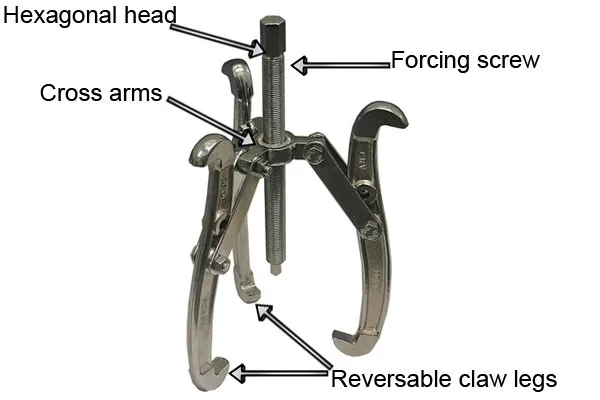
Here is a breakdown of the critical parts and their functions.
| Component | Function | Material |
|---|---|---|
| Base Plate | Anchors the tool to the housing face | High-carbon steel |
| Center Rod | Applies linear force to the hub | Cr-V alloy, threaded |
| Hub Assembly | Converts rotational force to linear | Forged steel |
| Jaws | Engage and grip the outer race | Hardened HRC 50+ |
| Jaw Pads | Protect the bearing and housing | Polyurethane or nylon |
The Base Plate and Swivel Mechanism
The base plate must seat flat against the housing. If there are casting ridges or gasket surfaces, a rigid plate will not sit level. Many industrial-grade pullers use a swivel base.
This allows the plate to tilt slightly, ensuring even contact. Without this, you apply uneven pressure. One side of the bore takes the load, and the other side is starved.
This uneven load can distort thin-walled housings.
The Center Rod Thread
The rod uses a coarse thread, often ACME or UNC. These threads resist jamming under high load. Fine threads strip easily when a bearing is cold-welded to the shaft or housing.
You want a thread that maintains engagement even when the tool is under maximum tension. The rod diameter correlates to the pulling capacity. A 1/2-inch rod handles light loads.
A 3/4-inch rod handles heavy industrial extraction.
Jaw Profiles and Engagement
The jaws are not just flat bars. They have curved tips that match the bearing race curvature. A convex tip on a concave race creates a single point of contact.
This maximizes grip. Flat tips distribute force but risk slipping if the bearing is seated in a tight tolerance. For deep blind holes, the jaws must be long enough to reach the race without touching the bore wall.
Understanding these components helps you diagnose why a puller fails. If the base doesn't seat, the problem is the swivel mechanism or the housing surface. If the jaws slip, the profile is mismatched.
For more on matching tool parts to bearing dimensions, check out our [bearing puller size chart] for quick reference.
Choosing the Right Puller: Matching Jaws to Your Bearing and Bore Depth
Selecting the right blind hole puller is not just about the bearing diameter. You have to consider three variables: bearing outer diameter, bore depth, and housing wall thickness. A puller that fits the diameter but lacks the reach will fail.
It will bind on the housing wall before the jaws engage the race.
Start by measuring the bearing outer diameter. This determines the jaw spread. The jaws must open to a width slightly larger than the bearing outer diameter.
They wrap around the race. If the spread is too small, the jaws will not clear the race. If the spread is too large, the tool body will not fit inside the housing bore.
Then measure the blind hole depth. This is the distance from the open face to the outer race. Your puller's jaw reach must exceed this distance.
| Parameter | Measurement Method | Why It Matters |
|---|---|---|
| Bearing OD | Caliper on outer race | Determines jaw spread |
| Blind Hole Depth | Depth gauge | Determines jaw reach |
| Housing Wall Thickness | Caliper at open face | Ensures tool fits inside |
Single-Jaw vs. Multi-Jaw Configurations
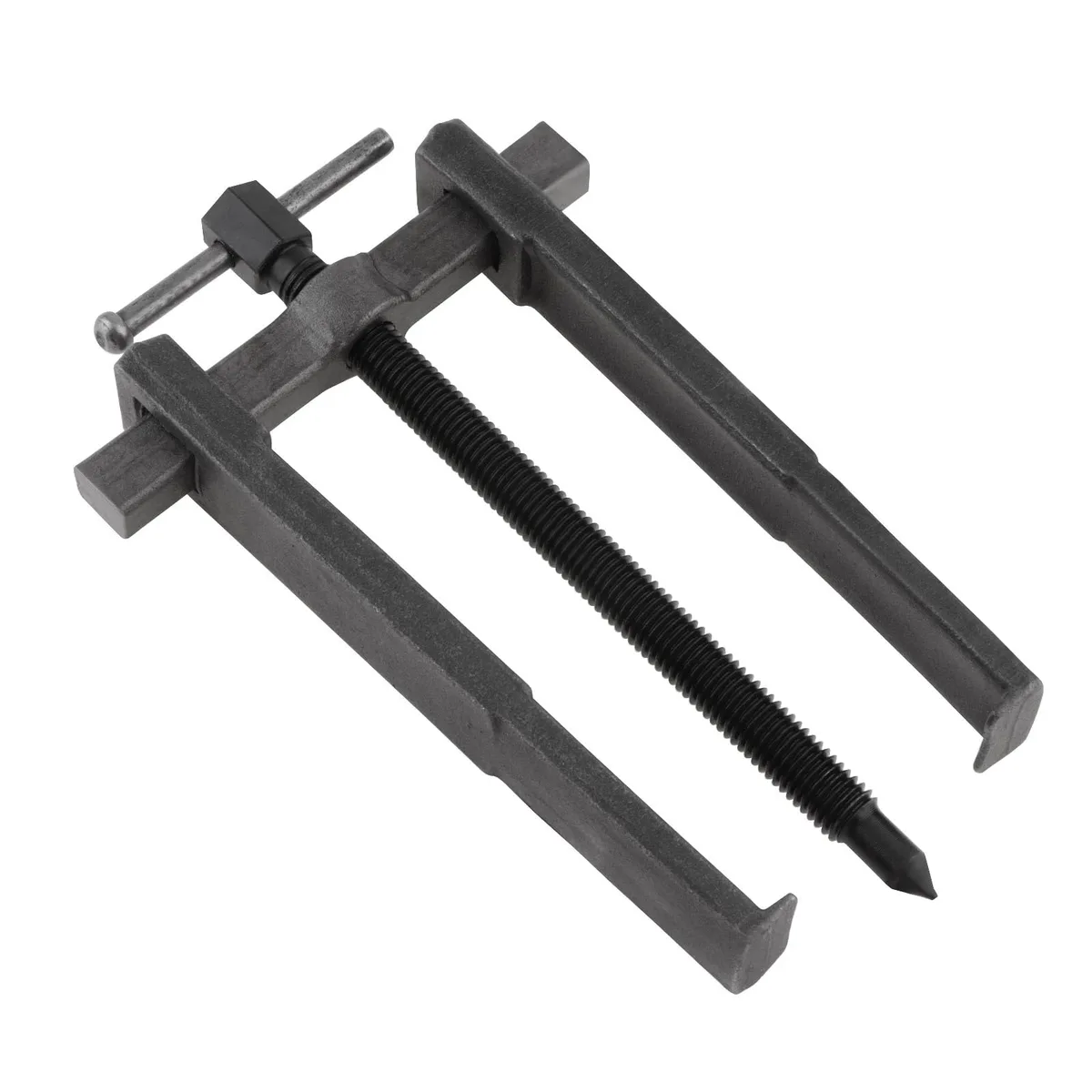
Single-jaw pullers are flexible but provide uneven force. They are useful when the bore has obstructions. Two-jaw pullers provide balanced force and are the standard for most applications.
Three-jaw pullers offer superior balance for heavy industrial loads. For blind holes, two-jaw internal pullers are the most common. They are compact and easy to maneuver in tight spaces.
If you are unsure which configuration fits your specific housing, look at the jaw length options. Manufacturers offer short, medium, and long reach variants. The long reach variants are essential for deep blind bores, such as those found in water pumps or agricultural gearbox housings.
Also, consider the jaw material. Hardened steel jaws last longer but can mark soft housings. Nylon or phenolic inserts protect the surface but wear out faster.
For delicate appliance motors, use protected jaws. For rugged industrial gearboxes, go with hardened steel. This choice prevents cosmetic damage while maintaining grip strength.
For a deeper look at tool variations, see our [guide to different puller types].
Step-by-Step: How to Extract a Bearing From a Blind Bore Without Damage
Removing a bearing from a blind hole is a precision operation. The goal is to apply pure axial force. Any lateral force cracks the housing or distorts the bearing.
Follow these steps to ensure a clean extraction.
- Prepare the housing. Remove any dust, grease, or debris from the bore opening. Wipe the outer surface where the base plate will sit. The base must slide freely on the housing face.
- Check your reach. Dry-fit the puller. Lower the jaws into the bore. Confirm the tips reach the outer race without the tool body touching the housing wall. If it touches, stop. You need a smaller tool or different reach.
- Engage the jaws. Position the jaws under the outer race. Do not let the tips slide up onto the bearing race. They must stay against the outer diameter of the race.
- Seat the base plate. Place the base plate on the housing face. Ensure it is square. Use a swivel base if the surface is uneven.
- Apply force slowly. Turn the center rod handle. Apply steady, gradual pressure. Do not use a breaker bar.
- Monitor for movement. Watch the bearing. It should move smoothly. If it sticks, check for lateral binding.
- Complete the extraction. Once the bearing clears the bore, stop turning. Remove the tool carefully.
Critical Safety Note: Wear eye protection. A slipping jaw or snapping rod can shoot fragments. Keep your hands away from the jaw engagement points.
The tool creates high tension. If a jaw lets go, it can snap back with significant velocity.
Dealing with Corroded or Stuck Bearings
Corrosion creates a cold weld between the bearing race and the housing bore. This requires higher force. Do not force the tool beyond its rated capacity.
Instead, apply penetrating oil. Let it soak for 15 to 20 minutes. Then tap the base plate gently with a soft mallet to break the rust bond.
Apply oil again. Repeat this process. Never use a sharp drift between the bearing and housing.
This destroys the bore finish. If the bearing breaks apart during removal, clean the fragments from the bore. Inspect the bore for damage.
If the bore is gouged, you may need to use a [repair sleeve for damaged bores] to restore the fit.
Mistakes That Crack Housings, Snap Rods, and Ruin Bearings
Even with the right tool, bad technique causes damage. These are the most common errors we see in field reports and maintenance logs.
- Jaws on the Race, Not the Bore. If the jaws engage the inner ring or the cage, you destroy the bearing. The jaws must only touch the outer race. Check this before applying any force.
- Lateral Force Application. If the base plate is not square, the puller pushes sideways. This bends the housing. Always use a swivel base or shim the plate to ensure alignment.
- Overtightening the Rod. Stripping the center rod threads stops the extraction. It can also snap the rod. Use steady force. If it is stuck, back it off and re-oil the threads.
- Ignoring the Depth Limit. Forcing a short-reach puller into a deep hole jams the jaws. The housing wall blocks the jaw movement. This jams the mechanism. Measure the depth first. Use the correct reach.
The "Housing Crack" Scenario
Blind holes in cast iron or aluminum are vulnerable to stress cracks. The cracking usually starts at the bore opening. This happens when the jaws catch on the edge of the bore instead of sliding under the race.
Inspect the bore edge for sharpness. Deburr it if necessary. This prevents the jaws from catching.
A sharp edge acts like a shearing blade on the jaw tip. If you are working on automotive components, check out our [automotive bearing guide] for specific housing considerations. The material properties of engine blocks differ significantly from industrial gearboxes.
Blind Hole Puller vs. Alternatives: When to Use Each Method
A blind hole puller is not always the best tool for the job. Sometimes, the geometry or material makes another method safer and faster. Before you commit to the internal puller, check these alternatives.
Hydraulic Press Removal: This is the gold standard for precision. You remove the housing and press the bearing out in a shop press. This is best for new parts where you want zero risk of cracking.
It requires more disassembly. It is slower for on-the-fly repairs.
Induction Heating: Heating the housing expands the metal. This releases the interference fit. The bearing then drops out.
This works well on through-bores. For blind holes, heat distribution is tricky. You risk warping thin-walled housings.
Internal Arbor Expansion: This tool expands inside the bore to push the bearing out. It is great for deep bores with no exit hole. However, it requires precise fitment.
A slightly oversized arbor can crack the housing.
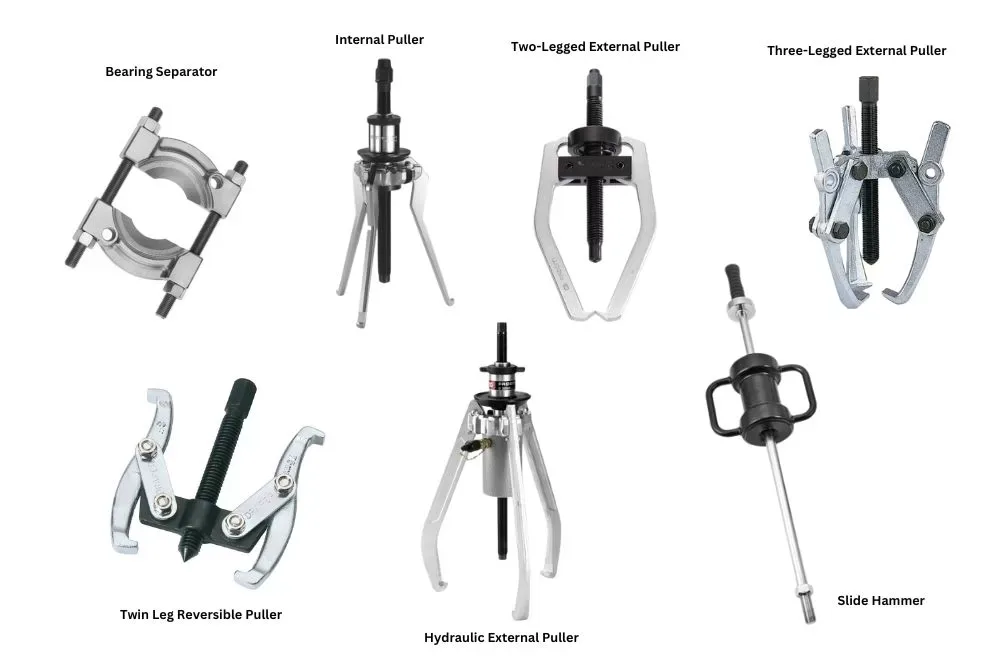
The blind hole puller wins when you need to keep the housing installed. It is the fastest option for in-situ repair. It works well on rigid, thick-walled housings.
It is less reliable on thin, flexible materials. Choose the method based on your tolerance for risk and time. If you have a press, use it.
If you are in the field, use the puller. For a deeper dive into tool selection, see our [puller tool guide] for more options.
Safety, Sizing, and Long-Term Care
Safety starts with respect for the tool's limits. A blind hole puller stores significant energy in the threaded rod. If that rod breaks, it becomes a projectile.
Always stand to the side of the tool, not in line with it. Wear safety glasses. Keep loose clothing away from the moving parts.
Sizing for Maximum Performance
Using the wrong size is the main cause of failure. You need the jaw spread to match the bearing outer diameter. If the spread is too large, the tool will not fit in the bore.
If it is too small, the jaws will not grip. Always check the jaw reach. The tips must clear the housing wall.
A 2mm clearance is the minimum. This allows the jaws to slide under the race.
Maintenance and Storage
Clean the tool after every use. Grease the threads and moving parts. This prevents rust and ensures smooth operation.
Inspect the jaws for wear. Replace them if they are chipped or worn smooth. Store the tool in a dry place.
A clean, maintained puller lasts for decades. A rusty, damaged one fails when you need it most. Check our [essential automotive specialty tools] list for storage best practices.
Frequently Asked Questions
Can I use a standard external puller on a blind hole?
No, not effectively. External pullers anchor on the outside. Blind holes have no exit hole for the base plate.
You cannot apply force from the outside. The jaws often lack the reach to engage the race from the open end. Use an internal puller designed for this specific geometry.
What if the bearing is rusted solid in the bore?
Use penetrating oil first. Let it soak for at least 15 minutes. Tap the housing gently with a soft mallet.
This breaks the rust bond. Do not force the tool. Excessive force can crack the housing.
Work slowly and steadily to avoid damaging the bore surface.
How tight should the jaw engagement be?
The jaws should grip the outer race firmly. They should not touch the housing wall. If they touch the wall, back off.
Adjust the jaw position until they are clear. The force must come from the bearing, not the housing. This ensures a clean, undamaged removal.
Is a hydraulic puller better than a mechanical one?
Hydraulic pullers offer more force with less effort. They are ideal for heavy, industrial bearings. Mechanical pullers are more portable and cheaper.
For most light to medium-duty applications, a mechanical puller is sufficient. Choose based on the weight and size of the bearing.
Can I reuse the tool after a successful extraction?
Yes, provided it is not damaged. Inspect the jaws and the center rod. Look for stripped threads or bent tips.
Clean and grease the tool. Store it properly. A well-maintained puller is a long-term investment.
It saves time and prevents costly housing damage on future repairs.