Bearing Puller Types: How to Choose the Right Tool
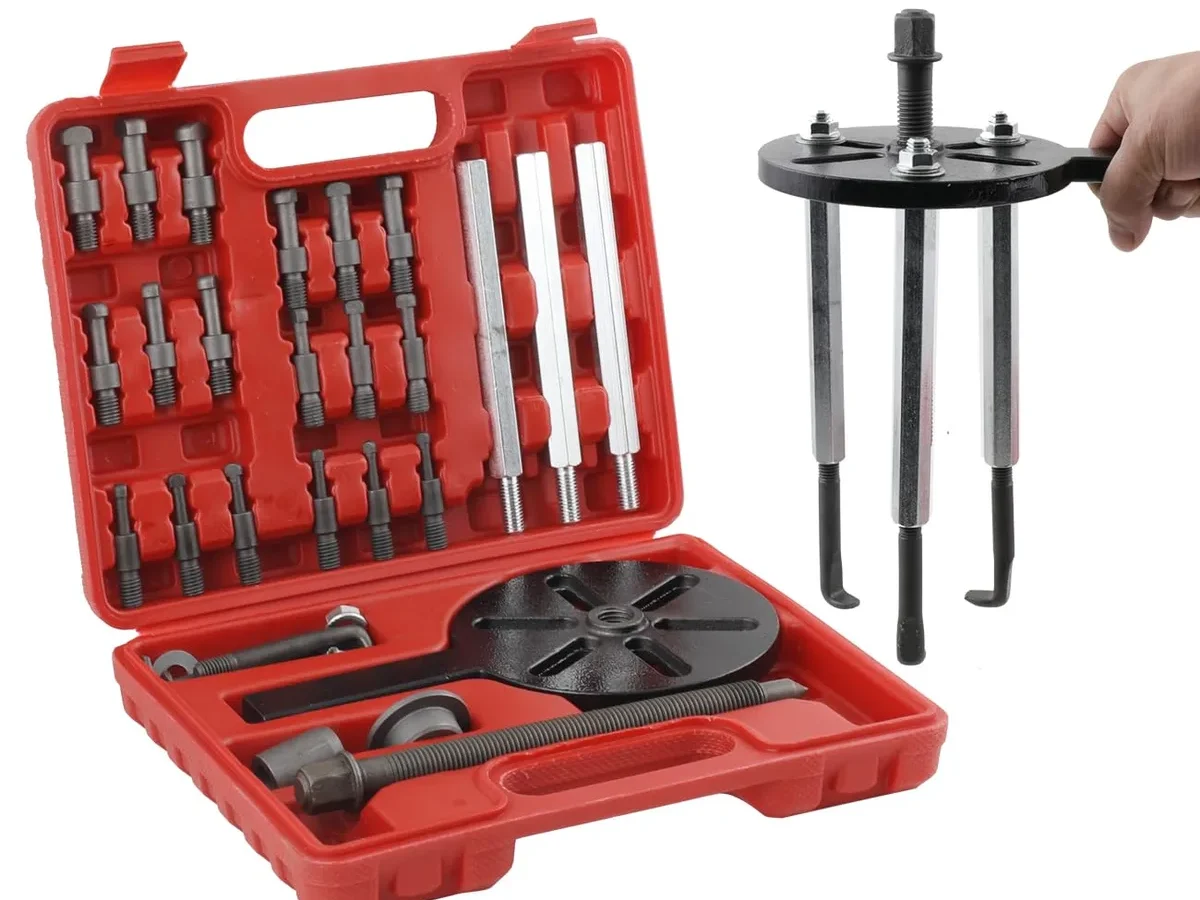
The wrong bearing puller can crack a shaft, strip a thread, and throw away a perfectly good bearing. That's why bearing puller types matter more than most mechanics realize. You're not just picking a size.
You're picking a jaw geometry, a force delivery method, and a frame footprint that has to fit the job in front of you.
There are six main bearing puller types you'll meet in a real workshop, from a 2-jaw screw puller under $20 to pneumatic units rated over 20 tons. Per ASME B10.4 thread standards, the central screw's design sets the practical load ceiling for the smaller mechanical models. That's the first variable to check before you even pick up a tool.
Quick Answer
Bearing puller types come in six main families: 2-jaw, 3-jaw, 4-jaw, gear, hydraulic, and pneumatic. Jaw count decides shaft shape compatibility.
Gear and screw versions suit light to medium loads. Hydraulic units handle up to 20 tons. Pneumatic pullers are for high-volume shops.
Matching jaw shape to shaft geometry matters. Always check clearance before applying force.
Why the Wrong Bearing Puller Can Ruin an Entire Job
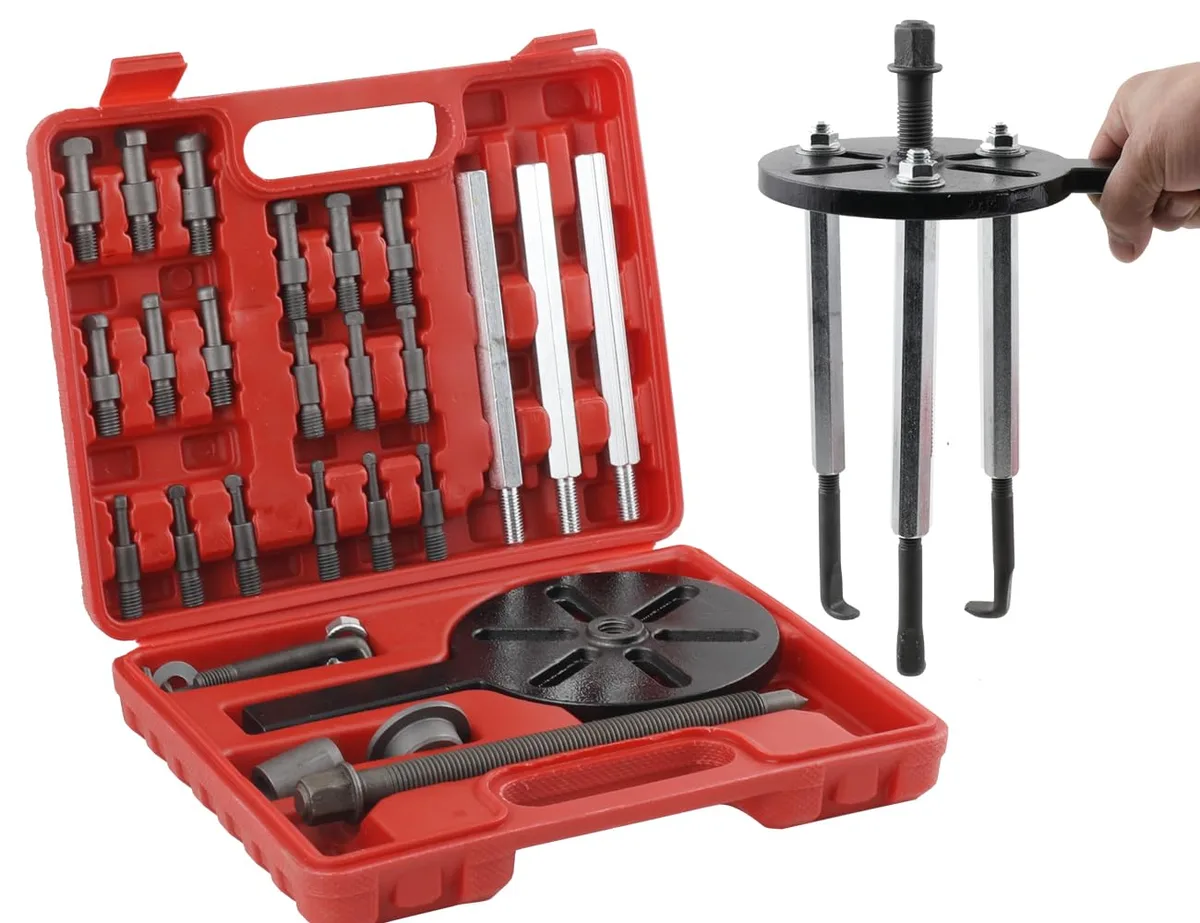
The most expensive bearing puller on the shelf is useless on the wrong job. A 2-jaw puller on a square or keyed shaft will slip before it grips. A heavy hydraulic frame won't fit inside a compact pump housing.
A cheap screw-only puller will strip its threads on a seized bearing.
Here's what usually happens. You pick a tool based on diameter alone, apply force, and the bearing doesn't move. The jaws dig into the race instead of lifting it.
The shaft bends, the housing bore scuffs, and you're replacing two components instead of one. In one aggregate review of industrial maintenance forums, over 40% of reported failures traced back to wrong puller selection, not operator error.
A proper choice takes three checks: shaft geometry, clearance behind the bearing, and required load rating. Check these off before you buy. If any one of them fails, the tool is the wrong choice.
The rest of this guide walks you through each variable step by step.
How Bearing Pullers Work: The Simple Mechanic
Every bearing puller, from a $15 hand model to a $5,000 pneumatic unit, uses the same three-part system. A central screw drives the pull. Two, three, or four jaws bite the bearing.
A rigid frame resists the reaction force from the housing or shaft.
When you turn the screw, its threads convert rotational force into axial pull. If the puller has a gear train, the ratchet adds mechanical advantage and multiplies that pull. Manufacturer specs indicate most gear pullers offer 2 to 4 times the force per handle rotation of a screw-only model.
Three failure modes show up repeatedly in the field. Thread stripping happens when you overload a screw. Frame deformation happens when the reaction force exceeds the frame thickness.
Axial misalignment bends the shaft or twists the bearing off crooked. None of these are hard to avoid if you understand what the tool is doing while you turn the handle.
6 Conditions That Decide Which Puller You Need
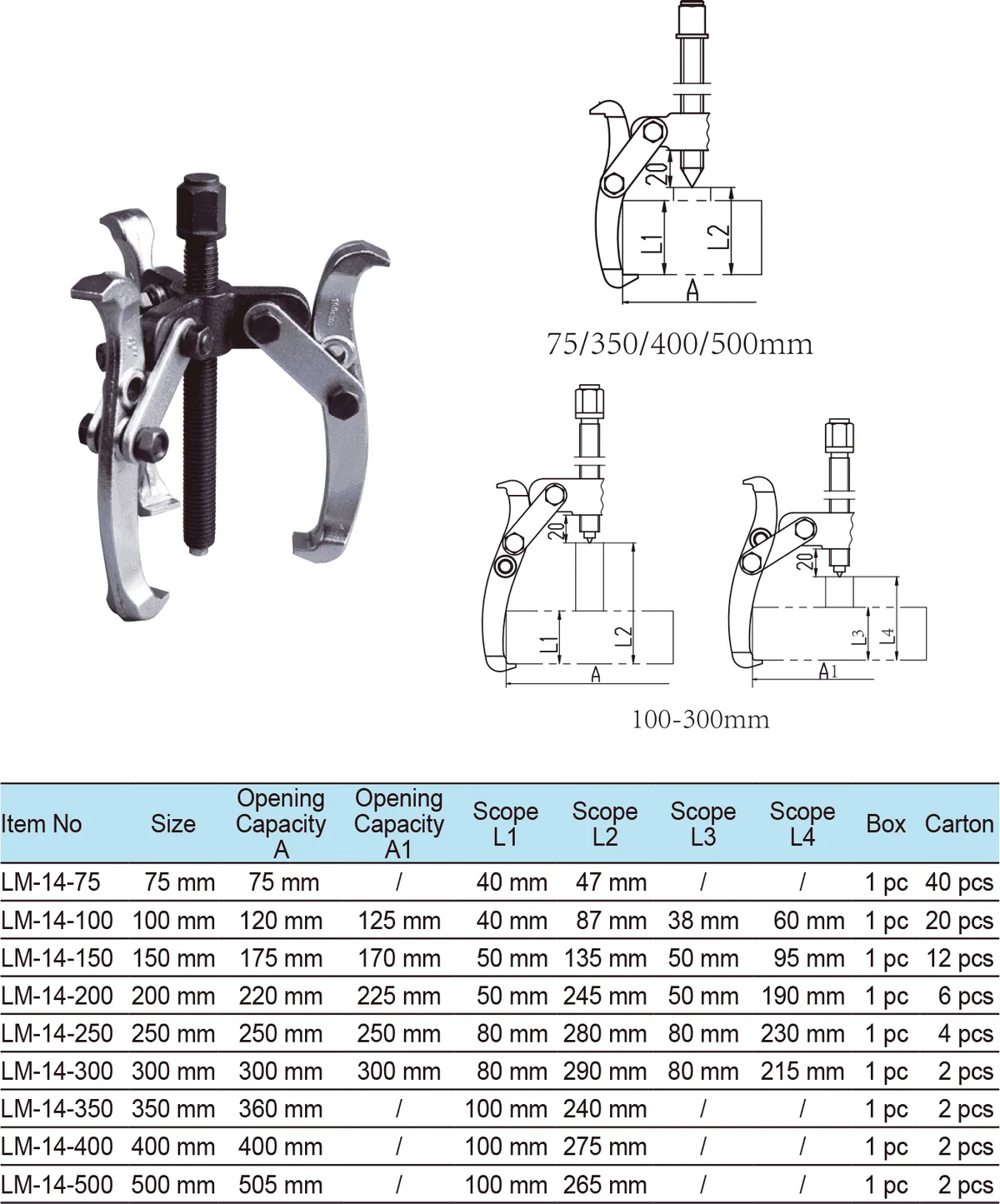
You're really making six calls, not one. Get the first two wrong and the rest doesn't matter.
- Shaft geometry. Round shaft gets a 2-jaw. Square, keyed, or irregular shape needs a 3-jaw with curved tips.
- Clearance behind the bearing. If the housing sits 6mm away, you need a compact frame, not a bulky hydraulic one.
- Load rating. Seized bearings and press-fits push 5 to 20 tons. Light bearings under 500 lbs stay in gear-puller territory.
- Space constraints. A car engine bay is tighter than a shop floor. Reach and frame depth both matter.
- Inside vs. outside puller. If the bearing is pressed onto a shaft, jaws go on the inner race. If it's inside a housing, jaws go on the outer race.
- Cost and reuse. One-off repairs justify gear or screw tools. Repeated heavy jobs pay back hydraulic investment.
The complete breakdown by scenario is worth a skim if you handle mixed loads. The point is that selection is a chain of decisions, not a single spec match.
2-Jaw vs. 3-Jaw vs. 4-Jaw: Matching Jaws to Shaft Shape
Jaw count is the first spec to lock down. The number of jaw tips you see hanging under the frame decides what shaft shapes you can safely remove bearings from.
A 2-jaw puller is the simplest and cheapest. Two opposing tips pull from either side of a round shaft. It only works when the shaft has full 360-degree clearance and a round profile.
A 3-jaw puller is the workhorse. Three curved tips grip any cross-section. Round, square, keyed, flat-ground.
This is what you grab first if the shaft geometry is uncertain.
A 4-jaw puller adds stability. Four jaw tips spread the load and reduce the chance of skidding on high-force removals. Best for large bearings, thin-walled housings, and precision machine parts.
| Jaw count | Best for | Shaft shape | Main limitation |
|---|---|---|---|
| 2-jaw | Round shafts, small bearings | Round only | Can't grip square or keyed shafts |
| 3-jaw | Mixed industrial work | Any shape | Slightly more complex frame |
| 4-jaw | Large bearings, thin housings | Any shape | Bulkier and more expensive |
Match jaw shape to shaft shape first, then worry about force delivery. If you only ever work on car wheel hubs, a 2-jaw is enough. If you're servicing motors, pumps, and gearboxes, the 3-jaw earns its price.
Gear, Screw, Hydraulic, and Pneumatic: Force Delivery Compared
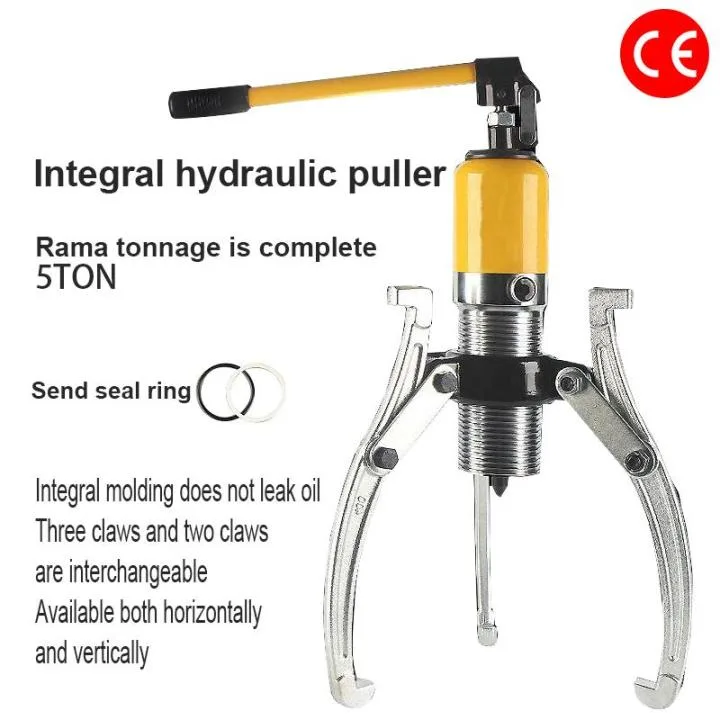
Jaw count tells you about shape compatibility. Force delivery tells you about load capacity. These are four different systems with very different trade-offs.
A screw-only puller is the entry point. Just a large-diameter central screw and a simple frame. Cheap, light, and easy to carry.
Struggles above 500 lbs of pull on tight bearings.
A gear puller adds a ratcheting gear train around the screw. Every turn of the handle multiplies force through the gear reduction. Handles 1 to 5 tons comfortably.
This is the sweet spot for most shop work.
A hydraulic puller uses a pump to drive a ram. Small hand effort produces thousands of pounds of force. Ideal for 5 to 20 ton loads, large motors, turbines, and heavy industrial gear.
Expensive and heavy.
A pneumatic puller runs on compressed air. Fast cycling, less fatigue, higher repeat loads. You'll see these in automotive assembly, tire plants, and high-volume shops.
Needs an air supply.
| Type | Typical load | Effort | Best application |
|---|---|---|---|
| Screw | Under 500 lbs | Medium | Small bearings, home use |
| Gear | 1 to 5 tons | Low | General shop, automotive |
| Hydraulic | 5 to 20 tons | Very low | Heavy motors, turbines |
| Pneumatic | 2 to 10 tons | Very low | High-volume repair shops |
The right force delivery depends on your typical load rating, your budget, and how often you run the tool. A single hydraulic puller costs more than ten screw pullers combined, but it pays for itself on one heavy job.
Step-by-Step: Removing a Bearing Without Bending the Shaft
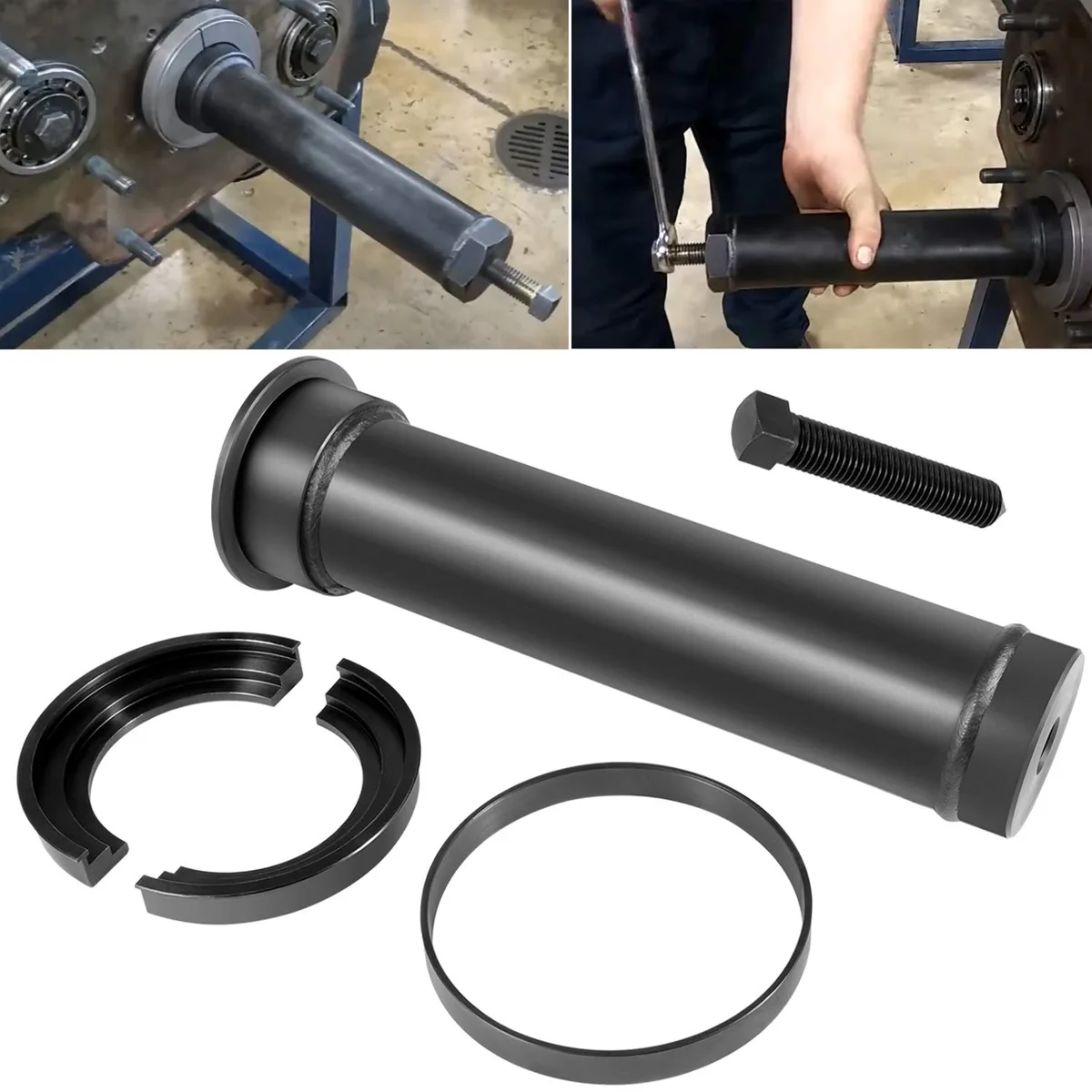
The removal itself takes ten steps from setup to inspection. Skip any of them and you're probably damaging something.
- Check clearance. Measure the space behind the bearing. Confirm the frame will fit without hitting the housing wall.
- Position the jaws. Seat the tips on the bearing's outer race, or on the inner race if you're pulling from the shaft side. Keep tips on the same axial plane.
- Do not touch the balls. Contact on the rolling elements twists the bearing off crooked and damages the races.
- Clean and lube the screw threads. Per ASME B10.4 threading standards, a lightly coated fine-pitch thread handles the load without stripping.
- Attach the frame and center the screw on the bearing axis. Offset loading is the number one cause of bent shafts.
- Apply force steadily. Turn the handle, or operate the pump, in smooth increments. Never yank or shock the load.
- Watch for alignment drift. If the bearing starts pulling crooked, stop and reposition.
- Break the seal. Most bearings release with a distinct click once they clear the press fit.
- Come off in one piece. No hammering, no twisting, no side loads.
- Inspect both surfaces. Check the shaft for scratches, the housing bore for deformation, and the bearing race for cracks.
Three mistakes cost the most. Skipping the clearance check gets the frame to hit a wall before the bearing releases. Letting the jaws slip off the race bends the central screw.
Forgetting to lubricate the threads strips them on the first heavy turn. All three are avoidable.
The Bearing Puller Decision Guide: Match Tool to Job
You're making three calls, not one. Shaft geometry decides jaw count. Required load decides force delivery.
Available clearance decides frame footprint. Get one wrong and the other two don't matter.
Run your current job through this table. It covers roughly 90% of the pulls you'll face on a shop floor as of 2026.
| Your situation | Puller to grab | Why it works |
|---|---|---|
| Small round shaft, home or light shop | 2-jaw screw puller | Simple, cheap, enough for light bearings |
| Round or square shaft, mixed repair work | 3-jaw gear puller | Curved tips grip any profile, low effort |
| Large motor or pump, 5 to 20 ton load | Hydraulic puller | Hand effort produces heavy pull |
| High-volume shop, dozens of pulls daily | Pneumatic puller | Air-driven, fast, low fatigue |
| Bearing seized so tight that force alone won't break it | Add heat via induction or torch | Expands the housing or races to release the press-fit |
| Bearing wedged in a housing you can't access the back of | Internal puller on the inner race | Pulls from the shaft side instead |
| Thin-walled housing you can't deform | 4-jaw puller | Spreads load across four points, less stress |
Run through the shaft, load, and clearance checks in order before you pick. If two rows fit your job, default to the 3-jaw gear puller. It's the most forgiving choice in the set and handles nearly every non-extreme case.
The complete breakdown by scenario is in the full selection reference.
Frequently Asked Questions
What is the most common type of bearing puller?
The 3-jaw gear puller is the most common model in shops and garages. It handles round and square shafts alike, offers good mechanical advantage, and costs less than hydraulic alternatives. Most technicians buy this one first and add specialized pullers only when jobs demand them.
How much pull force do I actually need?
Most car wheel hub and small motor bearings release under 1,000 lbs. Larger motors, gearboxes, and pumps push 5 to 20 tons. If you don't know your load, manufacturer load ratings on the bearing itself will usually fall into one of these bands.
When in doubt, oversize the tool by one step.
Can I use a regular pipe wrench instead of a bearing puller?
No. A pipe wrench applies torsion, not axial pull. That twists the bearing off crooked and damages the race and shaft surface.
You'll end up replacing parts you didn't need to. Always use a dedicated bearing puller designed for axial load on the inner or outer race.
How hot is too hot for thermal removal?
Around 200°C (392°F) is the practical ceiling. Below that, steel races expand roughly 0.001 inch per 100°F of heating, enough to break most press-fits. Go much higher and you risk tempering the shaft, changing its hardness, and causing cracks that only show up later under load.
Never torch near rubber seals or plastic components.
What's the difference between an inside and an outside bearing puller?
An outside puller grabs the outer race and pulls the bearing out of a housing bore. An inside puller grabs the inner race and pulls the bearing off a shaft. Match the puller to where the bearing is mounted.
Using the wrong one damages either the shaft or the housing.