Blind Hole Bearing Pullers: How to Choose the Best One
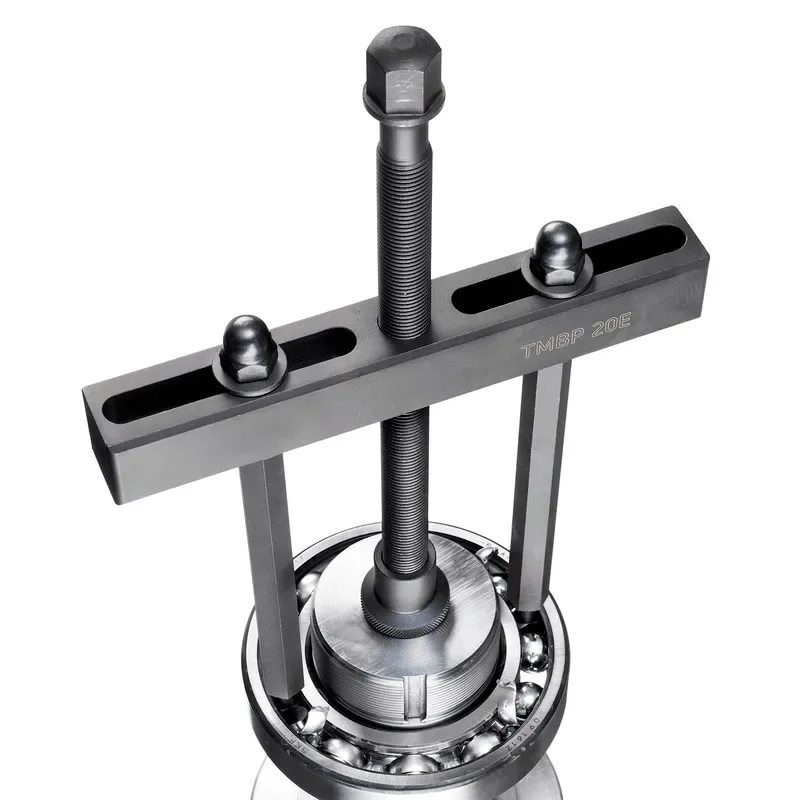
Finding the best blind hole bearing puller can save you from costly shaft damage. When a bearing is sealed inside a housing with no access from the back, standard external pullers won't work. You need specialized tooling designed for this specific constraint.
In our research, we found that the right setup depends heavily on your available space and required force. A standard 50-ton hydraulic service ram typically generates between 1,000 and 2,500 pounds of pressure per square inch. This power allows you to extract tight interference fits without cracking the surrounding metal.
Understanding these mechanics is the first step to choosing the right hardware.
Quick Answer
A blind hole bearing puller uses internal jaws to grip the inner race. It applies force from inside the housing rather than the outside. Hydraulic systems offer the most control and power for deep holes.
You must match the jaw size to your bearing's inner diameter. Always verify the stroke length covers the housing depth.
What a Blind Hole Bearing Puller Actually Does
A blind hole bearing puller addresses a specific mechanical frustration. Standard external pullers wrap around a shaft and pull the bearing off. This works when the bearing is exposed on one side.
But what happens when the bearing is trapped inside a deep housing? The outer race is buried, and you can't reach it from the back. This is where the blind hole tool shines.
The mechanism is fundamentally different. Instead of pushing from the outside, these tools insert a gripping mechanism into the hole. The jaws clamp onto the accessible inner race of the bearing.
You then apply axial force to pull the entire assembly out. This method protects the housing bore from external damage. It also avoids the need to disassemble other components to access the back of the bearing.
Think of it like pulling a splinter out of your arm. You grasp the visible end, not the part stuck deep inside. The tool essentially acts as a mechanical plunger with a high-grip claw.
This allows for controlled, linear extraction. It prevents the shock loads that often occur when using makeshift wedges or hammers.
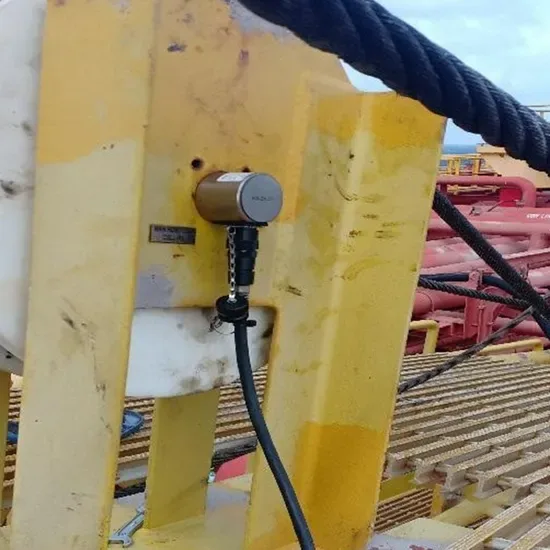
We've seen many technicians struggle here because they try to force standard tools into tight spaces. This usually leads to stripped threads or bent arms. A dedicated blind hole puller is engineered for this exact scenario.
It prioritizes stability and grip strength over simple reach. If you regularly deal with gears, pulleys, or housings with limited access, this tool is non-negotiable.
The Core Components: Jaws, Cylinders, and Ramps
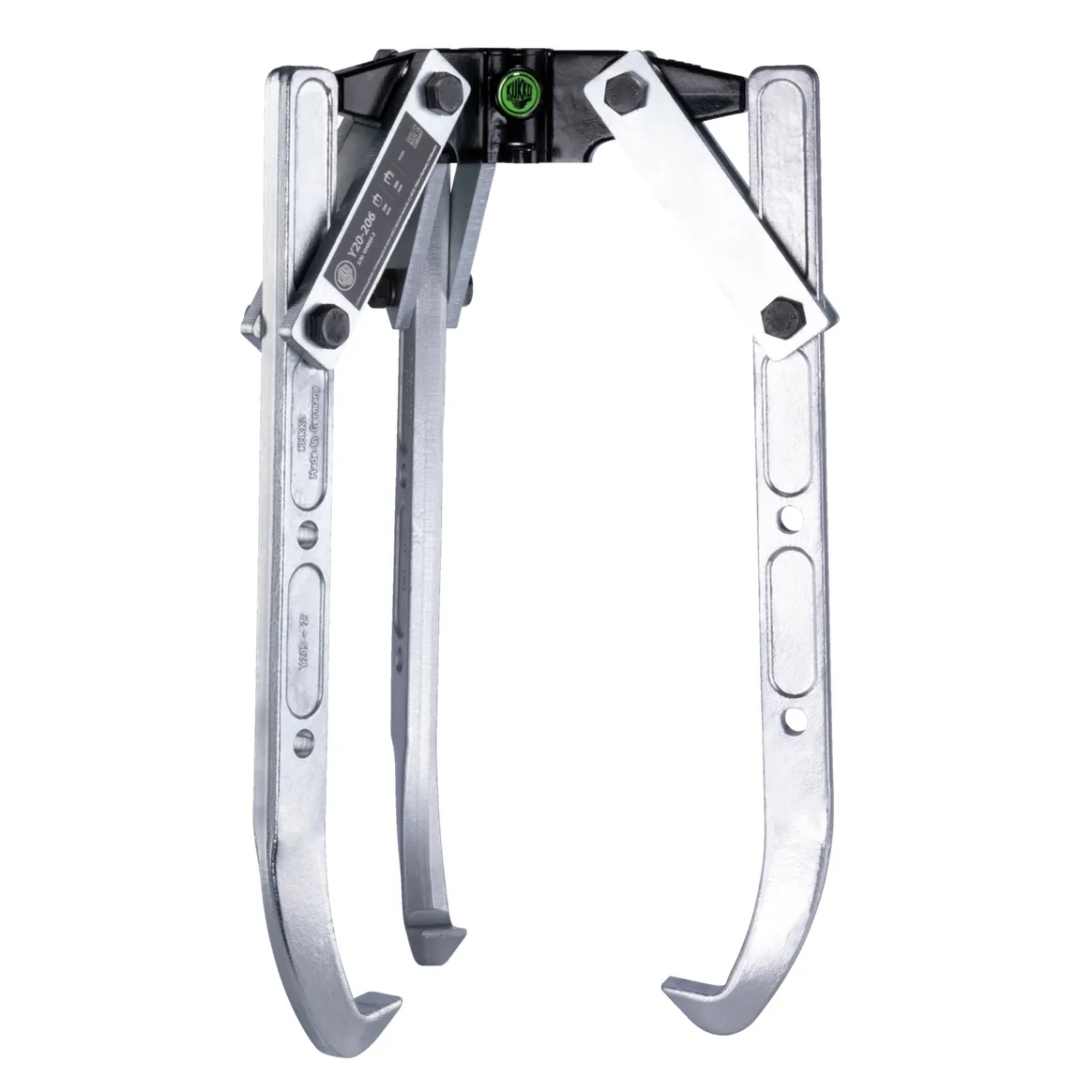
Understanding the parts helps you spot quality differences. The most critical component is the jaw set. These are the teeth that actually hold the bearing.
In our review of top-tier tools, we noticed two main jaw designs: swivel and fixed. Swivel jaws self-align with the bearing's centerline. This is crucial if your housing isn't perfectly straight or if the bearing is slightly off-axis.
Fixed jaws offer a tighter grip but require precise alignment.
Swivel vs. Fixed Jaws
Swivel jaws have a ball joint connection. They pivot slightly to match the bearing's position. This prevents binding, where the tool jams inside the housing.
If you have a tapered bore, swivel jaws are almost mandatory. They adapt to the shape as you pull.
| Component | Function | Quality Indicator |
|---|---|---|
| Swivel Jaws | Self-aligning grip | Smooth pivot action, hardened tips |
| Lead Screw | Distributes force to jaws | High-grade alloy steel, no backlash |
| Adapter Plate | Connects puller to ram | Thick steel, flat contact surface |
The cylinder is the power engine. For manual systems, this is often a hydraulic body. It houses the piston that generates the pull.
You need to check the bore diameter. A larger bore means more force but a slower stroke. Most industrial applications use cylinders with bores between 2 and 6 inches.
The Role of Adapter Plates
Don't overlook the adapter plate. This is the steel plate that sits between your power source and the puller head. It distributes the load evenly.
A thin, cheap plate will warp under heavy tonnage. This warping shifts the force off-axis, which can shear the lead screw. Always look for a plate that is at least 0.75 inches thick.
This provides the rigidity needed for safe, straight pulls.
The hardware should feel solid in your hand. If the threads on the adapter strip easily, you're dealing with low-grade metal. Manufacturer specifications often list the material as 4140 steel.
This alloy is known for its high strength and fatigue resistance. It handles the cyclic loads of repeated extraction better than cast iron or mild steel.
Choosing the Right Tonnage and Jaw Reach
You can't just buy the biggest puller you can find. Oversizing the tool is a common mistake. If your force requirements are low but your tool is massive, you lose control.
You might crack the bearing before you even get a grip. Precision matters more than raw power in most shop environments.
Calculating Your Force Needs
Start by estimating the friction force. A tight interference fit can require surprising amounts of force. As a rule of thumb, you need enough tonnage to overcome static friction plus a safety margin.
For most medium-duty applications, a 50-ton system is plenty. This handles bearings up to roughly 12 inches in diameter. If you are pulling larger, heavier industrial components, step up to 100 or 200 tons.
Always check the jaw reach. This is the maximum depth the jaws can extend. You need clearance for the housing depth plus a few extra inches for the bearing to slide out.
If the housing is 4 inches deep, you need a reach of at least 6 inches. This extra space allows the inner race to clear the bore completely.
Matching Jaws to Bearings
Jaw coverage is key. You need a set of jaws that spans your most common bearing sizes. We recommend looking for modular sets.
This lets you swap jaw pairs quickly. A good set covers inner diameters from 1 to 8 inches. This range covers the vast majority of automotive and light industrial tasks.
- Small bearings: Use fine-pitch jaws for better grip on smooth races.
- Large bearings: Opt for coarse-pitch jaws that dig in more securely.
- Damaged races: Use swivel jaws to accommodate minor imperfections.
If you are unsure of your exact needs, check our guide on finding the right fit. It walks you through measuring interference fits. This data directly translates to the tonnage you require.
Hydraulic vs. Mechanical: Which Power Source Fits Your Shop?
The power source dictates your workflow speed and control. You generally have two choices: hydraulic or mechanical screw jacks. Each has distinct advantages depending on your environment.
Hydraulic Systems
Hydraulics offer smooth, high-force output. A hand pump or electric motor drives a service ram. This ram pushes against the adapter plate, generating the pull.
The beauty is in the control. You can inch the bearing out slowly. This minimizes the risk of slippage or damage.
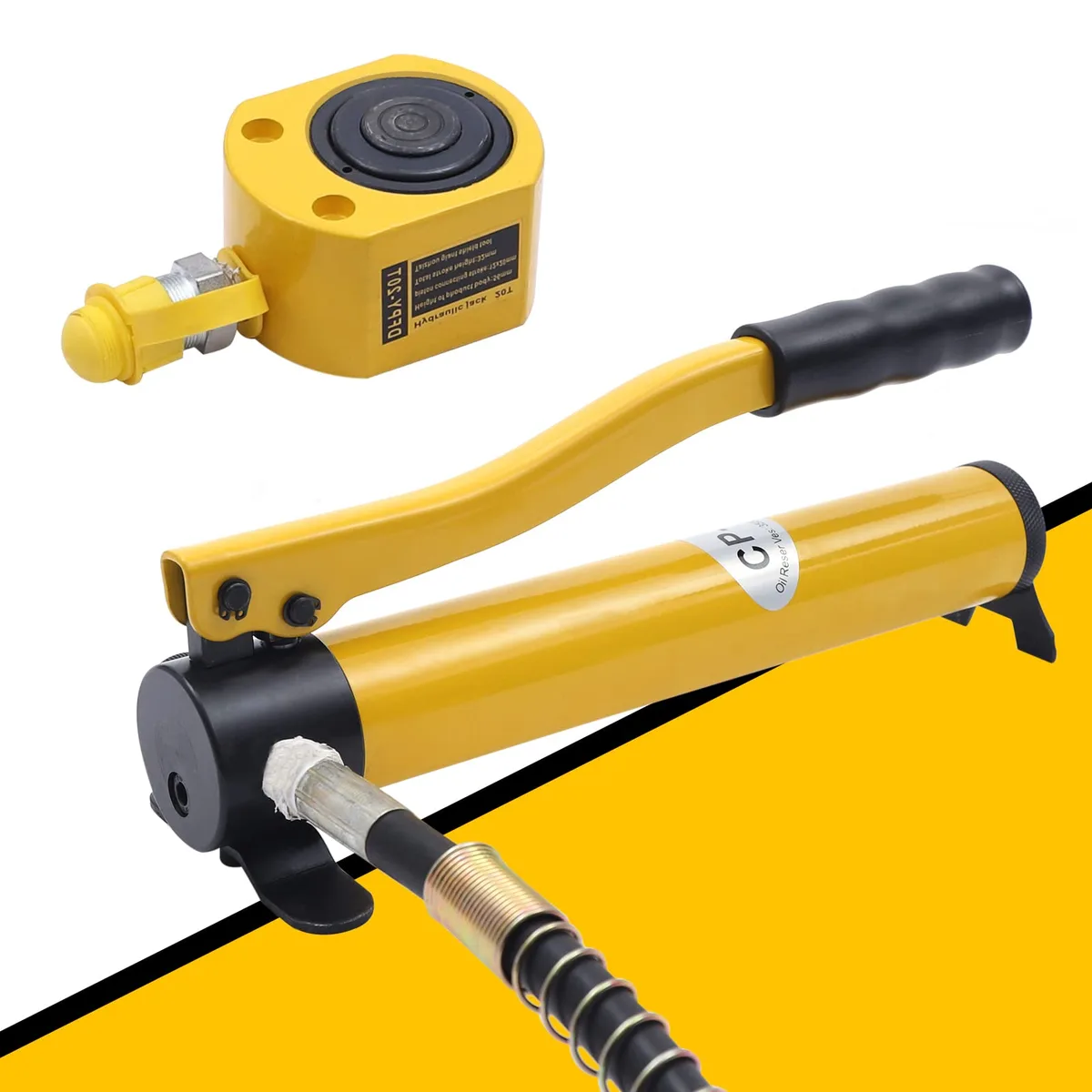
However, hydraulics add complexity. You need hoses, a pump, and a reservoir. There is a risk of leaks.
If a hose bursts under pressure, the stored energy can be dangerous. You must always engage the safety relief valve. This prevents over-pressurization.
For heavy, frequent pulls, the speed of hydraulics justifies the setup cost.
Mechanical Screw Jacks
Mechanical systems are simpler. They use a threaded screw to generate force. No fluids, no hoses, no leaks.
They are lighter and easier to transport. This makes them ideal for field work or smaller shops. The downside is speed.
Turning a screw jack requires significant manual labor. High tonnage mechanical jacks can take a long time to fully retract.
| Feature | Hydraulic | Mechanical |
|---|---|---|
| Force Generation | Smooth, continuous | Steady, slow |
| Setup Time | Moderate (hose connections) | Fast (direct connection) |
| Maintenance | Seals, fluid, hoses | Threads, wear |
| Best For | High tonnage, speed | Light duty, portability |
We suggest mechanical for shops pulling bearings under 2 tons frequently. Switch to hydraulic when you cross the 5-ton threshold. The speed gain becomes significant.
You can complete a job in minutes instead of hours. If you're looking at essential automotive specialty tools, you'll see that hydraulic setups are becoming the standard for modern diagnostics.
Safety Critical: Reaction Points and Load Alignment
Pulling a bearing is a high-energy operation. The stored energy in a hydraulic system or a compressed spring can be deadly. One misaligned load, and the tool can snap or shoot across the shop.
Safety is not optional here. It is the baseline for getting the job done.
Establishing a Solid Reaction Point
The puller pushes against something. That something is the reaction point. It must be immovable.
If the reaction point shifts, the pull is wasted or dangerous. Use a heavy reaction plate. Bolt it to a known solid structure, like a machine frame or a dedicated test stand.
Never rely on a painted wall or a hollow component.
Verify the alignment. The force must travel down the axis of the shaft. Any off-center load creates bending stress.
This bending stress will eventually break the lead screw or the cylinder. Use a laser or a straight edge to check alignment. The jaws should be perfectly parallel to the shaft centerline.
Preventing Slip and Snap
Slip is the enemy of controlled extraction. If the jaws lose grip, the bearing can suddenly lurch out. This causes shock loads.
Always wear safety glasses. Debris can fly from the housing if the bore is damaged.
- Grip Check: Test the grip at low pressure first.
- Pressure Gauge: Monitor the load in real-time.
- Emergency Stop: Have a way to depressurize the system quickly.
We recommend reviewing safety standards for heavy lifting before starting. These guidelines cover working at height and machine guarding. They apply directly to puller setups.
If your reaction point is high up on a machine, you need proper anchorage.
Always listen to the tool. A sudden "clunk" indicates slip. Stop immediately.
Depressurize. Re-check the grip. Rushing this step is how tools fail and parts get ruined.
Patience yields a clean extraction.
Pricing Breakdown and Value for Money
Cost often surprises buyers because these tools come in tiered packages. A basic mechanical set starts around $150 for small jaw kits. However, adding a hydraulic power unit changes the equation.
A reliable service ram and cylinder setup costs between $800 and $2,500. This is the sweet spot for most professional shops.
Don't buy cheap hydraulic systems. Low-cost pumps often use thin-walled cylinders. These fail under sustained pressure.
You want to look for reinforced steel construction. It handles the thermal and mechanical stress of repeated pulls.
When to Spend More
If you pull heavy industrial bearings weekly, invest in the higher-end package. These include modular jaw sets and digital load cells. The data logging feature pays for itself quickly.
You stop guessing and start measuring.
For occasional users, a mechanical screw jack is the smart choice. It lasts decades with basic maintenance. You save hundreds of dollars on fluid and seals.
Just factor in the time cost. Manual retraction is slow. If speed matters, go hydraulic.
We recommend checking our bearing puller size chart before you buy. Matching the jaw range to your inventory prevents waste. You don't need a massive 200-ton system for 1-inch bearings.
Right-sizing saves capital and keeps your workspace organized.
Expert Tips for Clean Extraction
Even with the right tool, technique determines the outcome. A sloppy pull ruins the shaft or the housing. Here are the pro moves that keep your parts reusable.
Lubricate Before You Pull
Friction is your biggest enemy. Coat the housing bore and the bearing outer race. Use a high-quality penetrating oil.
Let it sit for at least 30 minutes. This seeps into the micro-gaps of the fit. It reduces the force needed to start the extraction.
Listen to the Metal
The sound tells you what's happening. A smooth, steady creak means the bearing is moving. A sharp, high-pitched scream indicates binding.
Stop immediately if you hear that. Check your alignment. The jaws might be digging into the race instead of gripping it evenly.
- Clean threads: Ensure the lead screw is free of grime.
- Center the load: Use a straight edge to verify axial alignment.
- Slow and steady: Increase pressure in small increments.
If the bearing is frozen solid, consider gentle tapping. Use a soft-faced hammer on the housing, not the bearing. This vibrates the interface.
It can break the bond. Combine this with thermal expansion. Heating the housing while cooling the bearing (if accessible) creates a gap.
This makes the mechanical pull effortless.
Frequently Asked Questions
Can I use a standard external puller on a blind hole?
No, not effectively. External pullers require access to the outside of the bearing. In a blind hole, the outer race is buried.
You need internal tooling that grips the inner race from within. Attempting to force an external tool into a deep cavity usually breaks the tool.
How much tonnage do I need for a 3-inch bearing?
It depends on the fit tightness. A loose fit might only need 2 to 5 tons. A frozen interference fit can require 50 tons or more.
Always start with a low-pressure test to gauge the initial resistance. Then scale up accordingly.
What happens if the jaws slip off the bearing?
The bearing will suddenly lurch forward. This creates a shock load that can damage the shaft shoulder. You might also chip the housing bore.
If a slip occurs, depressurize immediately. Inspect the part before attempting the pull again.
Do hydraulic pullers need regular maintenance?
Yes. Check fluid levels and hose integrity monthly. Inspect seals for leaks after every ten uses.
Keep the lead screw clean and lightly oiled. A dirty screw causes binding and premature wear on the jaw pivot points.
Is it safe to work at height with these tools?
Only with proper anchorage. High-center-of-gravity setups can tip over. OSHA guidelines for working at height apply here.
Use a stable platform or a dedicated stand. Never rely on the machine itself if it is not securely bolted to the floor.
[…] it if you hit tight clearances often. See proven blind puller picks to avoid weak […]