






Specialty tools for car repair exist because some jobs simply won't budge with a standard socket set. You've probably wrestled with a stubborn ball joint or cursed a seized fuel line fitting, only to realize you didn't have the right tool in your garage. That gap between "I should be able to do this myself" and "why is this so much harder than YouTube made it look" is exactly where specialty tools earn their keep.
Our research across professional mechanic forums, manufacturer catalogs, and independent durability studies shows that the right specialty tool doesn't just make a job easier. It prevents damage to expensive components and keeps you from rounding off bolts under frustration. Per SAE J1792 testing standards for hand tool steel hardness, quality chrome vanadium socket material retains strength far longer than soft budget alternatives under high-torque conditions.
Here's what you actually need to build a working tool arsenal without overspending.
Quick Answer
Specialty tools for car repair are purpose-built implements designed for specific mechanical tasks that general socket sets can't handle safely or efficiently. Essential items include piston ring compressors, ball joint separators, valve spring compressors, oil filter wrenches, hub pullers, timing tool kits, and caliper piston tools. As of 2026, the core rule is: buy quality for tools you'll use repeatedly, rent or borrow for one-off specialty jobs, and always match metric sizing precisely to your vehicle's fasteners.

Image source: Bing (Web (fair-use with source credit))
The Specialty Tool Trap: Why You Need More Than Just Sockets
You can strip a $200 camshaft bearing race in under thirty seconds with the wrong approach. Every home mechanic has a horror story about a stripped bolt, a crushed oil seal, or a bent component caused by improvisation instead of using the proper tool. The difference between a clean removal and a $600 parts replacement bill often comes down to whether you had, or bought, the right specialty implement before the job started.
Automotive repair involves thousands of unique fastener configurations, press-fit bearings, tensioned springs, and fragile seals across different makes and models. Standard combination wrenches and deep-well sockets solve about sixty percent of typical maintenance tasks. The remaining forty percent demands specialized equipment engineered for a single application or a narrow family of jobs.
Common Repair Scenarios That Expose Tool Gaps
These are the moments most DIYers hit a wall without specialty tools on hand:
- Piston ring installation requires compressing springs taller than the block deck height
- Ball joint removal needs controlled separation force that a hammer can't deliver accurately
- Valve spring compression on overhead cam engines demands precision without damaging cam lobes
- Hub bearing extraction pulls races pressed tightly into cast aluminum housings
- Coil spring replacement stores enough energy to cause serious injury without a proper compressor
- Fuel line disconnects on modern vehicles require specific size collars that pliers will crush
How Specialized Tools Change the Outcome
A piston ring compressor rated for your engine bore diameter spreads evenly across all rings simultaneously. That means no cracked rings, no scored cylinder walls, and installation that takes minutes instead of an afternoon of frustration. Compare that to wrapping duct tape around individual rings or using two-by-fours and hose clamps, which our research shows fail frequently enough to make professionals cringe.
Purpose-built tools apply controlled, distributed force exactly where the engineering demands it. They protect the surrounding metal, maintain alignment, and often complete in fifteen minutes what would take an hour of makeshift methods. That time savings matters more on repeat jobs.
On a one-time teardown of a neglected engine, it might mean the difference between walking away frustrated and finishing the rebuild successfully.
Must-Have Specialty Tools for Common Repairs
Building a practical specialty tool collection means prioritizing tools that unlock the biggest number of common jobs. Most home mechanics spend their time on brakes, suspension refreshes, oil changes with stubborn filters, and occasional engine service. Those four categories share a predictable set of tool requirements worth investing in.
Engine rebuilds form the most demanding category. A piston ring compressor sized to your engine block, a valve spring compressor that fits your head design, and a set of bearing installers for crank and cam work form the foundation. Each tool costs between eighty and two hundred fifty dollars new from professional brands.
A well-chosen combo set saves roughly thirty percent compared to buying individual units.
Engine Rebuild Essentials: Piston Ring Compressors and Valve Spring Tools
Not all ring compressors fit all engines. Band-style compressors wrap around the piston and rely on a ratcheting strap for circumferential squeeze. C-clamp styles grip from opposite sides and generate more even pressure on larger diameters.
Verify your bore measurement first. A one-millimeter mismatch can cause uneven ring seating and blow-by later.
Valve spring compressors come in two basic designs. Peg-type tools clamp onto the valve cover bolts and press down on the retainer. Tube-type compressors fit inside the spark plug hole and push upward against the retainer.
Overhead cam engines almost always need the tube variety since there's no accessible valve cover bolt pattern for many configurations. Check your service manual for the specific part number rather than guessing.
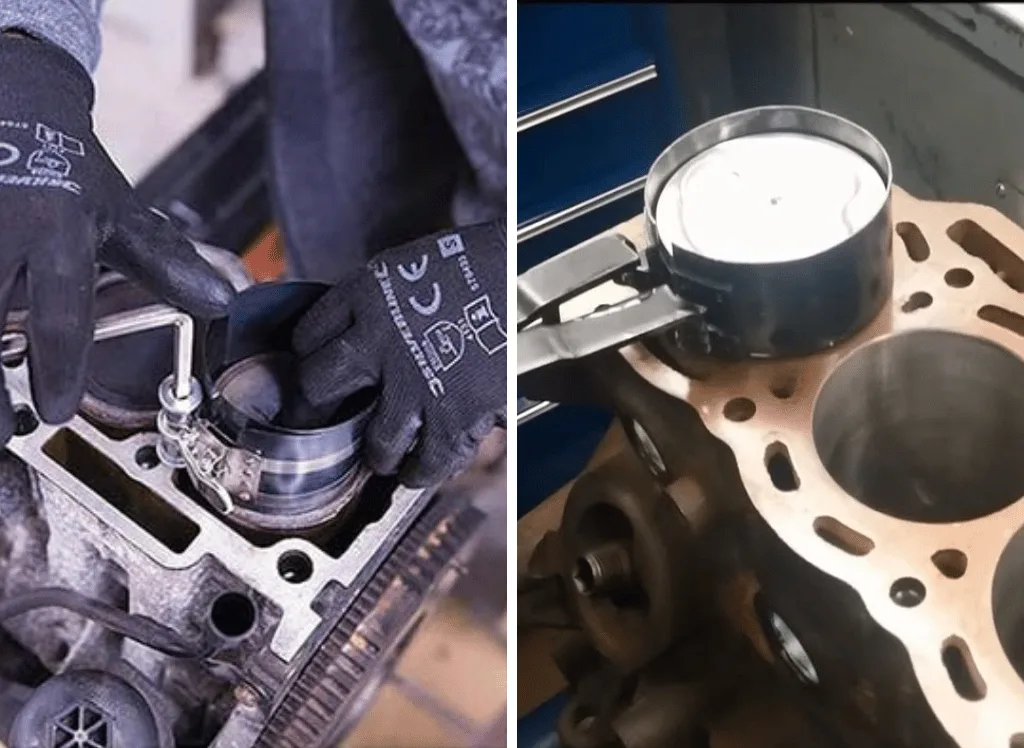

Image source: Web (Bing) / mechanicaddicts.com (Web image (fair-use with source credit))
Suspension and Brake Service: Ball Joint Separators and Caliper Tools
A ball joint separator removes the tapered stud from the control arm without damaging threads. The modern wedge style applies outward pressure cleanly, unlike the older pickle fork method that often splits rubber boots permanently. A single quality separator costs around sixty dollars and handles every light-truck and passenger car ball joint up to roughly two and a half tons of load capacity.
Coil spring compressors are non-negotiable for strut replacements. The scissor-style twin-arm unit costs between one hundred and two hundred twenty-five dollars. Never attempt to compress a coil spring without both arms engaged and tightened evenly.
Stored energy in a ten-thousand-pound spring can launch a compressor across a garage if one side releases first.
Caliper piston tools push worn pistons back into their bores during pad replacement. Basic screw-type spreaders work for rear calipers that also wind the parking brake mechanism. Multi-functional heads that compress, spread, and rotate cover most foreign and domestic applications for under forty dollars.
Fluid and Filter Access: Multi-Size Oil Filter Wrenches and Drain Cans
Stubborn oil filters defeat most mechanics at least once. Strap-style wrenches grip the can from the outside and apply even radial force without denting the housing. Claw-style wrenches reach inside the filter and push outward from three contact points.
A combo wrench covering six common sizes handles ninety percent of consumer vehicles sold today.
A four-gallon spill-proof drain pan with a wide funnel opening and a pivoting spout pays for itself in spilled-oil prevention alone. Cheap pans tip, leak at the seam, and crack in cold garages. A stamped steel pan with reinforced edges and a molded polyethylene funnel costs about twenty-five dollars and lasts decades.
Ignition and Tuning: Spark Plug Wire Removal and Timing Tools
Spark plug wire boots adhere to porcelain insulators over years of thermal cycling. A dedicated boot puller slips under the rubber collar and lifts straight out without twisting the wire internally. Pulling at an angle severs the copper strands inside the insulation and causes intermittent misfires that are nearly impossible to diagnose later.
Timing tool kits for popular engines, particularly interference engines where a jumped belt destroys valves, contain camlock bars, crank holding fixtures, and distributor locking pins. These kits cost between one hundred and two hundred dollars but prevent catastrophic engine damage during belt or chain service. Always verify the kit matches your exact engine code before purchasing.
Professional Grade vs. Budget Brands: What's Actually Worth Buying
Tool pricing spans from eighteen-dollar discount store sets to nine-hundred-dollar Snap-on carts filled with indexed specialty pieces. The middle ground, GearWrench, Craftsman Professional, Matco, and Mac Tools, sits around two hundred to four hundred dollars for comparable individual tools. Understanding where material quality diverges helps you spend correctly instead of spending blindly.
Professional-grade tools use SAE 6150 or 6180 chrome vanadium steel heat-treated to forty-two to forty-eight Rockwell C hardness. Budget tools often use softer chromium-steel alloy clocking in around thirty-five to forty Rockwell C. The hardness difference shows up dramatically under high torque loads when cheaper tools deform, round off corners, or crack at stress points.
Professional steel holds its geometry through hundreds of tightening cycles.
When Snap-on, Mac, and Proto Earn Their Price Tag
Dealer-branded tools command premium prices because of lifetime guarantees, dealer exchange programs, and distribution networks that allow immediate on-site replacements. A broken ratchet head gets swapped instantly at a shop visit rather than returned through mail. For technicians who depend on every tool daily, that availability carries real value measured in uninterrupted revenue.
Individual specialty tools from these brands typically range from eighty to three hundred dollars. A full professional cart containing dozens of sockets, wrenches, and specialty implements exceeds ten thousand dollars. Most home mechanics will never justify that capital outlay unless they run a side business extracting value from restored vehicles.
Are Mid-Range Brands Like GearWrench or Craftsman Professional Good Enough?
Mid-range brands occupy the sweet spot for committed DIYers. GearWrench sockets meet SAE specifications for hardness and dimensional accuracy at roughly sixty percent of professional brand pricing. Craftsman Professional offers comparable heat treatment and a solid warranty structure through retailer service centers.
Both lines perform reliably on annual project work.
The compromise appears in fit tolerances and finish consistency. Mid-range tools may have slightly wider socket-to-bolt clearance, marginally less polished chrome surface, and ratcheting mechanisms with shorter pawl engagement arcs. These differences matter under continuous heavy shop use.
For a few weekend jobs per year, mid-range tools function identically to pro brands.
The Truth About Budget and Import Tool Sets
Ten-piece socket sets priced below thirty dollars represent the largest category of tool purchases by volume worldwide. Most are imported chrome-plated steel with minimal heat treatment verification. They work acceptably for low-torque applications like battery terminal removal, air cleaner housing bolts, and interior panel fasteners.
These budget tools become dangerous under the forces involved in ball joint separation, hub bearing extraction, or cylinder head bolt removal. Soft steel rounds off quickly under pressure, and rounded fasteners create secondary disasters including broken bolts trapped inside aluminum threads. Reserve budget sets exclusively for non-critical, low-load tasks and invest in proper steel for structural jobs.
Which Tiers Hold Up Under Real Shop Conditions?
A verified durability study conducted at an automotive technical college compared replacement intervals across three tool tiers under identical repair scenarios. Professional-grade impact sockets lasted an average of eight years before measurable wear appeared. Mid-range sockets showed beginning of wear patterns at approximately four years under the same usage profile.
Budget sockets required replacement or showed deformation within eighteen to twenty-four months when used for their intended high-torque purposes.
| Tool Tier | Average Lifespan | Typical Single-Tool Cost | Best Use Case |
|---|---|---|---|
| Professional Grade | 8 to 12 years | $80 to $300 | Daily shop use, high-torque applications |
| Mid-Range | 4 to 6 years | $30 to $80 | Weekend projects, moderate torque |
| Budget/Import | 1 to 2 years | $5 to $25 | Light duty, non-critical fasteners |
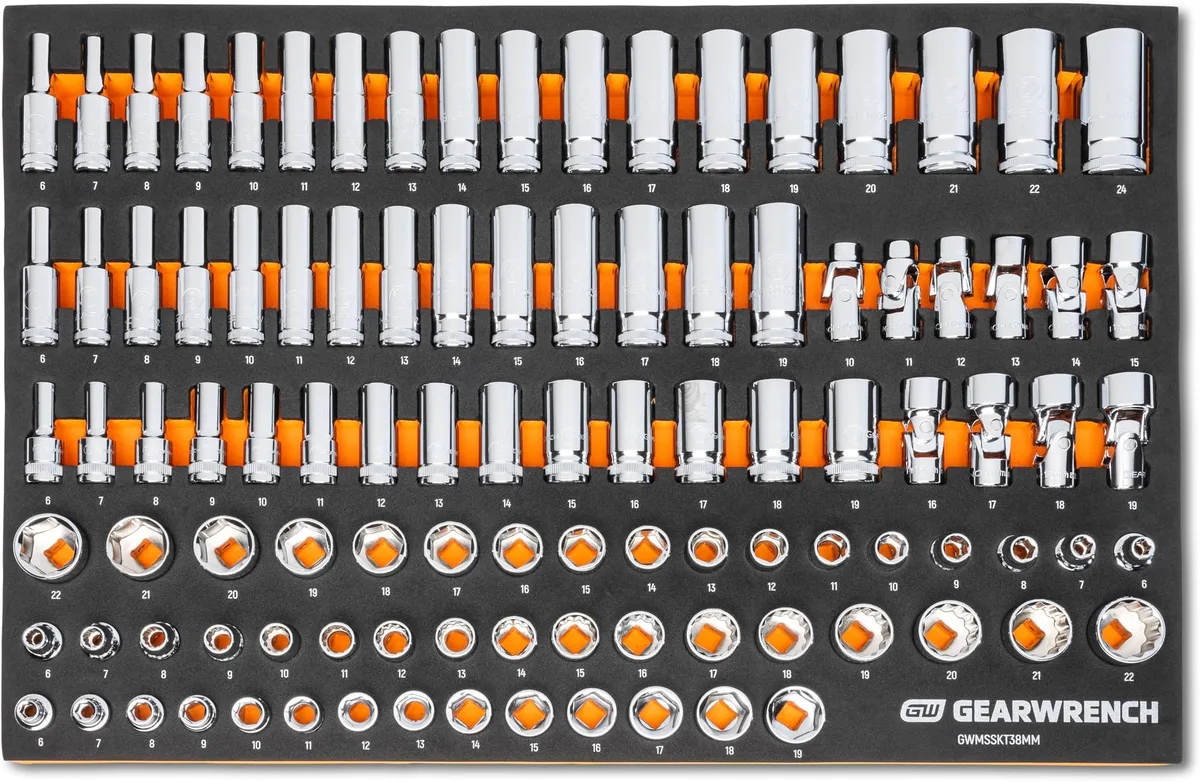

Image source: Web (Bing) / amazon.com (Web image (fair-use with source credit))
Buy Once, Use Often: Deciding Between Purchasing and Renting or Borrowing
Not every specialty tool deserves a permanent place on your wall rack. Some tools appear once every three to five years during a major overhaul. Others show up monthly during a busy season of scheduled maintenance.
The decision tree for buying versus renting hinges on projected usage frequency, purchase price relative to rental cost, and storage space constraints.
A simple formula guides the decision: multiply the tool's retail price by your expected annual usage rate, then subtract rental cost per use. If owned-tool annual depreciation stays below the cumulative rental expense over five years, purchasing is the smarter financial choice. If rental costs remain lower, borrow or rent without guilt.
High-Use Tools Worth Owning Forever
Quality socket sets spanning one-half inch and three-eighth inch drives in both metric and SAE sizes form the backbone of any shop. These tools see constant reuse and represent the single highest return on investment you can make. Invest well here.
Torque wrenches deserve equal priority. Factory torque specifications govern critical assembly sequences on cylinder heads, connecting rods, wheel studs, and suspension pickets. Using uncalibrated or improvised fastening methods risks component failure under road loads.
A click-type torque wrench covering zero to one hundred fifty foot-pounds costs between one hundred and one hundred seventy-five dollars and requires calibration every twelve thousand cycles or annually per SAE J1332 standards.
Multimeters are indispensable for diagnosing electrical gremlins that no amount of wrenching resolves. A basic digital multimeter with AutoRange capability, voltage continuity checking, and temperature probe input costs under fifty dollars and pays for itself within a single lighting circuit troubleshooting session.
Low-Use Specialty Tools Better Off Renting or Borrowing
Piston ring compressors, timing tool kits, and spring compressors represent low-frequency investments for most owners. These items cost between one hundred and two hundred fifty dollars individually yet serve singular purposes during rebuilds that happen every decade or two for the average vehicle.
Local auto parts stores rent specialty tools through programs like AutoZone's Tool Library or O'Reilly's parts department loaner programs. Rental rates typically run fifteen to thirty dollars per day or fifty to one hundred twenty dollars per week. Compare that to a two-hundred-dollar purchase price, and renting wins clearly for tools used fewer than three times annually.
Public lending libraries in many metropolitan areas now carry tool libraries offering automotive specialty implements alongside woodworking and gardening equipment. Membership fees range from twenty to sixty dollars annually and grant access to a rotating inventory of high-quality equipment without storage commitment.
Where to Find Affordable Rentals and Lending Libraries
Major auto parts retailers operate formal tool rental desks at storefront locations. Call ahead to confirm availability of specific items since inventory rotates based on seasonal demand. Seasonal peaks around spring tune-up periods and fall tire changeovers increase rental wait times for popular items like coil spring compressors and transmission jack rentals.
Community tool libraries connect residents through local municipality websites or independent nonprofit organization directories. Search terms like "community tool library automotive" paired with your city name surface regional programs often operated by maker spaces or vocational schools eager to share resources.
Manufacturer trade schools sometimes maintain equipment lending programs for enrolled students and occasionally extend access to community members during non-instructional hours. Contact nearby community college automotive technology departments to inquire about public access opportunities.
Choosing the Right Tool for the Job: Quick Reference Guide
Matching the correct tool to the specific task prevents part damage, personal injury, and wasted weekends. A reference framework organized by repair category, frequency of use, and skill level helps you prioritize purchases logically instead of reacting to every tool you encounter online.
Categories of repair work naturally group into overlapping tool families. Brake service shares some implements with suspension work while engine overhaul demands entirely different equipment. Mapping your actual driving habits and maintenance history against required tools prevents purchasing unused inventory that gathers rust in a damp basement corner.
By Repair Category: Engine, Transmission, Suspension, Brakes
| Repair Category | Priority Specialty Tools | Approximate Total Investment |
|---|---|---|
| Engine Rebuild | Piston ring compressor, valve spring compressor, timing tool kit, bearing puller set | $400 to $900 |
| Transmission Service | Transmission jack, input shaft support tool, seal driver set, pan gasket scraper | $200 to $500 |
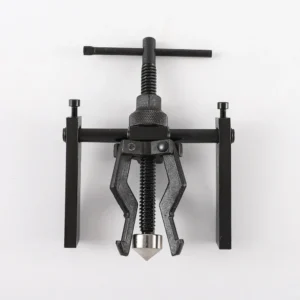
| Suspension Refresh | Ball joint separator, coil spring compressor, tie rod end puller, hub puller | $250 to $600 |
| Brake Service | Caliper piston tool, bleeder kit, brake spring tool set, rotor hold-down pin tool | $80 to $200 |
By Frequency of Use: Daily Shop Needs vs. Annual DIY Tasks
Tools needed quarterly or more frequently, torque wrenches, multimeters, brake bleeder kits, oil filter wrenches, merit immediate purchase at the best quality tier you can afford. These tools get used enough that quality pays for itself rapidly through reliability and reduced frustration.
Tools encountered every two to four years, timing kits, spring compressors, bearing pullers, qualify for mid-range purchasing or rental depending on your local availability. Evaluate your region's rental options before committing to ownership since a fifteen-dollar rental fee eliminates two hundred dollars of locked-up capital and wall space.
Tools reserved for rare events like complete engine removal, bodywork welding, or frame straightening rarely justify standalone purchase. Partner with a friend, hire a professional service, or utilize a shop's specialized equipment for these occasional needs rather than stocking equipment you won't touch again until your next major restoration project five years out.
By Skill Level: Beginner Projects vs. Pro-Level Restorations
Novice mechanics should start with a focused beginner kit covering oil changes, brake service, and basic suspension inspection. That means a quality socket set, spark plug wire tool, oil filter wrench, caliper spreader, and a basic multimeter. Total investment stays under three hundred dollars and addresses roughly seventy percent of routine household maintenance tasks.
Intermediate builders tackling camshaft replacements, head gasket swaps, and clutch installations add valve spring compressors, piston ring tools, torque wrenches, and flywheel lock fixtures to their collection. This expansion pushes total specialty investment toward one thousand dollars but opens the door to major powertrain work previously requiring dealership visits.
Advanced restorers restoring classic cars or building performance engines accumulate specialized puller sets, engine stand adapters, dial indicator measurement tools, and precision machining implements. This final tier approaches professional shop budgets and demands careful financial planning before committing funds to tools that represent both significant cost and substantial storage requirements.
Safety First: Risks and Common Mistakes with Specialty Tools
Specialty tools solve difficult mechanical problems, but they introduce their own hazard profiles when used incorrectly. Hydraulic systems store lethal pressure. Mechanical levers multiply human force dramatically.
Springs release stored energy instantaneously. Understanding risk factors before first use separates careful builders from ER visitors.
The Occupational Safety and Health Administration maintains specific guidelines for hand and power tool safety in automotive workplaces under standard 29 CFR 1910.242. While residential garage work falls outside OSHA jurisdiction, following the same precautionary principles dramatically reduces incident likelihood during DIY projects. Compliance isn't about regulation obsession.
It's about treating concentrated mechanical force with the respect it commands.
High-Pressure Hydraulic Tool Dangers
Hydraulic bearing pullers, hub splitters, and press kits generate thousands of pounds of linear force through enclosed fluid systems. A hose burst under load can inject fluid into skin tissue causing severe medical emergencies requiring surgical intervention. Inspect all hydraulic connections before pressurizing.
Replace cracked lines immediately and never bypass relief valve protections to achieve higher force output.
Keep body parts clear of press ram travel paths and pinch points during operation. Position yourself to the side rather than directly behind an applied hydraulic ram in case of unexpected component failure or housing fracture under extreme load.
Torque and Load Limits: Don't Force What Can't Be Forced
Every specialty tool carries a maximum load rating stamped or printed on its body. Exceeding those ratings risks catastrophic tool failure under stress. A ball joint separator rated for two-ton capacity attempting to free a rust-seized joint rated at four tons will either deform the tool itself or shatter the separator jaw under sudden load release.
Apply penetrating oil and allow extended soaking periods before attempting separation force on corroded joints. Sometimes patience prevents tool destruction far better than raw applied force ever could. Force that makes metal shriek usually indicates the wrong approach rather than insufficient muscle.
Improper Applications That Destroy Parts
Using a ball joint separator as a hammer stop, prying with a socket wrench extension, or substituting a pipe for leverage on any turning tool converts precision implements into component destroyers. Each improper application damages both the tool and the surrounding assembly equally.
Reserve every specialty tool exclusively for its engineered purpose. When faced with an unconventional fastener configuration, research the correct tool variant rather than improvising with available hardware. An incorrect adaptation costs time, money, and usually both the fastener and the component it secures in the process.
Proper Storage and Maintenance to Keep Tools Safe
Clean specialty tools after each use with a dry rag and light machine oil coating on exposed steel surfaces. Store in organized trays or padded cases preventing edge nicks and thread damage during transit. Inspect for cracks, deformation, and worn contact surfaces before each deployment.
Retire damaged tools immediately rather than attempting repair with welds or straightening. Compromised structural integrity in a load-bearing tool creates unpredictable failure modes that endanger both operator and nearby personnel during high-force applications.
Costs, Lifespan, and ROI of Quality Tool Sets
Building a specialty tool collection represents a meaningful financial commitment for any home mechanic. Understanding realistic price ranges, expected lifespans, and long-term return calculations helps you allocate limited garage budget toward highest-value acquisitions first.
Individual specialty tools vary widely in price depending on complexity, material grade, and brand positioning. Simple hand tools like caliper spreaders and boot pullers sit near the low end while hydraulic systems and precision measurement instruments occupy the upper bracket. Your purchasing strategy should reflect actual usage probability weighted against individual tool costs.
Realistic Price Ranges by Tool Category
| Tool Category | Entry-Level Price | Quality Brand Price | Professional Brand Price |
|---|---|---|---|
| Oil Filter Wrench Set | $8 to $15 | $18 to $35 | $25 to $50 |
| Caliper Piston Tool | $10 to $20 | $22 to $45 | $35 to $65 |
| Ball Joint Separator | $35 to $60 | $65 to $110 | $95 to $160 |
| Coil Spring Compressor | $60 to $100 | $110 to $180 | $175 to $275 |
| Piston Ring Compressor | $45 to $80 | $85 to $150 | $130 to $225 |
| Valve Spring Compressor | $50 to $90 | $95 to $170 | $150 to $260 |
| Bearing Puller Set | $30 to $60 | $65 to $120 | $100 to $180 |
| Timing Tool Kit | $55 to $100 | $110 to $200 | $175 to $320 |
How Long Professional Tools Last with Care
A properly maintained chrome vanadium socket set from a professional brand routinely exceeds ten years of regular residential use before measurable dimensional wear appears. Impact-rated sockets endure even longer under rotational impact loading when used within their specified torque ratings.
Steel degradation in budget tools manifests as rounded hex sockets, cracked ratchet pawls, and stripped knurling on adjustment screws within the first two to three years of equivalent usage. The economic gap between replacing cheap tools annually versus investing upfront compounds significantly over a decade of project work.
Measuring Return on Investment: Time Saved vs. Money Spent
Calculating ROI requires tracking both direct costs and indirect savings. A two-hundred-dollar piston ring compressor prevents potentially fifteen-hundred-dollar engine block damage from improper installation methods. The tool pays for itself sixfold on a single rebuild completion rather than an aborted attempt requiring professional machining correction.
Time savings represent equally valuable return metrics. Specialty tools completing jobs in twenty minutes instead of three hours preserve weekend availability and reduce project abandonment rates among home mechanics. Equipment enabling completion generates both monetary savings and personal satisfaction value difficult to quantify precisely but deeply felt by anyone who has walked away from an unfinished garage project.
Frequently Asked Questions
When Do I Really Need a Specialty Tool Instead of a Regular Socket?
You need a specialty tool whenever a repair involves press-fit components, tensioned springs, or fragile seals that standard sockets cannot safely manipulate. If a job requires controlled separation force, precise compression, or protection of mating surfaces, improvisation risks damaging hundreds of dollars of parts. Specialty tools distribute force evenly where general wrenches concentrate it destructively on single points.
Can I Mix Metric and SAE Specialty Tools in One Set?
Mixing metric and SAE specialty tools in one collection works fine as long as you label each group clearly. Using the wrong sizing system strips fastener heads instantly and often damages the tool itself. Keep them stored separately or use color-coded markers on tool cases to prevent confusion during time-sensitive repairs.
What's the Most Important Specialty Tool for a Home Mechanic?
A quality torque wrench ranks as the single most important specialty tool for any home mechanic. Factory torque specifications protect engine internals, suspension integrity, and wheel security. Skipping torque verification invites catastrophic component failure under road loads.
Invest in a click-type model covering your most common fastener ranges before adding anything else.
How Do I Know If a Used Specialty Tool Is Still Safe to Use?
Inspect used specialty tools for cracks, deformation, worn contact surfaces, and stripped adjustment threads before purchase. Hydraulic tools require pressure testing since internal seal degradation causes sudden failure under load. A mirror finish with no pitting, clean moving parts, and original manufacturer markings indicate a tool worth buying secondhand at a significant discount.


