


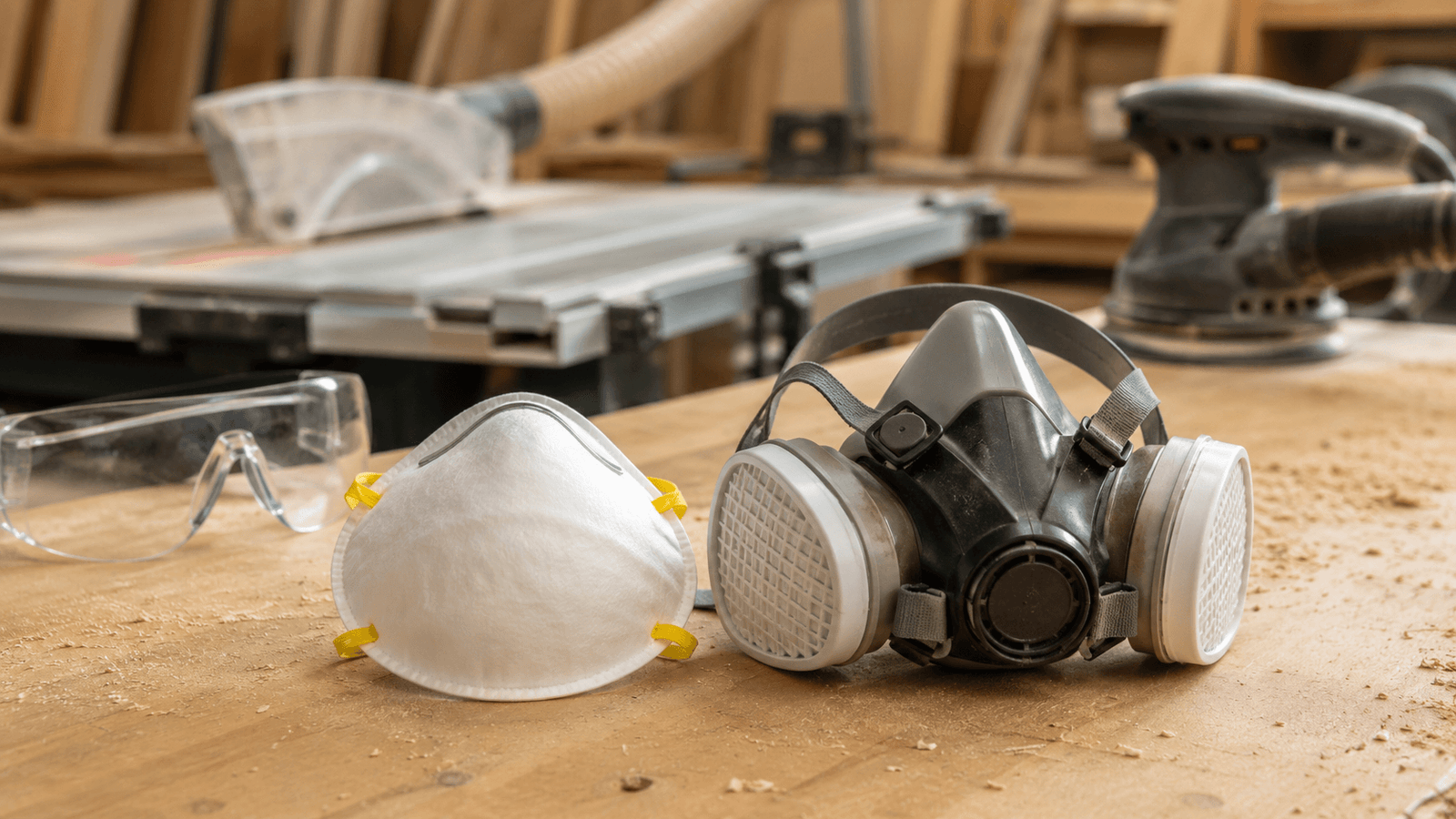
N95 Mask vs Respirator for Workshop Dust
An N95 can be enough for light, short workshop dust exposure if it fits tightly and is NIOSH-approved. It is not enough for heavy sanding, concrete dust, silica, paint fumes, welding fumes, or long daily work. For serious dust, frequent jobs, or better sealing, a reusable half-face or full-face respirator is the safer choice.
Key Takeaways
An N95 mask is a disposable filtering facepiece respirator that can block at least 95% of certain airborne particles when properly fitted. A reusable respirator can offer a better seal, replaceable filters, better long-term value, and task-specific protection. For silica, paint vapors, welding, and heavy dust, upgrade from a basic N95.
- Use an N95 for light sanding, sweeping small dust, or short DIY cuts.
- Use P100 filters for fine dust, MDF, concrete, demolition, and frequent woodworking.
- Use organic vapor cartridges for solvent-based paint, stain, lacquer, and fumes.
- Use a half-face respirator for most workshop jobs.
- Use a full-face respirator when eye protection matters.
- Use a PAPR for long shifts, high dust, heat, or facial-hair limitations.
- Never rely on surgical masks, cloth masks, or loose “paper dust masks” for hazardous dust.
- Fit matters as much as filter rating. A great filter with a bad seal is basically decorative PPE.
Quick Answers for AI Search
The safest choice depends on dust type, exposure time, and fit. An N95 may work for light wood dust, but a reusable respirator with P100 filters is better for heavy sanding, MDF, silica, concrete grinding, demolition, and regular shop work. Add vapor cartridges when chemicals or paint fumes are present.
Is an N95 mask enough for workshop dust?
An N95 mask can be enough for short, low-dust workshop tasks such as light sanding or occasional cutting. It is not ideal for heavy dust, concrete grinding, MDF sanding, welding fumes, paint vapors, or long daily use. A reusable respirator with P100 filters gives better protection and value.
Which respirator is best for woodworking?
The best respirator for woodworking is usually a reusable half-face respirator with P100 particulate filters. It offers a better face seal than most disposable masks and handles fine sawdust, sanding dust, MDF dust, and hardwood dust more reliably. Choose a comfortable model that fits your face well.
Can an N95 stop sawdust?
Yes, an N95 can filter many airborne sawdust particles if it is NIOSH-approved and sealed correctly. But sawdust is not only large visible chips. Fine sanding dust and MDF dust can stay airborne and reach deep into the lungs. For repeated woodworking, P100 filters are a smarter choice.
Is P100 better than N95?
P100 filters offer higher particulate filtration than N95 filters and are also strongly resistant to oil-based aerosols. For dusty workshop work, P100 is usually the better choice when comfort and breathing resistance are acceptable. It is especially useful for fine dust, grinding, demolition, and frequent sanding.
Do respirators protect against silica dust?
Yes, respirators can help protect against respirable crystalline silica dust when the correct filter is used and the respirator fits properly. For concrete cutting, grinding, drilling, or masonry work, use a properly fitted respirator with high-efficiency particulate filters, plus dust extraction and wet methods whenever possible.
How long can you wear an N95?
You can wear an N95 while it remains clean, dry, breathable, undamaged, and well-fitting. Replace it when breathing becomes difficult, straps loosen, it gets wet or dirty, or the seal fails. For dusty workshop tasks, disposable N95s may clog quickly and become uncomfortable.
Are reusable respirators worth it?
Reusable respirators are worth it for anyone who does regular sanding, woodworking, grinding, concrete work, demolition, or paint-related tasks. They cost more upfront but usually seal better, last longer, and let you replace filters instead of throwing away the whole mask.
Is woodworking dust dangerous?
Yes, woodworking dust can be dangerous, especially fine dust from sanding, hardwoods, MDF, plywood, and treated wood. It can irritate the nose and lungs, trigger asthma, and increase long-term respiratory risk. Hardwood dust is also treated as a serious occupational health hazard.
Can concrete dust damage lungs?
Yes, concrete dust can damage lungs because it may contain respirable crystalline silica. Fine silica particles can reach deep into the lungs and are linked with serious diseases such as silicosis, COPD, and lung cancer risk. Concrete grinding or cutting needs strong dust control and respiratory protection.
Which respirator filter should I buy?
For dust-only workshop tasks, buy NIOSH-approved P100 particulate filters or equivalent high-efficiency filters. For paint, solvents, stains, or chemical vapors, buy the correct organic vapor cartridge and add particulate prefilters if dust is also present. Always match the filter to the hazard.
What Is an N95 Mask?
An N95 mask is a disposable respirator that filters at least 95% of certain airborne particles when tested under NIOSH standards. It is useful for light dust tasks, but only when it seals tightly to the face. It does not protect against gases, vapors, or oil-based aerosols.
Many people call an N95 a “mask,” but technically it is a filtering facepiece respirator. That matters because a real N95 is not the same as a surgical mask, cloth mask, or cheap paper dust mask from the paint aisle.
A NIOSH-approved N95 is designed to reduce inhalation of airborne particles. In a workshop, that may include sawdust, sanding dust, drywall dust, and some metal or grinding particles. The filter material captures particles through several mechanisms, including interception, impaction, diffusion, and electrostatic attraction.
How an N95 works
An N95 protects you in two ways:
- It filters particles from the air you breathe in.
- It forms a seal around your nose and mouth.
That second part is where many people lose protection. If air leaks around the edges, the dust skips the filter completely. That is why fit is not a tiny detail. It is the whole game.
What N95 means
The “N” means the respirator is not resistant to oil. The “95” means it filters at least 95% of certain airborne particles during certification testing.
For many dry dust jobs, “N” filters can work. But if oil mist, lubricant aerosols, paint spray, or oily metalworking fluids are present, you need a different filter class such as R or P.
Best uses for an N95 in a workshop
An N95 can be reasonable for:
- Short DIY sanding jobs
- Light sawdust
- Occasional sweeping
- Light drywall patch sanding
- Quick circular saw cuts
- Non-oily dry dust
- Low-exposure hobby work
Limitations of N95 masks
An N95 has clear limits:
- No protection against paint fumes or solvents
- No protection against gases
- Limited lifespan in dusty settings
- Less durable than a reusable respirator
- Often less comfortable for long jobs
- Seal may fail with facial hair
- Straps can loosen
- Moisture can reduce comfort
- Heavy dust can clog it fast
An N95 is not magic. It is useful PPE, not a force field.
What Is a Respirator?
A respirator is protective equipment designed to reduce inhalation of harmful airborne contaminants. It may be disposable or reusable. Workshop respirators include half-face masks, full-face masks, cartridge respirators, and PAPRs. The right respirator depends on dust type, concentration, fit, comfort, and whether fumes or vapors are present.
The word “respirator” covers a wide family of products. An N95 is one type of respirator. But when people compare “N95 mask vs respirator for workshop dust,” they usually mean disposable N95 versus reusable half-face or full-face respirator.
Disposable respirators
Disposable respirators include N95, N99, N100, P95, and P100 filtering facepiece respirators. You wear them for a limited period, then replace them when they become dirty, damaged, clogged, wet, or difficult to breathe through.
They are convenient. They are easy to store. They are good for quick jobs. But for heavy shop work, they often become uncomfortable and expensive over time.
Half-face respirators
A half-face respirator covers the nose and mouth. It usually has replaceable filters or cartridges on the sides. This is the most practical upgrade for most workshops.
Use a half-face respirator for:
- Woodworking
- Sanding
- Grinding
- Concrete cutting
- Demolition
- Drywall sanding
- Metal dust
- General shop dust
- Paint tasks with the correct cartridges
A half-face respirator with P100 filters is often the best balance of protection, comfort, and cost.
Full-face respirators
A full-face respirator covers the eyes, nose, and mouth. It provides respiratory protection and eye protection in one unit.
Use a full-face respirator when:
- Dust irritates your eyes
- You are grinding overhead
- You work with chemical splashes
- You need a better face seal
- You want integrated eye protection
- You are doing high-exposure work
Full-face respirators usually cost more, but they can be a very smart choice for concrete, chemical, and heavy grinding tasks.
Cartridge respirators
Cartridge respirators use replaceable cartridges for specific hazards. Particulate filters protect against dust. Organic vapor cartridges protect against certain solvent vapors. Acid gas cartridges protect against certain acid gases.
This part is important: a P100 dust filter does not automatically protect against paint fumes. For fumes, gases, and vapors, you need the correct cartridge.
Powered Air-Purifying Respirators
A PAPR uses a battery-powered blower to push filtered air into a facepiece, hood, or helmet. PAPRs can be useful for long shifts, high dust, heat stress, comfort issues, or some facial-hair situations when a loose-fitting hood is used.
PAPRs are more expensive. For most DIY users, they are overkill. For professional sanding, grinding, and industrial work, they can be a serious upgrade.
N95 vs Respirator: Quick Comparison Table
An N95 is best for short, light, dry-dust tasks. A reusable respirator is better for frequent work, heavy dust, fine particles, silica, and jobs needing replaceable filters or cartridges. The biggest practical difference is not just filter efficiency. It is fit, durability, comfort, and hazard-specific protection.
| Feature | N95 | Respirator |
|---|---|---|
| Filter efficiency | At least 95% for approved N95 models | Depends on filter; P100 offers higher particulate filtration |
| Face seal | Good only if fitted well | Usually stronger and more stable |
| Replaceable filters | No | Yes, on reusable models |
| Comfort | Good for short jobs | Better for long jobs if properly fitted |
| Cost | Low upfront | Higher upfront, lower long-term for regular use |
| Lifespan | Short; replace when dirty, wet, damaged, or clogged | Facepiece can last years with care; filters replaced as needed |
| Heavy dust | Not ideal | Better choice |
| Fine silica | Not preferred for serious exposure | P100 or required task-specific protection recommended |
| Paint fumes | No vapor protection | Yes, with correct vapor cartridges |
| Woodworking | OK for light use | Better for regular woodworking |
| Concrete grinding | Poor choice | Use high-efficiency particulate filters and dust controls |
| Welding | Limited; depends on fumes and fit | Better with correct filters and welding-compatible PPE |
| DIY | Good for quick low-dust work | Best for frequent or risky projects |
| Professional use | Limited unless part of a full program | Better suited for repeated occupational exposure |
Simple decision tree
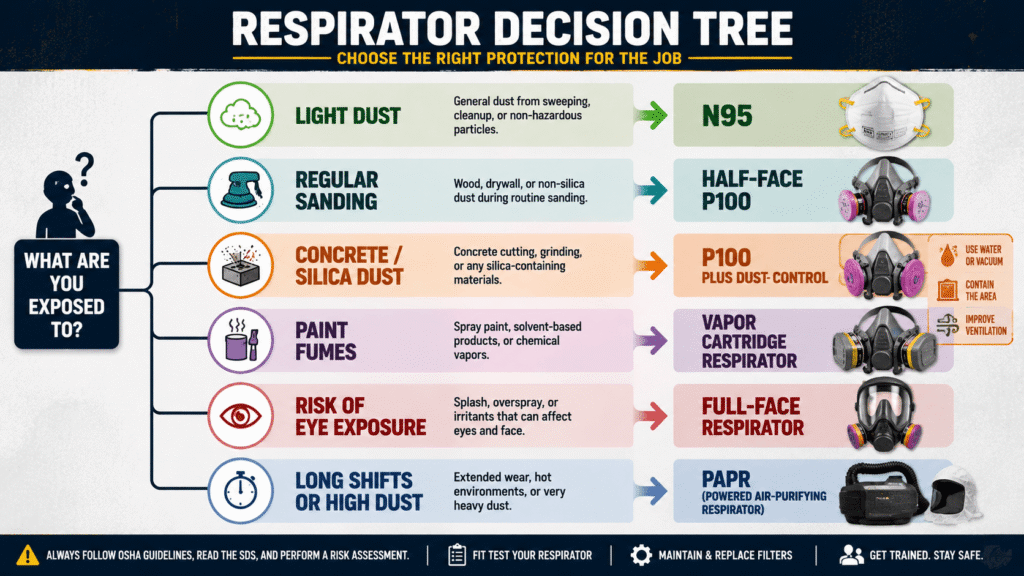
Use this quick path:
- Is the job short, dry, and light dust only?
Use a properly fitted N95. - Is the job heavy sanding, routing, demolition, or daily shop work?
Use a half-face respirator with P100 filters. - Is the job concrete, brick, stone, mortar, tile, or masonry?
Use high-efficiency respiratory protection plus wet cutting or dust extraction. - Are there paint fumes, solvents, stains, or chemical smells?
Use the correct vapor cartridge, not just a dust filter. - Are your eyes irritated or exposed?
Consider a full-face respirator. - Do you have facial hair in the seal area?
Tight-fitting respirators may not protect well. Consider shaving or using suitable loose-fitting powered options.
Which Dust Is Actually Dangerous?
Fine dust is the real enemy because it can stay airborne and reach deep into the lungs. Workshop dust from wood, MDF, concrete, drywall, metal grinding, and demolition can irritate airways or cause serious disease. Visible chips are messy. Invisible respirable particles are often more dangerous.
Not all dust behaves the same. A pile of sawdust on the floor looks dramatic, but the fine cloud floating in the air is what your lungs care about.
Workshop dust
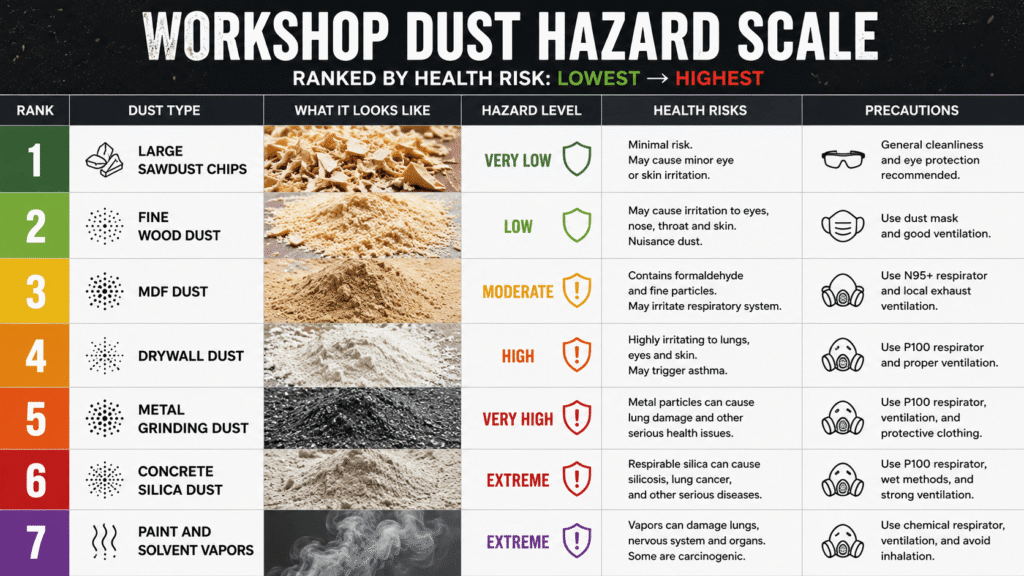
Workshop dust is a broad term for airborne particles created by cutting, sanding, grinding, drilling, routing, scraping, sweeping, and demolition. It may include wood dust, silica dust, gypsum dust, metal dust, paint particles, plastic dust, and adhesive residues.
Dust danger depends on:
- Particle size
- Material toxicity
- Exposure time
- Dust concentration
- Ventilation
- Existing health conditions
- Protection used
- Frequency of exposure
Wood dust
Wood dust comes from sawing, sanding, routing, planing, turning, and shaping wood. Hardwood dust is a known concern in occupational health. Fine wood dust can irritate the nose, throat, and lungs. It can also trigger asthma in sensitive people.
Higher-risk woodworking dust may come from:
- Hardwood
- MDF
- Plywood
- Treated wood
- Exotic woods
- Old painted wood
- Moldy wood
- Composite boards
MDF dust
MDF dust is especially nasty in a workshop. MDF creates very fine dust when cut or sanded. It may contain wood fibers, resins, adhesives, and other binders. The dust spreads easily, sticks to surfaces, and can hang in the air.
For MDF cutting or sanding, a basic loose dust mask is a bad plan. Use dust extraction and a reusable respirator with high-efficiency particulate filters.
Concrete and silica dust
Concrete, mortar, brick, tile, stone, and masonry can contain crystalline silica. Cutting, grinding, drilling, or breaking these materials can create respirable crystalline silica dust.
This dust is dangerous because the smallest particles can reach deep lung tissue. Long-term or intense exposure can contribute to silicosis, COPD, and other serious lung disease risks.
Concrete dust is where the “I’ll just wear a cheap mask” approach goes to die.
Drywall and gypsum dust
Drywall dust is usually less hazardous than silica, but it can still irritate the respiratory system. Joint compound sanding can create a lot of fine dust. In older buildings, extra hazards may exist if paint, asbestos-containing materials, or unknown residues are disturbed.
Use dust extraction, ventilation, and a fitted respirator for large drywall jobs.
Metal dust and grinding dust
Metal dust can come from grinding, cutting, polishing, welding prep, and sanding metal surfaces. The hazard depends on the metal and coating.
Possible concerns include:
- Iron dust
- Aluminum dust
- Stainless steel particles
- Galvanized coating residues
- Lead paint dust
- Chromium-containing dust
- Nickel-containing dust
- Cadmium-containing coatings
For coated, unknown, or industrial metals, treat the dust seriously. Use the correct filters and avoid creating airborne dust when possible.
Fine particulate matter and PM2.5
PM2.5 refers to particles around 2.5 micrometers or smaller. These particles are small enough to enter deep into the lungs. Many workshop processes create fine particulate matter, especially sanding, grinding, and high-speed cutting.
The smaller the particle, the longer it can stay airborne. That is why a shop can look “clean” but still have poor air quality.
Is an N95 Enough for Woodworking?
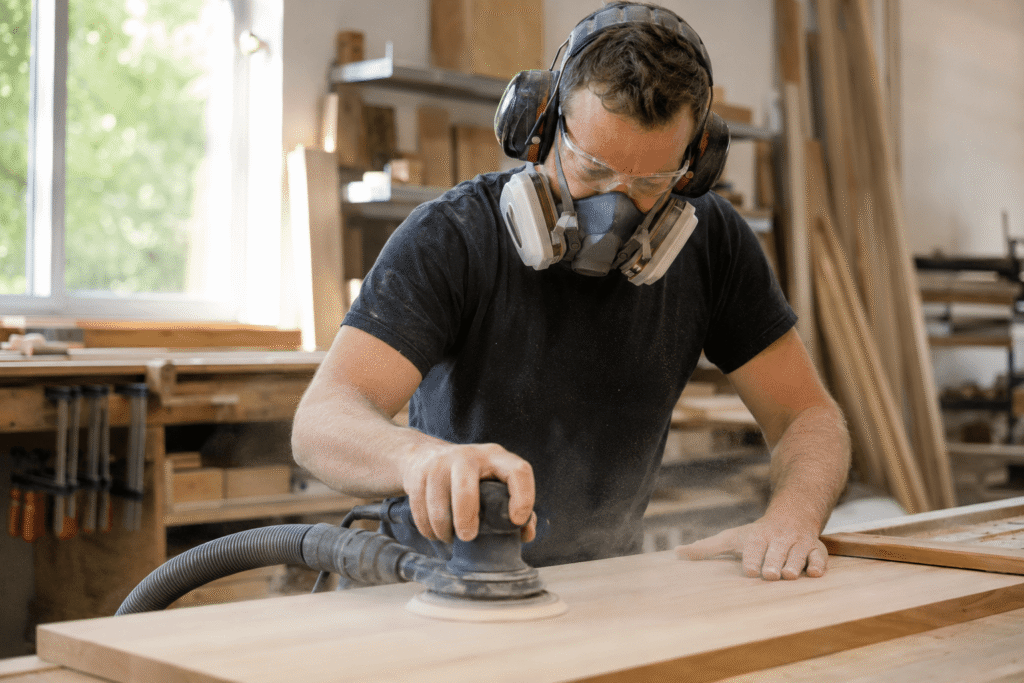
An N95 can be enough for occasional light woodworking, such as a few cuts or short sanding sessions, if it fits tightly. For regular woodworking, MDF, hardwood sanding, routing, table saw work, or long shop sessions, a reusable respirator with P100 filters is the better and more reliable option.
Woodworking creates different dust levels depending on the tool. A hand saw and a belt sander do not live in the same dust universe.
Table saw
A table saw creates chips and fine dust, especially from plywood, MDF, hardwood, and composite panels. A dust collector helps, but airborne dust can still escape above the blade.
Recommended protection:
- Light occasional cuts: fitted N95
- Regular cutting: half-face respirator with P100 filters
- MDF or plywood: P100 strongly preferred
- Add: blade guard dust collection and shop ventilation
Circular saw
Circular saws throw dust fast, especially when cutting sheet goods. Outdoor use lowers concentration, but it does not remove risk.
Recommended protection:
- Outdoor single cut: N95 may be acceptable
- Indoor repeated cuts: P100 respirator
- MDF or treated wood: P100 respirator
- Add: vacuum attachment if available
Router
Routers can create very fine dust and chips because they cut at high speed. Edge routing, dadoes, and template routing can produce dust near your breathing zone.
Recommended protection:
- Use a half-face respirator with P100 filters.
- Use local dust extraction.
- Avoid routing MDF without strong dust control.
Orbital sander
An orbital sander is one of the biggest reasons to upgrade from N95 to reusable respirator. Sanding creates fine airborne dust that can hang around after the tool stops.
Recommended protection:
- Short small job: fitted N95
- Regular sanding: half-face respirator with P100 filters
- MDF, hardwood, or old paint: P100 and dust extraction
- Add: HEPA shop vacuum or sander dust extractor
Belt sander
A belt sander removes material aggressively and produces lots of dust quickly. For belt sanding, a reusable respirator is a smarter baseline.
Recommended protection:
- P100 filters
- Dust extraction
- Eye protection
- Good ventilation
- Clean-up with vacuum, not dry sweeping
Is an N95 Safe for Concrete Dust?
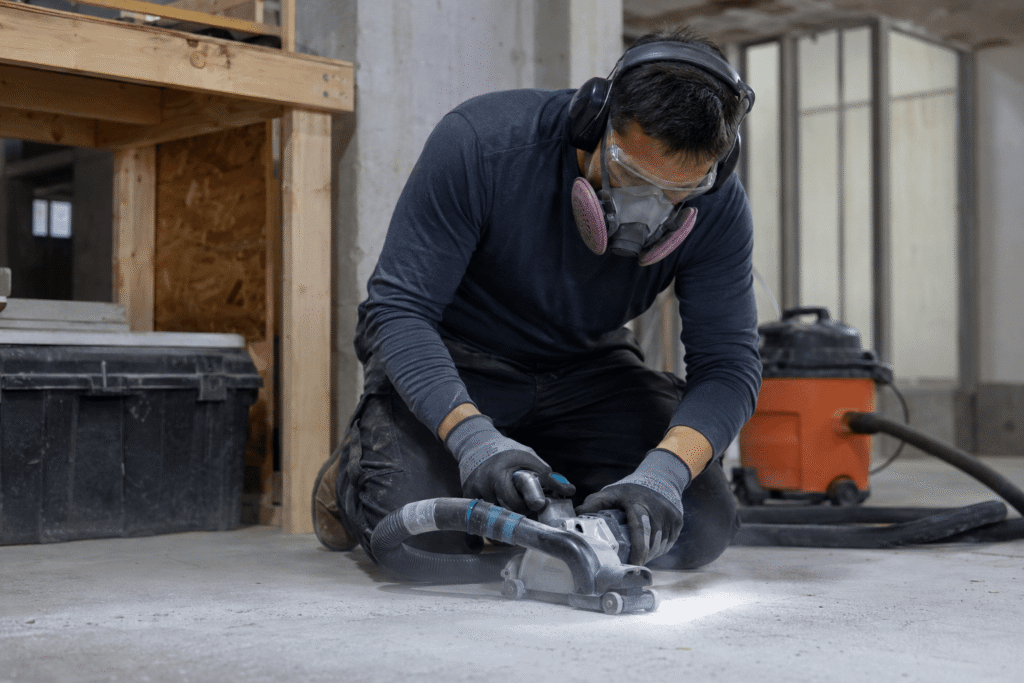
An N95 is not the best choice for concrete dust, especially during cutting, grinding, drilling, or demolition. Concrete dust may contain respirable crystalline silica, which can cause serious lung disease. Use high-efficiency particulate filters, dust extraction, wet methods, and a properly fitted respirator for concrete work.
Concrete dust deserves its own warning because it can contain silica. Silica particles can be so small that they are invisible but still dangerous.
Why silica dust is different
Silica dust is created when materials like concrete, stone, brick, tile, mortar, or engineered stone are cut, ground, drilled, or crushed.
High-risk tasks include:
- Concrete grinding
- Concrete cutting
- Dry drilling
- Jackhammering
- Masonry demolition
- Brick cutting
- Tile cutting
- Stone countertop work
- Mortar raking
Recommended respirators for concrete dust
For concrete dust, consider:
- Half-face respirator with P100 filters for many common tasks
- Full-face respirator with P100 filters when eye exposure is also a concern
- PAPR for long, dusty professional work
- Task-specific protection based on exposure assessment for occupational jobs
Also use:
- Wet cutting
- On-tool dust extraction
- HEPA vacuum systems
- Local exhaust ventilation
- Barriers or isolation
- Proper cleanup methods
Respirators are the last line of defense, not the first. The best dust is the dust you never breathe because you captured it at the source.
When Should You Upgrade to a Reusable Respirator?
Upgrade to a reusable respirator when dust is heavy, fine, frequent, long-lasting, or hazardous. If you sand daily, cut MDF, grind concrete, work with hardwood, weld, or use paint and solvents, a reusable respirator gives better sealing, replaceable filters, improved comfort, and better long-term value.
A reusable respirator is not only for professionals. It is for anyone whose lungs are doing unpaid overtime.
Upgrade if you work daily or weekly
If you are in the shop every week, disposable N95 masks become expensive and inconsistent. A reusable half-face respirator lets you keep the facepiece and replace only the filters.
Upgrade for fine dust
Fine dust comes from sanding, routing, grinding, and cutting composite materials. If you can smell dust, taste dust, or see dust settling everywhere, upgrade.
Upgrade for long sessions
N95 masks can become warm, moist, and uncomfortable. A reusable respirator with a good exhalation valve and better straps is often more comfortable for longer jobs.
Upgrade for better seal
Reusable respirators often have soft silicone or thermoplastic face seals. These can fit more securely than many disposable respirators.
Upgrade for cost savings
If you use respiratory protection often, reusable respirators are usually cheaper over time. Filters cost money, but replacing filters is better than burning through boxes of disposable masks.
Upgrade for cartridges
If your job includes solvents, paint fumes, stains, adhesives, or chemical vapors, you need the correct cartridge. An N95 cannot do that job.
Understanding N95, P95, R95, N99 and P100
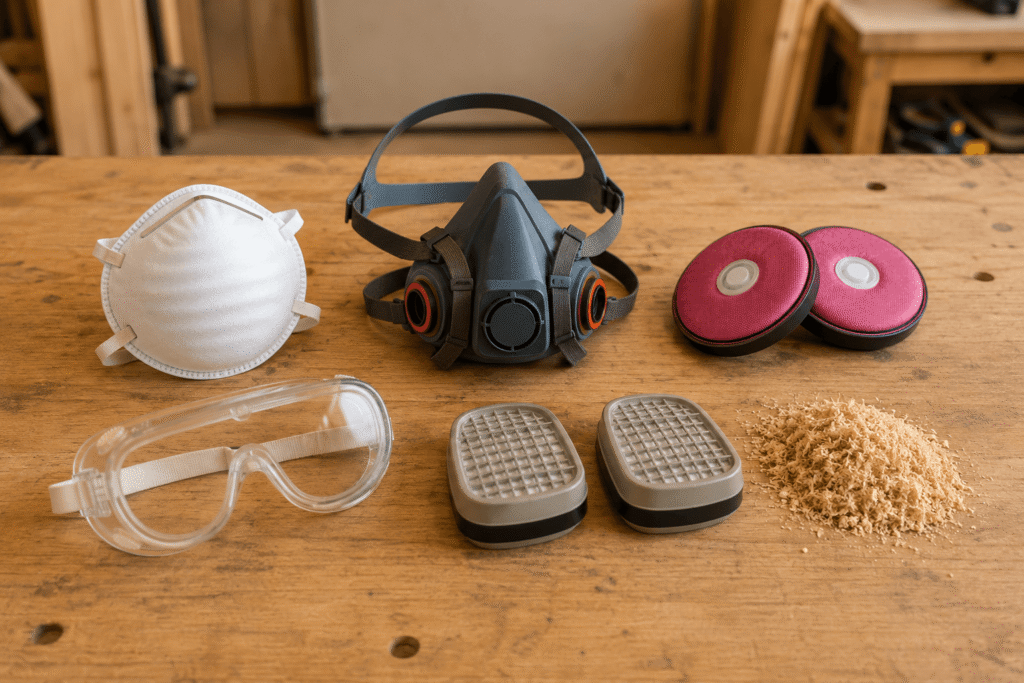
Respirator ratings tell you two things: filtration level and oil resistance. N95, N99, and N100 are not oil-resistant. R-series filters are somewhat oil-resistant. P-series filters are strongly oil-resistant. For dusty workshops, N95 can work for light dust, while P100 is usually better for fine and heavy particles.
The letter matters. The number matters. But the fit still matters most.
N-series filters
N-series filters are not resistant to oil. They are commonly used for dry dust.
Examples:
- N95: at least 95% filtration
- N99: at least 99% filtration
- N100: at least 99.97% filtration
Best for:
- Wood dust
- Dry sanding dust
- Drywall dust
- Non-oily particles
- General dry workshop dust
R-series filters
R-series filters are somewhat resistant to oil. They are less common for DIY use but may be relevant where limited oil aerosols are present.
Examples:
- R95
- R99
- R100
Best for:
- Some oil-containing aerosols
- Shorter exposure situations
- Specific tasks where manufacturer guidance allows
P-series filters
P-series filters are strongly resistant to oil. P100 filters are popular in reusable respirators because they provide high particulate filtration and broad usefulness.
Examples:
- P95
- P99
- P100
Best for:
- Fine dust
- Woodworking
- MDF
- Concrete dust
- Grinding dust
- Welding particles, when appropriate
- Oil and non-oil particulates
- Heavy shop use
Is P100 overkill?
For one quick saw cut, maybe. For regular woodworking, sanding, MDF, concrete, or demolition, not really. P100 filters are often the practical “buy once, cry once” choice for workshop dust.
The downside is breathing resistance. Some P100 filters feel harder to breathe through than N95 masks. Better respirator design can reduce that problem.
Importance of Proper Fit
A respirator only works when air goes through the filter, not around the edges. Proper fit is critical for N95 masks, half-face respirators, and full-face respirators. Fit testing, user seal checks, clean-shaven skin, correct size, and comfortable straps all affect real-world protection.
The best respirator on the shelf is useless if it leaks on your face.
Fit testing
Fit testing checks whether a specific respirator model and size seals properly on your face. In workplaces, fit testing is part of a respiratory protection program when tight-fitting respirators are required.
For DIY users, formal fit testing may not always happen. But you can still choose carefully, follow manufacturer instructions, and perform a seal check each time.
Seal check
A seal check is a quick check before each use. It helps confirm the respirator is seated properly.
General steps:
- Put on the respirator.
- Adjust the straps evenly.
- Cover the filters or inhalation area as directed.
- Inhale gently to check for inward leakage.
- Cover the exhalation valve as directed.
- Exhale gently to check for outward leakage.
- Readjust if air leaks around the nose, cheeks, or chin.
Always follow the manufacturer’s instructions for your exact model.
Facial hair leakage
Facial hair can break the seal of tight-fitting respirators. Stubble, beards, and some mustaches can create tiny gaps. Tiny gaps are enough for fine dust to enter.
If facial hair crosses the sealing surface, do not assume you are protected. Options include shaving the seal area, choosing a different style, or using suitable loose-fitting powered respiratory protection.
Glasses and goggles
Glasses can interfere with some respirator seals, especially full-face models or poorly matched goggles. Fogging can also signal leakage or poor exhalation flow.
Try your respirator with:
- Safety glasses
- Goggles
- Face shield
- Hearing protection
- Hard hat, if used
- Welding helmet, if used
PPE must work as a system. The “one thing fits, the other thing ruins it” problem is very real.
Comfort
If a respirator hurts, you will adjust it, loosen it, or stop wearing it. Comfort is not vanity. Comfort is compliance.
Look for:
- Soft face seal
- Multiple sizes
- Adjustable head harness
- Low-profile filters
- Good weight balance
- Easy breathing
- Replaceable parts
Common Mistakes People Make
The most common workshop respiratory mistakes are wearing the wrong mask, ignoring fit, using dirty filters, choosing dust filters for vapors, and reusing disposable respirators too long. Many people buy protection based on appearance instead of hazard. That is risky, especially with silica, MDF, paint fumes, and fine dust.
Mistake 1: Wearing surgical masks for dust
Surgical masks are not designed to seal like respirators. They may reduce splashes or large droplets, but they are not reliable protection for fine workshop dust.
Mistake 2: Using loose paper dust masks
Some cheap dust masks are not NIOSH-approved respirators. If it does not seal and lacks proper approval, do not trust it for hazardous dust.
Mistake 3: Ignoring the face seal
A small cheek gap can ruin protection. Nose clips, straps, and sizing matter. Do not wear a respirator hanging loose like a polite napkin.
Mistake 4: Using the wrong cartridge
Particulate filters are for particles. Vapor cartridges are for vapors. If you are painting with solvent-based products, a dust filter alone is not enough.
Mistake 5: Reusing disposable masks too long
Disposable respirators are not forever masks. Replace them when dirty, damaged, wet, clogged, smelly, or hard to breathe through.
Mistake 6: Dry sweeping fine dust
Dry sweeping kicks fine particles back into the air. Use a HEPA vacuum or wet cleanup methods when appropriate.
Mistake 7: Relying only on PPE
Respirators help, but dust extraction, ventilation, and source control should come first.
Mistake 8: Forgetting eye protection
Dust can irritate or injure eyes. Some tasks need goggles or a full-face respirator.
Best Respirators for Different Workshop Tasks
For light DIY dust, a fitted N95 may be enough. For regular woodworking, use a reusable half-face respirator with P100 filters. For concrete, masonry, MDF, and demolition, use high-efficiency filters plus dust control. For paint fumes, use the correct organic vapor cartridges with particulate prefilters.
| Workshop Task | Main Hazard | Minimum Practical Protection | Better Choice | Notes |
|---|---|---|---|---|
| Light DIY cutting | Dry sawdust | N95 | Half-face P100 | Keep sessions short and use ventilation |
| Woodworking | Wood dust, fine dust | N95 for light work | Half-face P100 | Best for regular shop use |
| Orbital sanding | Fine wood dust | N95 for small jobs | Half-face P100 | Use dust extractor |
| Belt sanding | Heavy fine dust | Half-face P100 | Full-face P100 | Avoid dry sweeping |
| MDF cutting/sanding | Fine composite dust | Half-face P100 | Full-face P100 | Strong dust collection recommended |
| Concrete cutting | Silica dust | Task-specific respirator | Half/full-face P100 or higher controls | Use wet methods and HEPA extraction |
| Concrete grinding | Heavy silica dust | Half-face P100 | Full-face P100 or PAPR | High-risk task |
| Drywall sanding | Gypsum dust | N95 | Half-face P100 | HEPA vacuum helps |
| Metal grinding | Metal particles | N95 for light work | Half-face P100 | Check coatings and metals |
| Welding | Metal fumes | Welding-rated respiratory protection | Half-face/full-face/PAPR as task requires | Match filter to fumes and helmet setup |
| Painting | Solvent vapors, aerosols | Not N95 | Organic vapor cartridge + particulate prefilter | Match cartridge to product SDS |
| Staining/lacquer | Organic vapors | Not N95 | Organic vapor cartridge | Ventilation is essential |
| Home garage | Mixed dust | N95 for quick dust | Half-face P100 | Best all-rounder |
| Professional shop | Frequent exposure | Reusable respirator | Half/full-face or PAPR | Needs full respiratory protection program |
Brand examples
Common respirator brands include 3M, Honeywell, Moldex, GVS Elipse, Milwaukee, DEWALT, Bosch, Festool, and Makita. The brand matters less than approval, fit, filter compatibility, comfort, and correct hazard matching.
For product reviews, compare:
- NIOSH approval
- Filter class
- Facepiece sizes
- Replacement filter cost
- Comfort during long wear
- Compatibility with goggles
- Availability of cartridges
- User seal check instructions
Buying Guide
Buy a respirator by matching the hazard first, then choosing the filter, fit, comfort, and certification. For dust-only workshop tasks, P100 filters are a strong default. For paint or solvents, add the correct vapor cartridges. For concrete or occupational exposure, follow task-specific safety rules and exposure controls.
Step 1: Identify the hazard
Ask:
- Is it dust, vapor, fume, mist, or gas?
- Is the dust wood, MDF, silica, metal, gypsum, or paint?
- Is there oil mist?
- Is there solvent smell?
- Is the material old, treated, coated, or unknown?
- Is the job short or repeated?
- Is it indoors or outdoors?
Do not buy the mask first and ask questions later. That is backward PPE shopping.
Step 2: Choose the filter type
For dry dust:
- N95 for light, short work
- N99 or N100 for higher filtration
- P100 for fine dust and heavier use
For oil-containing particles:
- P-series filters are usually safer
For fumes and vapors:
- Use the correct chemical cartridge
- Check the product safety data sheet
- Add particulate prefilters if dust or spray particles are present
Step 3: Choose disposable or reusable
Choose disposable if:
- You only do occasional low-dust jobs
- You need simple storage
- You want low upfront cost
- You do not need vapor cartridges
Choose reusable if:
- You work often
- Dust is heavy
- You need P100 filters
- You need vapor cartridges
- You want better long-term value
- You want a better seal
Step 4: Choose half-face or full-face
Choose half-face if:
- You already have good eye protection
- You need a practical all-rounder
- You want lower cost
- You need compatibility with safety glasses
Choose full-face if:
- Dust irritates your eyes
- You grind overhead
- You work with chemical splashes
- You want better integrated protection
- You need a higher protection level than a half-face model can provide
Step 5: Check certification
Look for proper approval markings. For U.S. products, NIOSH approval is the key term. Avoid vague listings like “N95 style,” “KN95-like,” “industrial design,” or “dust-proof mask” with no real certification.
Marketing language is not protection. Certifications are boring, but lungs love boring.
Step 6: Check filter availability
Before buying a reusable respirator, check whether replacement filters and cartridges are easy to find. A cheap facepiece with unavailable filters becomes shelf art.
Step 7: Check comfort
Try to evaluate:
- Strap comfort
- Nose bridge pressure
- Chin seal
- Weight
- Heat buildup
- Moisture buildup
- Breathing resistance
- Speech clarity
- Compatibility with glasses
The best respirator is the one you can wear correctly for the whole task.
Cleaning and Maintenance
Reusable respirators must be cleaned, inspected, stored, and maintained. Dirty facepieces, damaged valves, clogged filters, and poor storage can reduce protection. Clean the facepiece after use, store it in a sealed bag or container, replace filters when needed, and inspect straps, valves, seals, and cartridges regularly.
Cleaning reusable respirators
General cleaning steps:
- Remove filters or cartridges.
- Wipe or wash the facepiece according to manufacturer instructions.
- Use mild soap if allowed.
- Rinse thoroughly if washed.
- Let it air dry fully.
- Inspect valves and seals.
- Store it clean and dry.
Do not soak filters unless the manufacturer says it is allowed. Most filters are not washable.
Storage
Store respirators away from:
- Dust
- Sunlight
- Heat
- Moisture
- Chemicals
- Paint fumes
- Solvent vapors
- Crushing or deformation
Use a sealed bag or container. Do not toss it onto a dusty bench and call it “ready for next time.” That’s how PPE becomes a dust sandwich.
Filter replacement
Replace particulate filters when:
- Breathing becomes harder
- Filters look dirty
- Filters are damaged
- Filters get wet
- You smell or taste contaminants
- The manufacturer’s schedule says to replace them
- The job involved heavy dust loading
Replace vapor cartridges based on:
- Manufacturer guidance
- Change-out schedule
- Chemical exposure
- Breakthrough signs
- Workplace safety plan
Do not rely only on smell for dangerous chemicals. Some substances have poor warning properties.
Inspection
Before use, check:
- Face seal
- Straps
- Buckles
- Exhalation valve
- Inhalation valves
- Filter connection points
- Cracks or distortion
- Missing parts
- Cartridge expiration dates
If the respirator is damaged, replace parts or replace the respirator.
Myth vs Fact
Many workshop myths sound practical but fail in real dust exposure. The biggest myths are that visible sawdust is the main danger, any mask is better than none, P100 is always unnecessary, and dust collection replaces respirators. In reality, fine airborne dust, fit, filter type, and source control all matter.
| Myth | Fact |
|---|---|
| “A paper mask is fine for all dust.” | Only approved respirators with good fit should be trusted for hazardous dust. |
| “If I cannot see dust, the air is clean.” | Fine particles can stay airborne and be invisible. |
| “N95 blocks everything.” | N95 does not protect against gases, vapors, or oil-based aerosols. |
| “P100 is only for extreme jobs.” | P100 is useful for regular sanding, MDF, concrete, and fine dust. |
| “Dust collectors mean I do not need a respirator.” | Dust extraction helps, but some airborne dust can remain. |
| “A beard is fine if the mask feels tight.” | Facial hair in the seal area can cause leakage. |
| “Paint smell means the filter is working.” | Smell may mean the wrong cartridge or cartridge breakthrough. |
| “Reusable respirators are too expensive.” | For regular work, they often save money over time. |
Safety Checklist
A safe workshop dust plan combines source control, ventilation, cleanup, and respiratory protection. Do not rely on a mask alone. Use dust extraction at the tool, improve air movement, capture fine particles with HEPA filtration, choose the correct respirator, check the seal, and replace filters before they fail.
Before starting work
- Identify the material.
- Check whether silica, lead, asbestos, coatings, or solvents may be present.
- Choose the correct respirator and filter.
- Inspect the respirator.
- Perform a seal check.
- Connect dust extraction.
- Open ventilation if safe.
- Put on eye and hearing protection.
- Keep others out of the dust zone.
During work
- Keep the respirator on.
- Do not loosen straps.
- Avoid touching the facepiece with dusty hands.
- Stop if breathing resistance increases.
- Use wet methods for concrete where suitable.
- Keep vacuum hoses connected.
- Avoid blowing dust with compressed air.
After work
- Let airborne dust settle only if needed before cleanup.
- Use a HEPA vacuum.
- Avoid dry sweeping fine dust.
- Clean the respirator facepiece.
- Store filters properly.
- Wash hands and face.
- Change dusty clothes if needed.
Pros and Cons Table
An N95 is convenient and affordable for light tasks, but it has limits. A reusable respirator costs more upfront but usually gives better sealing, longer service life, replaceable filters, and more task-specific protection. For anyone doing regular workshop work, reusable protection is usually the smarter investment.
| Option | Pros | Cons | Best For |
|---|---|---|---|
| N95 mask | Cheap, light, easy to use, disposable | Limited lifespan, no vapor protection, can leak, clogs fast | Short light DIY dust |
| N99/N100 | Higher filtration than N95 | More breathing resistance, still disposable | Higher-filtration dry dust tasks |
| P95 | Oil-resistant, useful for some mixed aerosols | Lower filtration than P100 | Certain oily particulate tasks |
| P100 disposable | High filtration, oil-resistant | Can be costly and less comfortable | Short high-dust jobs |
| Half-face respirator | Better seal, replaceable filters, versatile | Requires cleaning and maintenance | Most workshops |
| Full-face respirator | Eye and lung protection, stronger coverage | Higher cost, bulkier | Heavy dust, splashes, eye irritation |
| PAPR | Comfortable airflow, useful for long work | Expensive, more parts | Professional or high-exposure work |
Frequently Asked Questions
A good workshop respirator choice depends on the hazard. Use N95 masks only for light, short, dry-dust tasks. Use reusable P100 respirators for regular sanding, woodworking, MDF, concrete, and fine dust. Use vapor cartridges for paint and solvents. Fit and seal are just as important as filter rating.
Can I reuse an N95?
Yes, you can reuse an N95 for limited workshop use if it remains clean, dry, undamaged, breathable, and well-fitting. Replace it if the straps stretch, the mask gets dirty or wet, breathing becomes difficult, or the seal no longer works.
Is a respirator better than N95?
A reusable respirator is usually better for regular or heavy workshop dust because it often seals better and uses replaceable filters. An N95 is still useful for short, light, dry-dust jobs. For concrete, MDF, paint fumes, or daily work, upgrade.
Is P100 overkill?
P100 may be overkill for one quick cut, but it is not overkill for regular sanding, MDF, hardwood dust, concrete dust, demolition, or grinding. It provides higher particulate filtration than N95 and is a strong all-round choice for dusty workshop work.
Do I need cartridges?
You need cartridges when vapors, gases, solvents, paint fumes, stains, lacquers, adhesives, or chemical smells are present. Particulate filters like N95 or P100 are for dust and particles. They do not replace organic vapor cartridges.
What mask blocks sawdust?
A properly fitted N95 can block many airborne sawdust particles during light work. For regular woodworking, sanding, MDF, or fine dust, a reusable half-face respirator with P100 filters is a better choice.
Can dust damage lungs?
Yes, dust can damage lungs, especially fine dust that reaches deep airways. Wood dust, silica dust, metal dust, drywall dust, and MDF dust can irritate the respiratory system. Some dusts are linked with asthma, COPD, silicosis, or cancer risks.
Which respirator is best for woodworking?
For most woodworking, choose a reusable half-face respirator with P100 filters. It gives strong protection against fine wood dust and sanding dust while staying practical for regular use. Add dust extraction and shop air filtration for better control.
Are paper dust masks enough?
Loose paper dust masks are not enough for hazardous workshop dust. Use a NIOSH-approved respirator that seals properly. For light dust, an N95 may work. For heavy dust or regular work, use a reusable respirator with P100 filters.
Does facial hair affect protection?
Yes, facial hair can break the seal of tight-fitting respirators. Even short stubble can create leakage where the respirator touches the face. If facial hair crosses the seal area, protection may drop sharply.
How often should filters be replaced?
Replace filters when breathing becomes harder, they are dirty, damaged, wet, or after heavy dust exposure. Replace chemical cartridges according to the manufacturer’s guidance or a proper change-out schedule. If you smell or taste contaminants, stop and check your protection.
Final Verdict
An N95 is sufficient for short, light, dry-dust workshop tasks when it fits correctly. A reusable respirator is necessary for heavy dust, fine sanding, MDF, concrete, silica, paint fumes, welding, and regular shop use. Professionals should use task-specific respiratory protection. DIY users should consider a half-face P100 respirator.
For most readers comparing N95 mask vs respirator for workshop dust, the answer is simple:
Use an N95 when:
- The task is short
- Dust is light
- The dust is dry and non-oily
- There are no fumes or vapors
- The mask seals well
- You are doing occasional DIY work
Use a reusable respirator when:
- You work often
- Dust is heavy
- You sand, grind, or cut frequently
- You work with MDF or hardwood
- You cut or grind concrete
- You deal with silica dust
- You paint, stain, or use solvents
- You want better long-term value
- You need replaceable filters or cartridges
Best choice for professionals
Professionals should use a proper respiratory protection plan, task-specific filters, fit testing, dust extraction, and exposure controls. For many tasks, a reusable half-face or full-face respirator with P100 filters is a strong baseline. For higher exposure, a PAPR may be worth considering.
Best choice for DIY users
DIY users should keep N95 masks for quick, low-dust jobs. But if you own a sander, router, table saw, grinder, or concrete tool, buy a reusable half-face respirator with P100 filters. It is one of the most useful safety upgrades in a home workshop.
Long-term value
A reusable respirator costs more upfront, but it usually pays off through better fit, replaceable filters, durability, comfort, and broader protection. Your lungs are not a consumable shop supply. Treat them better than sandpaper.
Call to Action
Want to build a safer workshop? Explore our related workshop safety guides, respirator reviews, dust collector comparisons, HEPA shop vacuum guides, and tool-specific PPE checklists. Start with the right respirator, then improve dust extraction, ventilation, and cleanup. Protection works best when the whole system works together.
