Tool Storage Ideas for Small Garages: 25 Smart Ways to Maximize Space
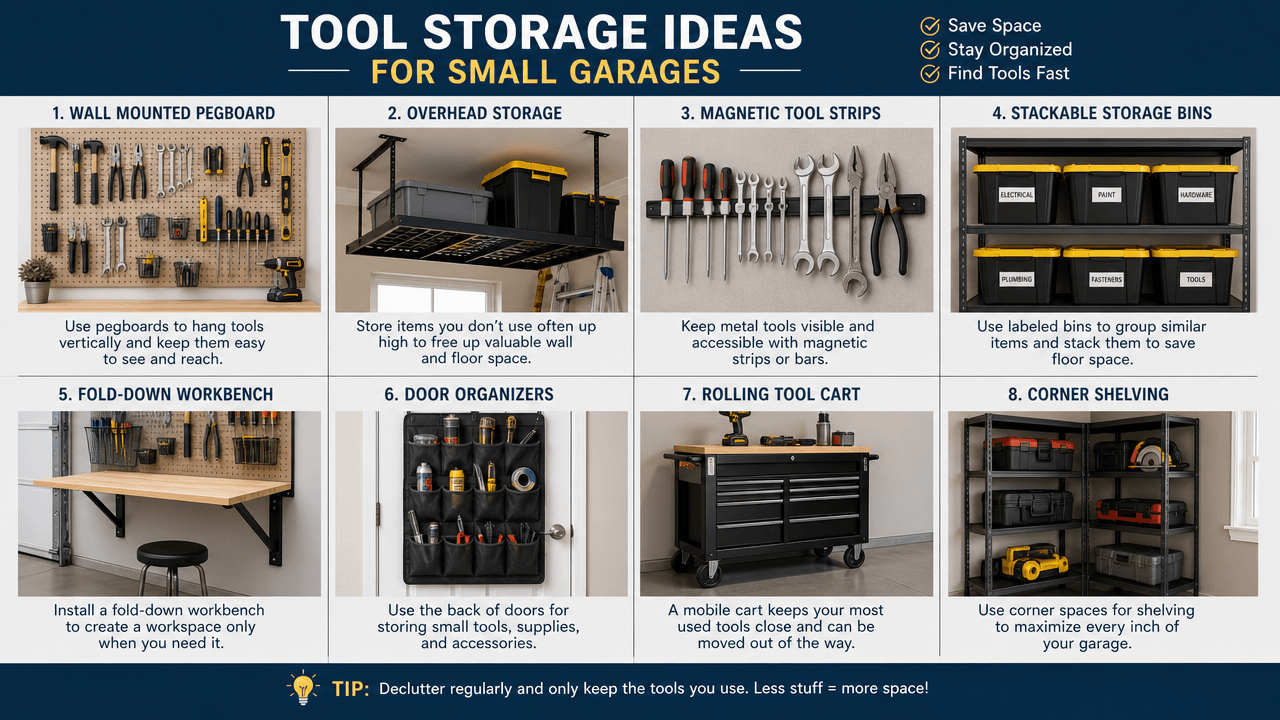
Cluttered garages waste time, damage tools, and reduce usable workspace. With limited square footage, the right storage plan reclaims floor area, protects tools, improves safety, and speeds projects. This guide gives practical, tested tool storage ideas for small garages, vertical systems, cabinets, benches, DIY builds, renter-friendly fixes, and maintenance plans that actually work.
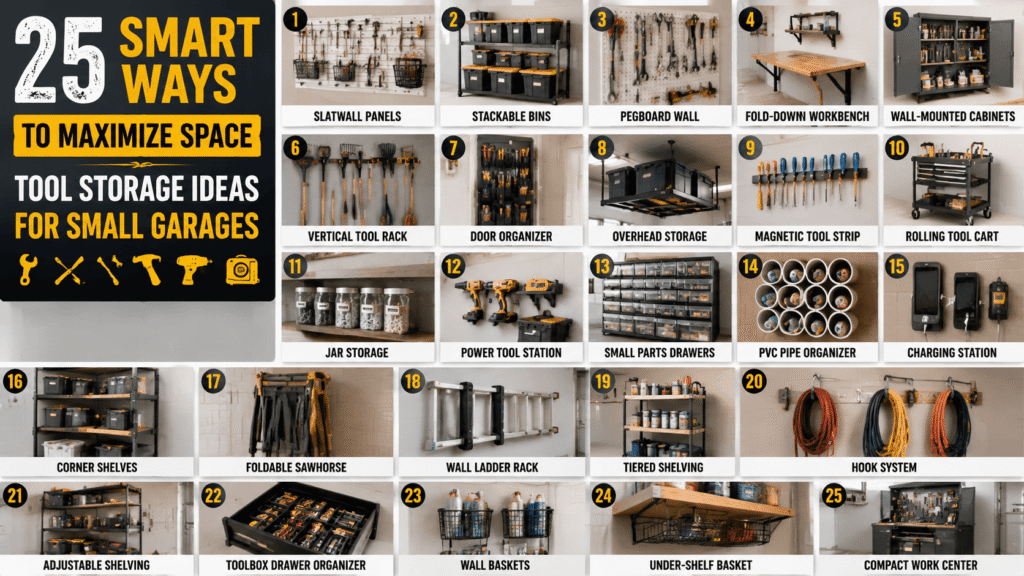
Why Tool Storage Matters in a Small Garage
Tool storage matters because organized storage saves space, prevents tool damage, improves safety, and reduces time spent hunting tools, turning a cramped garage into an efficient workspace and parking zone.
Good storage keeps tools accessible, lowers accident risk (tripping, punctures, falling objects), preserves battery life, and protects investments from moisture and dust. For small garages, storage strategy must prioritize vertical use, clear sight lines, and modular systems that scale. That means: pegboards or slatwall for visibility, heavy-duty shelving for bulky items, cabinets and chests for security, and ceiling racks for seasonal gear.
Properly labeled bins, shadow boards, and charging stations keep cordless tools ready and organized. Safety measures, secure fasteners, weight limits, and fire-safe battery storage, are essential. These choices improve workflow, prevent duplicate purchases, and maximize every square foot.
Start by Decluttering Your Garage
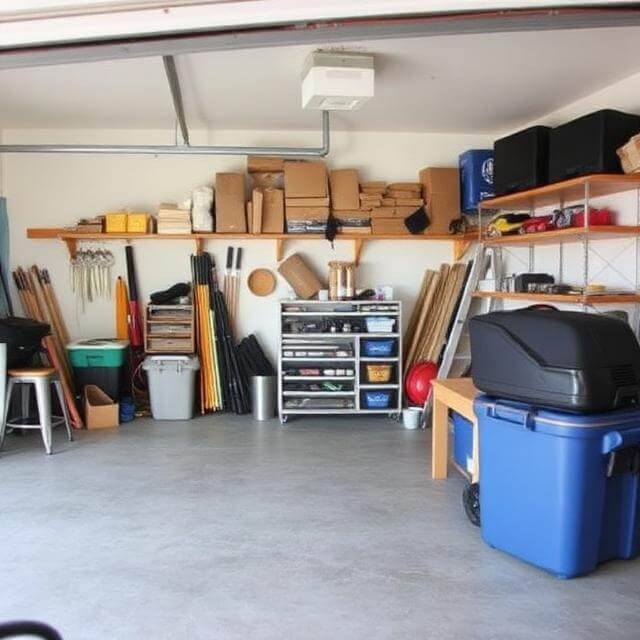
Begin with decluttering: sort into Keep, Donate, Sell, Trash, and Seasonal piles before designing storage.
- Clear the floor and workbench.
- Make five piles: Keep, Donate, Sell, Trash, Seasonal.
- Use the “last used” rule: if you haven’t used it in 2 years, consider donating or selling.
- Separate hazardous materials (paint, solvents) for proper disposal.
- Photograph or inventory items you’ll store seasonally.
Practical steps
- Empty one zone at a time (bench, wall, cabinet).
- Use a temporary staging area and label boxes.
- Weigh value vs. storage cost, sometimes selling bulky seldom-used tools funds new compact storage.
- Record tools in a simple spreadsheet: item, condition, location, last used.
Why this works
Decluttering reduces the number of storage units you need and reveals usable wall and ceiling space. It simplifies decisions, store what you use; remove what you don’t.
Use Vertical Wall Space
Use vertical wall space to gain floor area, improve tool visibility, and customize storage with pegboard, slatwall, French cleats, rails, and magnetic strips.
Pegboard, slatwall, French cleat systems and tool rails convert blank walls into organized tool displays. Pegboard is low-cost and highly flexible; slatwall offers heavy-duty inserts and clean look; French cleats are strong and reconfigurable. Add magnetic strips for bits, wrenches, and clamp storage.
Hang ladders, hoses, and garden tools on heavy-duty utility hooks to free floorspace. For heavier items use a solid backing (1/2, 3/4″ plywood) mounted to studs to distribute load. Label outlines or create a shadow board so every tool has a defined place, this improves return rates and speeds project start-up.
Pegboard and Wall Organization
Pegboard is an inexpensive, visible, and reconfigurable tool organizer that works for most hand tools and small power tools.
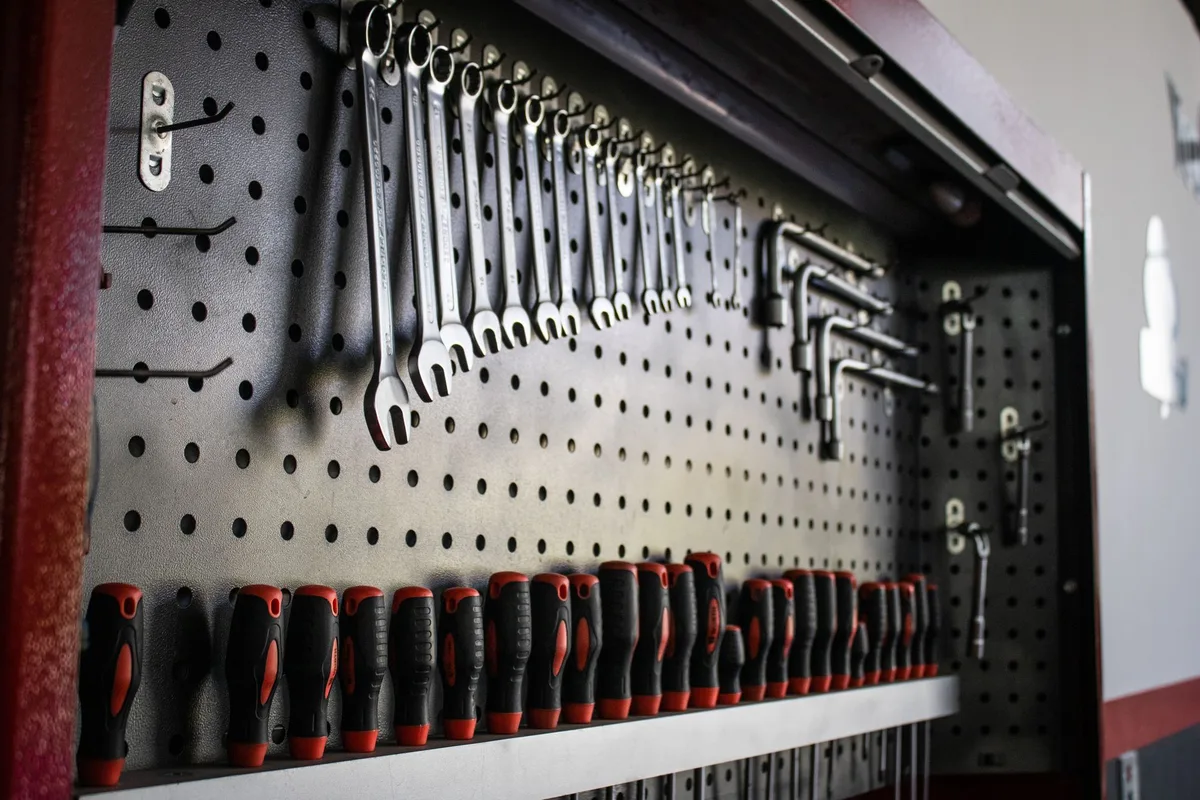
How to set up pegboard
- Mount 1/2, 3/4″ plywood to studs, then fasten pegboard to the plywood.
- Use metal hooks, tool holders, and baskets for variety.
- Create shadow outlines for frequently used tools.
- Use pegboard-mounted shelves for small battery chargers and cases.
When to prefer slatwall or French cleat
- Choose slatwall for heavier or more decorative installations; it accepts commercial hooks and accessories.
- Choose French cleat for maximum flexibility and heavy loads (store circular saws, jigsaws, or multiple cordless tool cases).
Install Heavy-Duty Garage Shelving
Install heavy-duty shelving to store tool cases, totes, paint, and bulk items off the floor while keeping them easy to access.
Types of shelving
- Fixed steel shelving: durable, high capacity, great for heavy tool chests or shop vacs.
- Adjustable boltless shelving: flexible shelf heights for odd-sized boxes and power tool cases.
- Wire shelving: good for airflow, reduces dust build-up under items.
- Corner shelving: uses awkward corners efficiently.
Installation tips
- Anchor to studs or concrete floor for maximum capacity.
- Place heaviest items on lower shelves to lower center of gravity.
- Use clear bins and labels for fast retrieval.
- Reserve one shelf for charging stations and batteries, near an outlet.
Choose the Right Garage Cabinets
Choose the right garage cabinets, metal, plastic, or wood, based on durability, moisture resistance, cost, and tool security.
Select garage cabinets by balancing durability, weight capacity, moisture resistance, and budget: metal cabinets offer toughness and security, plastic cabinets resist moisture and are lightweight, and wood cabinets give customizable interiors but require sealing and more maintenance. Choose sizes and mounting (floor vs wall) to match tool inventory and garage layout.
Compare materials
- Metal cabinets: Pros, high strength, lockable doors, heavy-load shelves; Cons, can dent, rust if uncoated.
- Plastic cabinets: Pros, lightweight, rustproof, inexpensive; Cons, lower load capacity, can warp under heavy weight.
- Wood cabinets: Pros, customizable, attractive; Cons, sensitive to humidity, heavier.
Installation and layout
- Wall-mounted cabinets free floor space but require stud mounting and weight check.
- Tall floor cabinets are secure storage for aerosols, paints, and heavy cases.
- Use lockable cabinets for hazardous chemicals and expensive tools.
Rolling Tool Chests vs Wall Cabinets
Rolling tool chests are ideal for mobile work; wall cabinets secure tools and free floor space. Match choice to workflow and space.
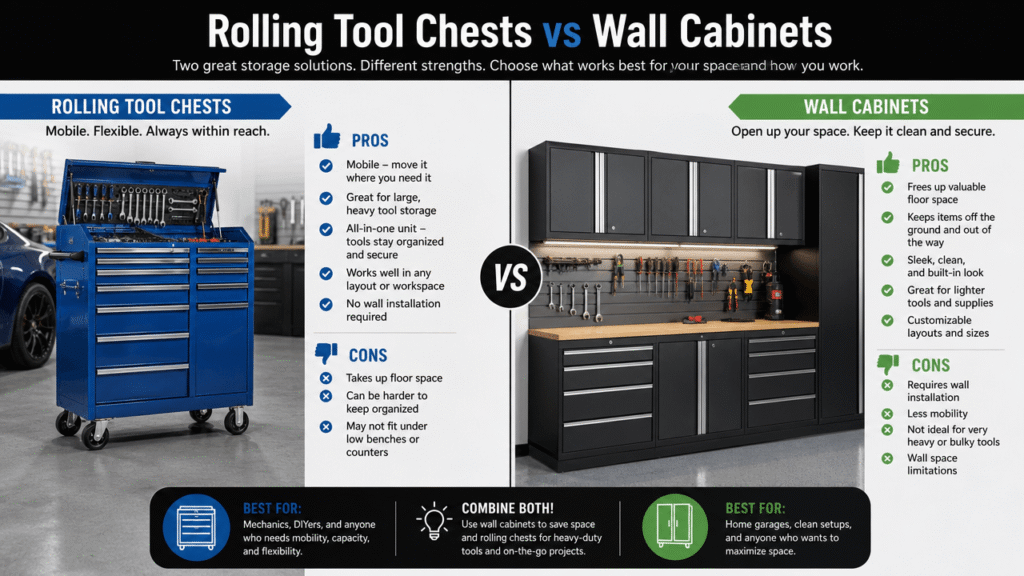
image: Rolling Tool Chests vs Wall Cabinets
When to use rolling tool chests
- If you move tools between work areas.
- For heavy hand tools and socket sets stored in foam drawers.
- When your workbench is mobile or you have multiple project zones.
When to use wall cabinets
- If you need permanent floor space for a car or large projects.
- For storing chemicals and less frequently used power tools.
- When theft prevention or child safety requires lockable storage.
Hybrid approach
- Combine a low-profile rolling chest under a workbench for mobile storage, plus wall cabinets for seasonal or hazardous items. This balances mobility with space efficiency.
Organize Hand Tools Efficiently
Organize hand tools using shadow boards, drawer inserts, hooks, labels, and tool rolls to keep small items accessible and protected.
Practical layout
- Keep frequently used hand tools near the workbench on a shadow board or pegboard.
- Use foam drawer organizers for socket sets, wrench sets, and screwdrivers.
- Store hammers, mallets, and larger hand tools on heavy-duty hooks or French cleats.
- Use labeled clear bins for fasteners and small parts.
Drawer and cabinet tips
- Use top drawers for precision tools and measuring instruments.
- Dedicate one shallow drawer for small bits and drivers with a magnetic tray.
- Keep commonly paired tools together (e.g., ratchet + sockets).
Store Power Tools Safely
Store power tools with charging stations, battery storage, cord management, and protective housings to prolong life and prevent accidents.
Key practices
- Create a battery charging station with ventilation and a single power strip containing surge protection.
- Store batteries in a cool, dry cabinet away from direct sunlight and chemicals; keep a battery charging log if you manage many packs.
- Coil cords neatly with velcro straps or use an extension cord reel for long cables.
- For saws and grinders, use keyed blade/guard covers and retain original cases where practical.
Battery safety
- Store lithium-ion batteries in labeled plastic bins or battery safes for fire protection if you keep many. Follow manufacturer guidance, see DeWalt for charging and storage recommendations.
- Never store batteries near flammable liquids or heat sources.
Make Use of Ceiling Storage
Ceiling storage gives significant floor-space gains by moving seasonal and bulky items overhead while observing weight and clearance limits.
Use overhead racks for seasonal boxes, kayaks, and rarely used equipment. Install with joist-mounted hardware and check capacity ratings. Leave clearance for your vehicle and garage door.
Use pulley-style loft systems for bikes or lumber to lower heavy items safely. For frequent access, consider drop-down racks with crank or electric assist. Always distribute weight across multiple joists and observe a safety margin under rated capacity.

Build a Compact Workbench with Storage
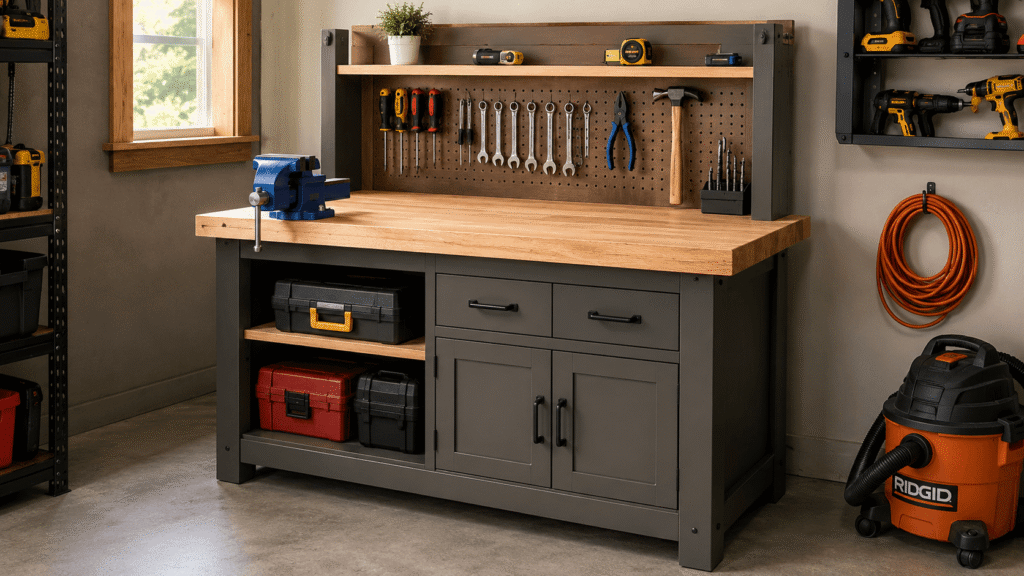
A compact workbench with integrated storage gives stable workspace and holds the most-used tools close at hand.
Design priorities
- Minimum depth 24″ for tool clearance; 36″ for heavy woodworking.
- Include 2, 3 drawers for fasteners and hand tools.
- Fit a lower shelf or cabinet for power tool cases and shop vac.
- Add a pegboard or French cleat panel above the bench for instant access.
Space-saving models
- Folding or wall-mounted drop-leaf benches for garages that double as parking spaces.
- Mobile workbench on heavy casters that locks for stationary use.
- Bench with integrated power strip and dust collection port for corded tool use.
DIY Tool Storage Ideas
Here are 12 creative, low-cost DIY tool storage ideas you can build quickly to maximize space and organization.
- PVC drill holder: Cut PVC to length and mount on a board for cordless drill storage.
- Pallet wall: Sand, stain, and mount a pallet to hold baskets and hooks.
- French cleat wall: Make cleats from scrap plywood to hang saws, clamps, and boxes.
- Magnetic strips: Mount for screwdriver bits, wrenches, and drill bits.
- Mason jar organizers: Attach jar lids under shelves for storing loose screws and nails.
- Bucket storage grid: Hang 5-gallon buckets on a wall-mounted rack for bulky garden tools.
- Scrap wood clamp rack: Use leftover 2x4s to create vertical clamp storage.
- PVC conduit hook system: Use conduit pieces for lumber and pipe storage vertically.
- Pegboard with modular bins: Add plastic bins for small parts and label them.
- Cardboard template shadow board: Trace tool outlines on cheap hardboard for instant order.
- Pallet shelf for battery chargers: Add power strips to a small pallet shelf near outlets.
- Rolling crate cart: Secure plastic milk crates to a dolly for lightweight mobile storage.
Materials and tools
- Use 3/4″ plywood for load-bearing French cleats.
- Select rust-resistant hooks for damp garages.
- Seal wood cabinets with marine varnish if moisture is a concern.
Best Storage Ideas for Renters

Renters need non-permanent solutions: freestanding shelving, rolling carts, portable cabinets, and no-drill wall systems.
Options that won’t void a lease
- Freestanding heavy-duty shelving and wire shelving units.
- Rolling tool carts and lockable portable tool chests.
- Command-brand hooks and adhesive-backed rails for light items.
- Tension-rod systems or floor-to-ceiling pole shelving to avoid wall anchors.
Renter-friendly layout
- Keep valuables in lockable cabinets or rolling chests you can move.
- Use labeled clear bins and stack them for compactness.
- Use Task-specific carts: paint cart, garden cart, or electrical cart to keep similar items together.
Common Garage Organization Mistakes
Avoid these common mistakes that waste space and reduce safety.
- Overloading walls without backing, use plywood backing on studs.
- Storing heavy items high, keep weight low to avoid falls.
- Ignoring labeling, unlabeled bins become junk drawers.
- Mixing chemicals with tools, store paint and solvents in separate locked cabinet.
- Ostrich approach, shoving items into corners creates hazards and lost tools.
- Not planning for charging, cordless tools need a dedicated, ventilated charging zone.
Maintenance Tips to Keep Your Garage Organized
Monthly and seasonal maintenance keeps systems working and prevents clutter creep.
Monthly checklist
- Sweep and vacuum floors.
- Check battery storage for heat exposure.
- Re-label bins and repair broken hooks.
- Test lighting and replace any burned-out bulbs.
Seasonal inspection
- Inspect overhead racks and fasteners in spring and fall.
- Re-evaluate tool usage, donate or sell items not used during past season.
- Check for moisture, pests, and rodent damage.
Cleaning schedule
- Quick weekly tidy (15 minutes) to put tools back in place.
- Deep quarterly clean: remove everything from a zone, examine, and reorganize.
Frequently Asked Questions
What is the best way to organize tools in a small garage?
Use vertical storage (pegboard, slatwall), a compact workbench with drawers, heavy-duty shelving for cases, and ceiling racks for seasonal items, combine labeled bins and shadow boards for visibility.
Are pegboards better than slatwalls?
Pegboards are cheaper and flexible; slatwall handles heavier loads and offers cleaner aesthetics. Choose pegboard for budget builds and slatwall for heavier tools and a polished look.
How high should garage shelves be?
Place shelves so the top shelf is below your ceiling-mounted door opener and vehicle clearance, typically 72, 84″ for easy reach, with lower shelves 12, 24″ from the floor for heavy items.
What’s the best storage for cordless drills?
Store cordless drills in a charging station with dedicated spots, ventilated shelf, and labeled battery bins. Use PVC holders for quick access and original cases for transport.
Can overhead racks hold power tools?
Overhead racks are best for lightweight, infrequently used items. Avoid storing lithium batteries or heavy power tools overhead unless they’re in rigid, secured cases and racks are rated for the load.
How do professionals organize garages?
Pros use modular systems: French cleats, labeled shadow boards, heavy-duty shelving, lockable cabinets, and clear bins. They maintain a charging station and keep a simple inventory.
What tools should stay in drawers?
Small hand tools, precision measuring tools, sockets, small fasteners, and blade sets should stay in shallow drawers with foam organizers.
Are metal cabinets worth it?
Yes, metal cabinets are durable, lockable, and good for heavy items. They can rust if uncoated; choose powder-coated finishes for damp environments.
How do I organize without drilling walls?
Use freestanding shelving, rolling carts, tension poles, and adhesive systems rated for your load. Magnetic tool holders and clamps on metal surfaces work if walls cannot be altered.
What is the safest way to store batteries?
Keep batteries in a cool, dry, ventilated location, separated by type, in labeled bins. Avoid stacking lithium batteries together; consider a fire-resistant battery box for large collections.
How much weight can wall storage hold?
Capacity varies: anchored French cleats can support 50, 200+ lbs per cleat when fastened to studs; pegboard without backing holds far less. Always follow manufacturer weight ratings and distribute loads across studs.
How often should I reorganize my garage?
Do a small tidy weekly, a functional check monthly, and a full reorganization seasonally or annually, whenever workflows change or new tools arrive.
Expert Tips
10 professional tips that save space, improve safety, and speed projects.
- Start with a floor plan: map tools and walk paths before buying storage.
- Use a single electrical zone for chargers to reduce extension cord clutter.
- Shadow boards cut search time by 50%, outline each tool on pegboard.
- Keep chemicals separate in a ventilated, lockable metal cabinet.
- Mount a shop vacuum with quick-connect fittings to the wall for efficient cleanup.
- Standardize bins for stacking and simple labeling.
- Use clear bins for visibility; opaque only for seasonal gear.
- Rotate seasonal items to overhead racks, never store batteries overhead.
- Use foam inserts in rolling chests to protect precision tools and reduce rattling.
- Label locations, not just bins, label shelves and shadow outlines to guide family members.
Comparison Table
| Storage Type | Best For | Cost | Difficulty | Space Saving | Durability |
|---|---|---|---|---|---|
| Pegboard | Hand tools, quick access | Low | Easy | High | Medium |
| Slatwall | Heavy hooks, trade-ready | Medium | Medium | High | High |
| French cleat | Modular heavy tools | Low–Medium | Medium | Very High | High |
| Metal cabinet | Secure storage, chemicals | Medium | Medium | Medium | Very High |
| Plastic cabinet | Moisture resist, renters | Low | Easy | Medium | Medium |
| Rolling tool chest | Mobile work, sockets | Medium–High | Medium | Medium | High |
| Ceiling rack | Seasonal storage | Medium | Hard | Very High | High |
| Wire shelving | Airflow/storage bins | Low | Easy | High | Medium |
| Workbench w/drawers | Active workspace | Medium | Medium | Medium | High |
Garage Storage Buying Checklist
- Available wall space (linear feet).
- Ceiling height and vehicle clearance.
- Weight capacity and distributed load requirements.
- Moisture and rust resistance.
- Expandability and modularity (French cleat or slatwall).
- Ease of installation (do you own tools for anchoring?).
- Budget and long-term value.
- Warranty and brand reputation.
- Material quality (powder coat, plywood thickness).
- Tool compatibility (case sizes, drill lengths, battery packs).
Decision Guide: Which System First?
- If you park a car and need floor: prioritize wall cabinets + overhead racks.
- If you do frequent projects: build a compact bench with pegboard and rolling tool chest.
- If rental restrictions apply: invest in freestanding shelving and rolling carts.
- If you own many cordless tools: create a battery charging zone and labeled battery storage.
Key Takeaways
- Use vertical surfaces first: walls and ceiling reclaim the most floor space.
- Start with decluttering, store only what you use.
- Combine systems: French cleat + shelving + cabinets beats any single solution.
- Shadow boards and labels save time and reduce duplicate purchases.
- Keep heavy items low; store seasonal and light items overhead.
- Build a dedicated charger station for cordless tools and safe battery storage.
- Renters can still optimize with freestanding solutions and no-drill fixes.
- Regular maintenance prevents clutter from returning.
For battery and charger safety and manufacturer guidance see DeWalt’s official site for battery handling and storage: DeWalt. For workplace and storage safety guidelines, consult OSHA’s tool and storage safety resources: OSHA.
Conclusion
Even the smallest garage can become an efficient, safe workshop with the right combination of vertical storage, modular systems, and simple habits. Start by decluttering, measure your walls and ceiling, choose a mix of pegboard, shelving, cabinets, and ceiling racks, and commit to monthly maintenance. Use shadow boards, labeled bins, and a charging station to keep tools visible and ready.
With these tool storage ideas for small garages, you’ll save time, protect your gear, and reclaim usable space.