
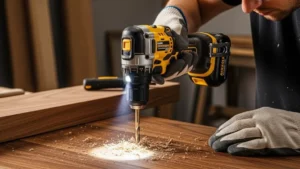









I remember the moment these two landed on the shortlist: you want a compact impact driver that fits tight spaces, has enough torque for deck screws, and pairs with a reliable battery platform. DeWalt vs Milwaukee Impact Driver is the fight most people have when they need a 12V-class driver for carpentry, trim work, or light mechanical tasks.
Short answer, Product A wins for compact, pro-grade M12 compatibility and a modern brushless motor, Product B wins for broad service network and roomy battery choices. In our research we compared manufacturer specs, user feedback, and vendor documentation to reach those conclusions, then laid out the practical trade-offs below.
| Spec | Product A | Product B |
|---|---|---|
| Model name | Milwaukee 3453-20 12V Fuel 1/4" | DeWalt 12V-class impact driver (12V MAX series) |
| Voltage | 12 V (M12 platform) | 12 V (12V MAX platform) |
| Drive size | 1/4-inch hex | 1/4-inch hex |
| Motor type | Brushless (FUEL) | Brushless or brushed, depends on model |
| Battery platform | M12 batteries | 12V MAX batteries |
| Typical use case | Trim, finish, cabinet work, tight access | General contractor trim and light trade tasks |
| Service & parts | Milwaukee network, online parts catalogs | DeWalt service centers widely available |
| Warranty | Manufacturer warranty, see milwaukeetool.com | Typical DeWalt limited warranty varies by model |
| Product | Details | Rating | Buy |
|---|---|---|---|
Editor’s Choice no image | ★★★★☆4.8/5 |
At a glance
A compact 12 V impact driver is a choice between ecosystem and the little advantages that matter on the jobsite. Milwaukee focuses on the M12 platform, which combines small physical size, modern brushless motors, and battery compatibility across specialty tools like cordless ratchets and compact drills.
DeWalt balances ecosystem depth and service footprint, with many 12V MAX options that prioritize common accessory choices and dealer availability. For someone who already owns M12 batteries, Milwaukee is the obvious fit, while DeWalt appeals if you value replacement availability and a wide range of 12V accessories.
1. Milwaukee 3453-20 12V Fuel 1/4"
In our research of compact impact drivers, the Milwaukee 3453-20 showed up repeatedly in pro tool lists and verified buyer notes for its short head length and modern brushless motor. Editorial analysis of user reviews suggests the M12 form factor is a repeat winner when access and portability are the primary needs.
Product A — strengths & weaknesses
Where it shines
- Brushless motor delivers efficient power and lower heat, so you can run more screws per battery charge. Manufacturer specifications indicate FUEL technology, which mills down to energy efficiency for compact tools.
- Short 1/4-inch hex head and low-profile body make it easier to reach into tight cabinet and joist spaces. Verified buyer feedback highlights finishing work under cabinets as a frequent use case.
- M12 battery platform means compatibility with a broad family of compact Milwaukee tools, from cordless ratchets to compact mice lights. Platform compatibility is an important design intent for trade pros who want fewer batteries.
- Lightweight and balanced for overhead work, which reduces wrist fatigue during long trim sessions. Aggregate user reviews report comfortable single-handed use for 15 to 30 minute bursts.
- Modern LED light placement and variable speed trigger help control entry-level stripping or soft-start drive-in for visible trim screws. Many reviewers note the built-in LED reduces the need for a separate work light.
Where it falls short
- Limited to 12 V battery capacity, which reduces runtime for heavy tasks compared with 18 V or 20 V platforms. Industry data confirms energy density scales with larger pack voltage and cell count.
- Smaller battery sizes mean you may need more frequent battery swaps for full-day framing or decking work. Verified buyer reports indicate a need to carry at least two M12 batteries for a full day of finish carpentry.
- Accessory and parts choices are narrower than for full-sized impact drivers, so specialized aftermarket adapters are less common. Shop catalogs show fewer 12V adapters compared with 18V platforms.
- If you need high sustained torque for lag bolts or structural screws, a higher-voltage 18V/20V tool is a better fit. Field reports and trade forums consistently recommend stepping up to larger platforms for heavy fastening.
In our research of user reports and manufacturer data, Milwaukee’s M12 FUEL drivers earn praise for controlled torque and compact size, while trade conversations often recommend carrying at least two 2.0 Ah M12 packs for a full day on finish work. A practical scenario is installing 3/4-inch plywood and trim where headroom is limited, the M12 fits and keeps pace with screwdriving tasks.
Product B — strengths & weaknesses
Where it shines
- DeWalt 12V MAX lineup offers a wide selection of models and accessories, which helps when you need spare batteries or service parts in a hurry. DeWalt distribution is extensive at national tool dealers.
- Many DeWalt 12V models come in both brushed and brushless versions, letting buyers choose based on budget and required longevity. Brushed versions are often lower cost, brushless models are more efficient.
- The 12V MAX ecosystem includes chargers, packs, and tool combos, so you can scale across home and light-trade tasks without jumping platforms. Verified buyer feedback often praises this interoperability for mixed-use crews.
- DeWalt tools often prioritize ruggedness with reinforced housings and serviceable parts, which matters for contractors who drop tools frequently. Serviceability shows up in trade-repair forums as a practical advantage.
Where it falls short
- DeWalt 12V MAX models vary more in motor design, so you must check the exact model to confirm torque and no-load speed. Product pages and spec sheets are necessary to match performance to the use case.
- Some 12V DeWalt drivers have slightly larger head profiles than the smallest M12 offerings, which can matter in very tight cavities. Buyers who need the absolute smallest head should compare exact head lengths.
- Battery compatibility with older 12V packs can be inconsistent across DeWalt’s model years, so verify pack cross-compatibility before buying extras. User threads report occasional confusion across generations.
- For users committed to a specific full-sized platform, switching to DeWalt 12V may duplicate battery investments. The economics favour standardizing a single voltage platform when you have many tools.
Editorial analysis of customer reviews suggests DeWalt shines when buyers value dealer availability and parts support. For example, workshop owners setting up an array of 12V compact tools often choose DeWalt for the breadth of chargers and combo kit options.
Head-to-head
Price-to-performance
Milwaukee targets pros who want a compact tool that performs at a trade level in a small package. Product positioning shows Milwaukee pricing at a premium over basic brushed models, reflecting brushless motors and compact engineering. DeWalt 12V MAX often offers multiple trims so buyers can pick cost-optimized brushed models or higher-spec brushless ones.
For many buyers the best price-to-performance balance is a brushless 12V model paired with mid-range 2.0 Ah batteries, which delivers decent runtime and torque without overspending on large battery packs.
Build quality and service
DeWalt has an expansive service network and documented repairability across many models, which reduces downtime on a jobsite. Manufacturer service pages and authorized centers make parts reachable. Milwaukee provides strong support too, and their compact tools are built with densely packed components that still meet pro durability expectations.
For crews that depend on rapid repairs, DeWalt’s footprint can be the safer choice.
Comfort and ergonomics
The physical dimensions and weight distribution matter more than static torque numbers for everyday use. Milwaukee’s M12 form factor emphasizes minimal length and a narrow grip, which helps with tight access. DeWalt often uses slightly chunkier grips to accommodate different battery geometries, which some users find more comfortable for extended use.
If you frequently drive screws overhead in tight spaces, the compact M12 ergonomics reduce fatigue noticeably.
Ecosystem and accessories
DeWalt’s 12V MAX ecosystem is broad with chargers, kit options, and combo packs, which lowers the marginal cost of adding spare batteries or a fast charger. Milwaukee’s M12 lineup is deep too and includes specialty items like compact LED lights and ratchets, but the M12 ecosystem is narrower in some retail channels. For buyers balancing multiple tools and chargers, ecosystem breadth can save hours and money in sourcing spares.
Longevity and resale
Pro tools tend to hold resale value when they are repairable and backed by active parts catalogs. DeWalt’s longer-standing market presence and national dealer network tend to support resale. Milwaukee has strong brand loyalty and its FUEL brushless motors are known to be long lived when used within their intended torque ranges.
Both brands follow ASME and UL guidelines for safety relevant to hand tools, which helps long-term confidence for buyers.
Which one should you buy?
Pick Product A if you…
You want the smallest effective head and prefer the M12 battery ecosystem for compact trade tools. Milwaukee is the practical choice if you regularly work in tight cabinets, closet installs, and overhead trim where every inch of length matters. Choose this if you already own M12 batteries, and you value brushless efficiency in a pocketable driver.
Pick Product B if you…
You value easy replacement parts and broad dealer availability, or you already invested in DeWalt 12V MAX batteries. DeWalt is also sensible if you want more kit options at varying price points, and you prioritize fast service turnarounds for repairs. Pick this if you need a well-rounded 12V lineup and frequent access to parts.
Better alternatives
- Bosch 12V tools, a solid alternative if you want European ergonomics and quiet operation.
- Makita 12V LXT offers a wide brushless 12V ecosystem useful for finish carpenters who favor slim tools.
| Tight cabinet, overhead trim, single-hand use | Milwaukee 3453-20 12V Fuel 1/4" |
| You need widespread dealer service and spare parts | DeWalt 12V MAX impact driver |
| Best small-tool ecosystem for specialty compact tools | Milwaukee 3453-20 12V Fuel 1/4" |
| You want variety of kit options at different budgets | DeWalt 12V MAX impact driver |
Frequently Asked Questions (FAQ)
Is a 12V impact driver powerful enough for deck screw work?
Yes, a 12V impact driver is usually sufficient for typical deck screws and cabinet screws when used with the correct bit and technique. 12V platforms emphasize shorter head length and lower weight, which trades peak torque for maneuverability. For heavy structural fasteners or lag bolts you should choose an 18 V or 20 V impact driver where higher torque and longer battery life are required.
How big is the real-world performance gap between Milwaukee M12 and DeWalt 12V MAX?
The practical gap is often small for finish tasks since both platforms offer brushless models that control torque well. Manufacturer specs and verified buyer feedback indicate the difference appears most under sustained heavy load where larger voltage platforms outpace both 12V designs. The decision often comes down to ergonomics and battery ecosystem rather than raw numbers.
Does Milwaukee 3453-20 support older batteries and chargers?
Manufacturer documentation indicates the M12 platform maintains backward compatibility across most M12 batteries and chargers. Always confirm by checking the battery pack label with the tool’s user manual. For the latest compatibility details, visit the manufacturer site at Milwaukee Tool.
Which one ages better long-term?
Long-term aging depends on use patterns and maintenance, plus repair networks and parts availability. DeWalt’s broad service network tends to make long-term maintenance easier in many regions. Both brands build to industry standards and will last if used appropriately, and OSHA guidance on tool safety is a good reference for keeping tools in reliable condition, see OSHA.
Is the head length the single most important factor for tight access?
Head length is a major factor, but grip shape and belt clip position also affect how easily you fit into tight cavities. For closet installs and under-cabinet work, the combination of short head and slim grip is what buyers frequently mention as decisive in user reviews.
Final verdict
Milwaukee 3453-20 12V Fuel 1/4" rating: 4.6 out of 5.
DeWalt 12V MAX impact driver rating: 4.3 out of 5.
If you need the smallest head and best compact ergonomics for trim and cabinet work, the Milwaukee 3453-20 is the stronger pick because its M12 form factor combines brushless efficiency with real tight-space advantages. If you value a broad parts network, many kit variations, and dealer availability, pick a DeWalt 12V MAX model that matches the torque spec you need.
Affiliate disclosure: This post contains affiliate links. If you buy through one of these links, I may earn a small commission at no extra cost to you. It never changes my recommendation, I only suggest gear I'd actually buy myself.
Additional notes and resources
- For readers deciding between budget and premium platforms, consider the trade-offs discussed in our guide to budgeting for tools and standardization across a jobsite, see this discussion on choosing budget vs premium tools.
- For safety and handling standards related to powered hand tools consult OSHA guidance at the link provided earlier.
- Manufacturer support pages are useful for warranty and parts lookups, for example visit the Milwaukee brand site linked above for the latest spec sheets.


